 Orcas Island Siding
 Building a Home That Holds Up on Orcas Island
Orcas Island sits in the heart of San Juan County, and homes here live with a set of conditions that mainland siding jobs simply don't have to plan for. Marine air moves across the island constantly, carrying salt that settles on siding, trim, and metal fasteners. Rain comes in sideways off the water during winter storms, driven by wind that finds every gap in a wall assembly. And because much of the island sits under a mix of fir, cedar, and madrona canopy, homes in shaded lots deal with a long moss and algae season that can run from fall through spring. None of this is exotic — it's just the reality of building on a Pacific Northwest island — but it does mean the exterior products and installation details that work fine in a drier inland climate don't always hold up the same way here.
We install siding, roofing, windows, and decks, and on Orcas Island specifically, the siding conversation almost always starts with the same question: what's actually going to survive out here without turning into a maintenance project every summer?
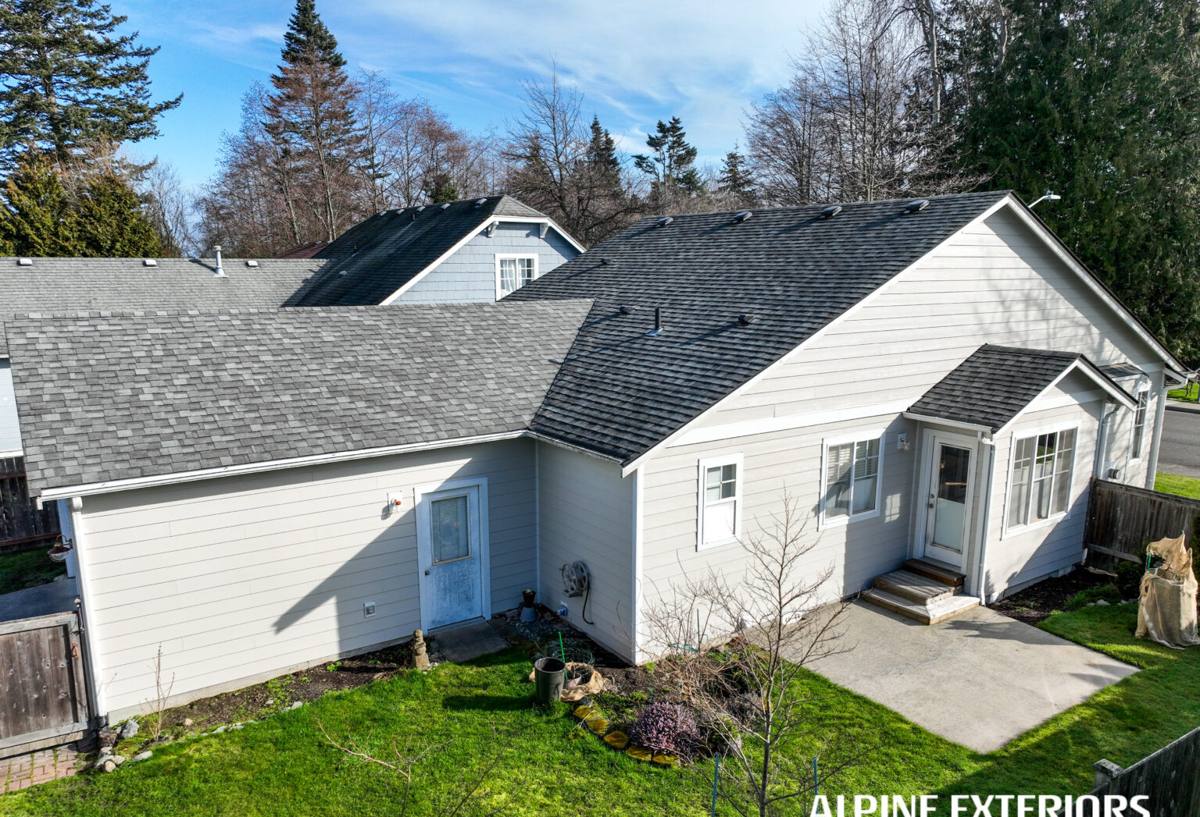
What Salt Air Actually Does to an Exterior
Salt air is corrosive in a slow, cumulative way. It's not a single storm that causes the damage — it's years of fine salt particles settling into seams, fastener heads, and any spot where paint or factory finish is thin or has started to fail. On siding materials that depend on a field-applied paint job for their weather barrier, salt exposure tends to accelerate the point at which that paint starts chalking, peeling, or losing adhesion. Once the finish starts to go, the substrate underneath is exposed to moisture cycling, and that's when real problems start.
Why This Matters More Near the Water
Properties closer to the shoreline see this effect faster and more visibly than homes further inland on the island, but no property on Orcas is truly free of marine air influence. It's one of the reasons we pay close attention to fastener selection and flashing details on every job here, not just the siding material itself.
Driving Rain and Wind-Driven Moisture
San Juan County gets a real wet season, and Orcas Island's exposure to wind coming off the water means rain doesn't always fall straight down — it gets pushed sideways into wall assemblies, especially on the windward side of a house. This is a water-management problem as much as a materials problem. A siding product can be excellent and still fail early if the flashing, house wrap, and drainage plane behind it aren't installed correctly. Conversely, a good material installed with sloppy water management will still let moisture in around windows, at butt joints, and behind trim.
Where We See the Most Water Damage
- Around window and door trim where flashing was skipped or reversed
- At horizontal siding joints without proper caulking or H-molding
- Behind decks and porch roofs where wall-to-roof transitions weren't flashed
- Near ground level where siding was installed too close to grade or hardscaping
The Long Moss Season
Shaded, tree-covered lots are common on Orcas Island, and that shade keeps siding and roofing damp for longer stretches than a home in full sun. Moss and algae take hold in that kind of persistent moisture, and on porous or textured surfaces they can get a real foothold — not just a cosmetic film, but growth that holds moisture against the material underneath. Over time, that constant dampness is harder on wood-based products and painted composites than it is on a dense, factory-finished fiber cement panel, which sheds water more readily and doesn't feed organic growth the way wood fiber can.
Why We Only Install James Hardie Fiber Cement Siding
We made a decision as a company to install James Hardie fiber cement exclusively — not vinyl, not LP SmartSide, not Cemplank or Allura, not primed spruce or cedar. That's not a marketing angle; it's a standard we hold because of what we've seen play out on exteriors in this climate over time.
Fiber cement is cement, sand, and cellulose fiber, which makes it dense, non-combustible, and dimensionally stable in a way wood-based and vinyl products aren't. James Hardie's ColorPlus factory finish is baked on under controlled conditions rather than applied on-site, which gives it more even coverage and better long-term adhesion than field-painted alternatives — a real advantage in an environment where salt air is working against any painted surface year-round. Hardie also engineers regional product lines (their HZ5 line, for example) specifically for wetter, more humid climates like the Pacific Northwest, with formulations meant to resist moisture-related damage better than a generic national product.
What This Means in Practice
It means less repainting, better resistance to moisture cycling, and a product that doesn't feed moss and algae growth the way a wood-fiber substrate can. It also comes with a strong transferable warranty backed by a large, established manufacturer — something that matters if you ever sell the home. We're not going to tell you every other siding product is junk; some of them are reasonable products used well in the right conditions. But for what Orcas Island homes face — salt, driving rain, and shade-driven moisture — we've standardized on the one system we're confident holds up with the least maintenance burden over the decades a homeowner actually lives with it.
How Siding Materials Compare in This Climate
| Material | Salt Air / Moisture Behavior | Maintenance Over Time | Notes for Island Use |
|---|---|---|---|
| James Hardie Fiber Cement | Dense, non-combustible, factory-finished; resists moisture-related breakdown | Low — occasional wash, no repainting for many years | Regionally engineered lines built for wet coastal climates |
| Vinyl Siding | Can warp or become brittle with UV and temperature swings; seams are moisture entry points | Low upfront, but limited repair options if damaged | Not something we install; appearance and repairability trade-offs |
| Wood or Primed Spruce/Cedar | Absorbs moisture, susceptible to rot and moss growth in shaded, damp areas | High — regular repainting and moisture monitoring needed | Requires the most ongoing upkeep in this climate |
| LP SmartSide / Engineered Wood Composites | Performance depends heavily on correct installation and sealed edges | Moderate — edge sealing and paint maintenance matter a lot | Installation sensitivity is a real factor in wet, wind-driven climates |
Beyond Siding: Roofing, Windows, and Decks
Siding doesn't work in isolation — it's one part of an exterior envelope that has to manage water together. We handle roofing, windows, and decks alongside siding for that reason. A roof with poor flashing at a wall intersection will send water behind good siding no matter how well it's installed. Windows that aren't flashed correctly create the same problem from a different direction. And decks attached to the house need proper ledger flashing so the connection point doesn't become a chronic leak source — something we see often enough on older island homes that it's worth checking even if a deck looks fine on the surface.
Decks in a Wet Climate
Decking on Orcas Island deals with the same moss and moisture exposure as siding, particularly on shaded lots. Material choice, gap spacing, and ledger flashing all affect how well a deck sheds water and resists the slow rot that comes from trapped moisture between boards.
What Working With a Local Crew Looks Like Here
Building on an island adds logistics that don't exist on the mainland — material deliveries have to be scheduled around ferry timing, weather windows for exterior work are narrower in the wet months, and a crew unfamiliar with island scheduling can turn a straightforward project into a frustrating one. We plan material orders and crew schedules around ferry access up front, so a job isn't sitting half-finished waiting on a delayed delivery. Working with a contractor who's done projects on Orcas before also means fewer surprises around permitting through San Juan County and a better sense of which details — flashing, fastener spec, siding clearance from grade — matter most for this specific environment.
What to Ask Before Hiring an Exterior Contractor on Orcas
- Do they have experience specifically with island logistics and scheduling around ferry access?
- Are they familiar with San Juan County permitting requirements for exterior work?
- What siding brand and product line do they install, and why?
- Do they detail flashing at windows, doors, and roof-to-wall transitions as part of the written scope — not just the siding material itself?
- Can they explain how their approach accounts for salt air and moss exposure specific to your property's location and sun exposure?
- Is their fastener and installation approach matched to the manufacturer's specifications for this climate zone?
Getting Started
Every property on Orcas Island sits a little differently — closer to the water or further inland, shaded or open, exposed to prevailing wind or tucked out of it — and that affects what your siding, roofing, windows, or decking actually need to hold up over time. If you're noticing paint failure, moss buildup, soft spots, or just want a straight assessment of where your exterior stands, we're glad to take a look. Reach out for a free, no-pressure estimate using the form below.