 Orcas Island Siding
 What Orcas Island Puts Your Roof Through
A roof in Orcas doesn't fail the same way a roof does further inland. San Juan County sits surrounded by saltwater, which means every roof here is dealing with airborne salt, near-constant humidity swings, and long stretches of shade under fir and cedar canopy. None of that is dramatic on its own, but it adds up year after year, and it adds up faster than most homeowners expect.
Salt air and metal fasteners
Salt-laden air corrodes exposed metal faster than it would a few miles inland. Nails, flashing, and fastener heads that aren't rated for coastal exposure can start rusting years before the shingles around them show any wear. Once fasteners go, seals fail, and water finds its way in long before the roofing material itself looks "done."
Moss season
Orcas Island's tree cover keeps a lot of roof surfaces shaded and damp for much of the year. That's exactly the environment moss needs. Moss doesn't just sit on top of shingles — it lifts edges, holds moisture against the roof deck, and works its way under granules and flashing over time. A roof that looks mossy but "fine" from the ground can already have compromised layers underneath.
Driving rain and wind-driven water
Storms coming off the water don't always drop rain straight down. Wind-driven rain pushes water sideways and upward under laps, ridge caps, and flashing that would keep a calmer climate's roof perfectly dry. Roofs here need underlayment and flashing details that assume water will be tested from more than one direction.
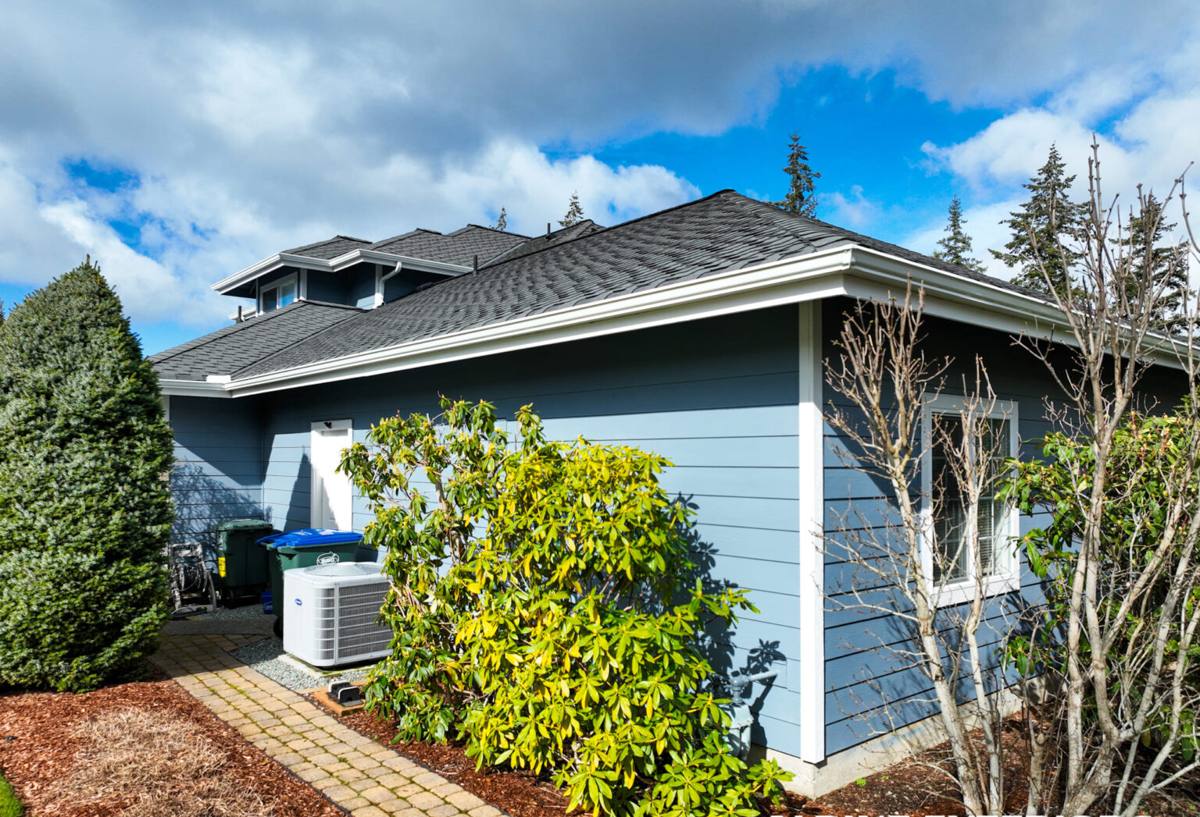
Signs a Roof on Orcas Needs Replacement, Not Another Patch
Repairs make sense when a roof has isolated damage and the rest of the system is sound. Replacement is the honest answer once the damage is spread out or the underlying materials are compromised. Some signs point clearly toward replacement:
- Moss growth that returns within a season or two of cleaning, especially on north-facing or shaded slopes
- Granule loss heavy enough that you're finding grit in gutters and downspouts regularly
- Soft or spongy spots on the roof deck when walked, indicating trapped moisture underneath
- Rusted or failing flashing around chimneys, skylights, and roof-to-wall transitions
- Shingles curling, cracking, or lifting at the edges from repeated wet-dry cycling
- Interior staining on ceilings or in the attic that shows up after wind-driven storms specifically
- A roof already past 20-25 years old that's had multiple repairs in the last few years
If you're seeing two or more of these at once, it's usually cheaper long-term to replace than to keep chasing individual repairs.
Choosing a Roofing Material for This Climate
There's no single "best" roofing material for every home on Orcas Island — it depends on your budget, your roof's pitch and shading, and how much upkeep you're willing to commit to. Here's how the common options actually perform in a marine, moss-prone climate:
| Material | Moss & moisture resistance | Salt air durability | Maintenance |
|---|---|---|---|
| Architectural asphalt shingles (algae-resistant) | Good with copper/zinc-infused granules | Good with coastal-rated fasteners | Low to moderate |
| Standing seam metal | Excellent — moss struggles to hold on smooth metal | Very good with proper coatings and fastener selection | Low |
| Cedar shake | Poor without diligent upkeep — traditional look, but shade and moisture accelerate rot | Moderate | High |
| Synthetic/composite shingle | Good | Good | Low to moderate |
We're honest with clients about cedar shake specifically: it has a genuine, traditional look many island homeowners want, but in a shaded, damp environment it demands more frequent cleaning and treatment than most people plan for. If you love the look, we'll tell you what the upkeep actually requires rather than let you find out the hard way.
What a Correct Roof Replacement Actually Involves
Full tear-off and deck inspection
We don't recommend layering new shingles over old ones on this island — trapped moisture between layers is exactly the kind of slow damage that goes unnoticed until the deck is soft. A full tear-off lets us inspect the roof deck itself for rot, soft spots, or prior water damage before anything new goes down.
Underlayment built for wind-driven rain
Given how often rain arrives sideways off the water, we use synthetic underlayment with proper lap orientation and extra ice-and-water membrane at eaves, valleys, and any roof-to-wall transitions — the spots wind-driven water actually finds a way into.
Flashing and fastener selection
Every fastener and flashing piece we install is chosen with salt air exposure in mind, not just general durability. Chimney flashing, valley flashing, and step flashing get particular attention since these are the areas that fail first when corrosion sets in.
Ventilation
Proper intake and exhaust ventilation keeps moisture from condensing inside the attic space, which matters even more in a humid, shaded climate like this one. A well-ventilated roof also sheds heat and moisture more evenly, which helps slow moss regrowth on the surface.
Island Logistics: Permits, Ferries, and Weather Windows
Roofing on Orcas Island isn't just a materials-and-labor job — it's a logistics job too. San Juan County permitting applies to roof replacement work, and we handle that paperwork as part of the process rather than leaving it for the homeowner to sort out. Material deliveries and dumpster drop-off/pickup have to be scheduled around ferry availability, which means a mainland contractor unfamiliar with the run can turn a straightforward reroof into a multi-week ordeal waiting on the next available sailing.
We also plan tear-off days around realistic weather windows. An open roof deck and an unexpected squall off the water don't mix, so we watch the forecast closely and stage materials so the vulnerable part of the job — deck exposed, no covering — is as short as possible.
Our Process for an Orcas Roof Replacement
- On-site inspection of the current roof, attic ventilation, and any visible moisture damage
- Written estimate covering material options, scope, and a realistic timeline that accounts for ferry and weather scheduling
- Permit submission through San Juan County before any work begins
- Material and dumpster delivery scheduled around confirmed ferry reservations
- Full tear-off and deck inspection, with any rot or damage reviewed with you before covering it up
- Installation of underlayment, flashing, and finish roofing material to spec
- Final walkthrough covering the completed work and what maintenance to expect going forward
What Affects the Cost of a Roof Replacement Here
| Factor | Why it matters on Orcas |
|---|---|
| Roof size and pitch | Steeper pitches and larger surfaces take more labor and material |
| Number of layers to remove | Multiple existing layers add tear-off time and disposal cost |
| Material choice | Standing seam metal generally costs more upfront than asphalt but needs less upkeep long-term |
| Deck condition | Rot or soft decking found during tear-off requires repair before new roofing goes on |
| Access and delivery logistics | Ferry scheduling and site access can affect delivery timing and cost |
| Flashing complexity | Chimneys, skylights, and multiple roof planes add detail work |
We give you an itemized estimate before any work starts, so you know exactly what's driving the number — not a vague lump sum.
Keeping a New Roof Ahead of the Moss
A new roof doesn't mean moss stops trying. What changes is how well the roof resists it and how easy it is to keep clean. A few habits go a long way here:
- Keep gutters clear of fir and cedar needles, which hold moisture against the roof edge
- Have shaded slopes checked for early moss growth once a year, ideally after the wettest months
- Trim back overhanging branches where reasonable to reduce shade and debris buildup
- Consider zinc or copper strips near the ridge on shaded roofs — rain washing over them helps inhibit new moss growth between cleanings
- Avoid pressure washing shingles directly; it can strip granules and shorten the roof's life
Why Work With a Crew That Already Roofs on Orcas
A lot of the mistakes we get called to fix aren't from bad materials — they're from crews unfamiliar with this specific climate treating it like a standard mainland job. That shows up as the wrong fastener spec, underlayment that isn't built for sideways rain, or a timeline that blows up because nobody planned around the ferry schedule. We work on Orcas Island regularly, so the permitting, the logistics, and the climate-specific details aren't guesswork for us — they're just how we build the estimate from day one.
If your roof is showing its age, holding onto moss it shouldn't, or you just want an honest read on whether repair or replacement makes more sense, we're glad to take a look. Reach out for a free, no-pressure estimate using the form below.