 Orcas Island Siding
 Why Board & Batten Suits Orcas Island Homes
Board and batten has a long history on the San Juan Islands, and it's easy to see why. The vertical lines read as understated and durable rather than flashy, which fits the wooded lots, waterfront bluffs, and quiet cabin-and-farmhouse character that define so much of Orcas Island's building stock. It also happens to be a genuinely practical siding profile for a wet marine climate — when it's built correctly, the vertical battens shed water off the face of the wall instead of trapping it in horizontal laps.
That last part matters more here than almost anywhere else in Western Washington. Orcas Island sits out in the Salish Sea, exposed to salt-laden air, long stretches of driving rain off the water, and shaded, damp microclimates on the wooded interior of the island where moss and lichen take hold fast. Board and batten siding can handle all of that — but only if it's installed with the right materials and the right details. Get those wrong, and you've just built a siding system that looks good for two or three years and then starts failing where you can't see it.
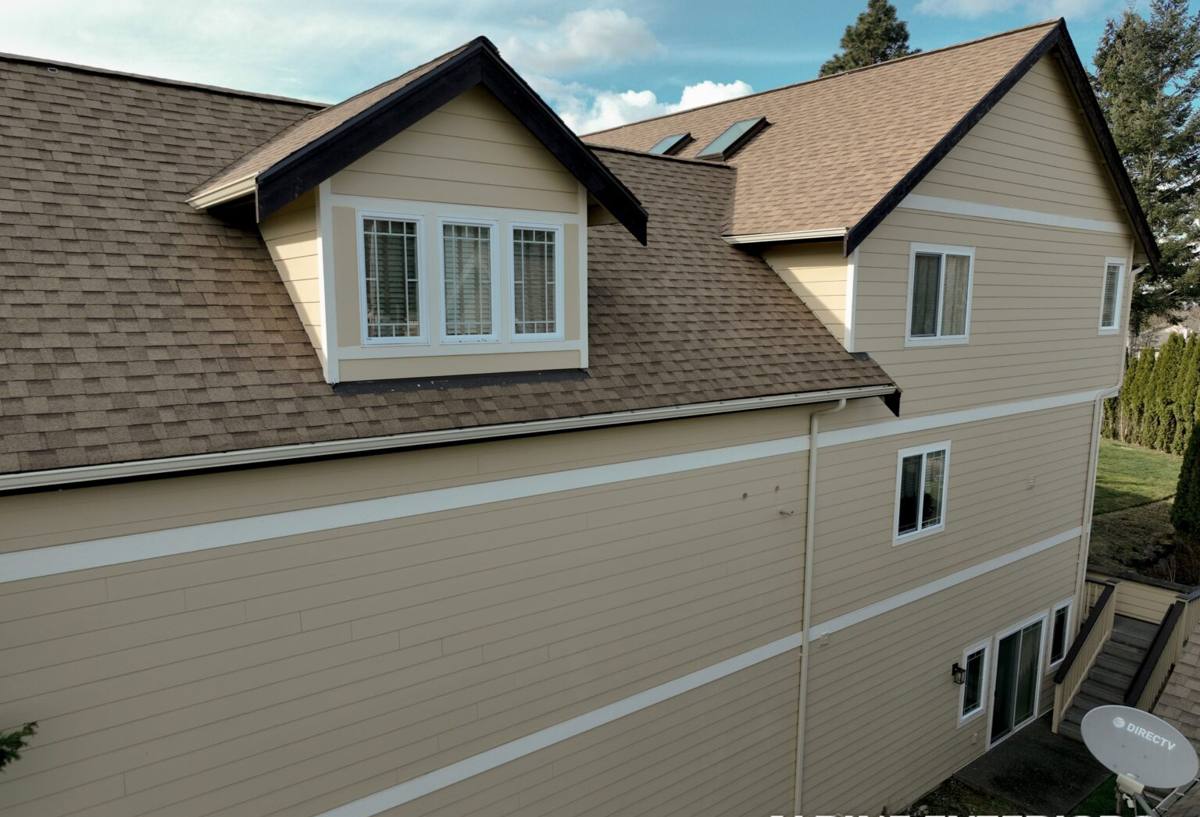
What Orcas Island's Climate Actually Does to Vertical Siding
Salt Air and Corrosion
Homes anywhere near the island's shoreline take on a steady dose of salt-laden moisture carried in off the water. Over time that salt air accelerates corrosion on fasteners, flashing, and any metal trim components. It also degrades cheap or thin paint films faster than it would inland, which is why the quality of the factory finish on your siding — not just the siding material itself — has a real, measurable effect on how the wall looks in ten years.
Driving Rain
Orcas Island gets weather systems that come in sideways off the water, driving rain directly into vertical wall surfaces rather than just dropping straight down. Board and batten's vertical battens are good at shedding this kind of rain when the laps, flashing, and water-resistive barrier behind the siding are detailed correctly. When they're not, driving rain finds every gap and pushes moisture behind the cladding, where it can sit against sheathing for days between dry spells.
Moss and Lichen Season
The island's wooded, shaded lots — and the long stretches of damp, low-light weather from fall through spring — create ideal conditions for moss and lichen growth on north-facing and shaded wall sections. This isn't just cosmetic. Moss holds moisture against a wall surface far longer than open air would, which shortens the life of any siding material that isn't inherently rot-resistant, and it's one of the main reasons wood-based board and batten systems on the island age faster than the same product would in a drier climate.
Why We Install Board & Batten Only in James Hardie Fiber Cement
We don't offer board and batten in vinyl, engineered wood, or primed spruce, and that's a deliberate call rather than a limitation. Vinyl board and batten can warp and fade under the region's UV and temperature swings and doesn't hold paint if a homeowner ever wants to change the color. Wood-based and engineered wood panel products are more moisture-sensitive at cut edges and butt joints — exactly the kind of detail that's hard to keep perfectly sealed for decades on a home exposed to driving rain and salt air.
James Hardie fiber cement solves the core problem directly: it's non-combustible, dimensionally stable, and doesn't feed moss or rot the way organic wood fibers can. Hardie's factory-applied ColorPlus finish is baked on and warranted against fading and peeling, which matters on a shoreline-adjacent island where sun, salt, and rain all work against a paint job simultaneously. Hardie also builds specific HZ5 product formulations engineered for climates with sustained moisture exposure — which describes San Juan County about as well as anywhere in the state.
We stand behind Hardie because we've seen what happens to lesser board and batten systems on this island after a decade of real weather. We'd rather install one product correctly than offer four options and let cost pressure push homeowners toward the one that won't last.
What a Correct Board & Batten Installation Actually Involves
Board and batten looks simple from the curb — vertical boards, battens over the seams — but the assembly behind that simple face is where the job succeeds or fails. A correct installation on Orcas Island includes:
- A drainage plane (rainscreen furring or a code-compliant weather-resistive barrier) that lets any moisture that gets behind the siding actually drain and dry out, rather than sitting against the sheathing
- Corrosion-resistant fasteners rated for coastal exposure, driven at the manufacturer-specified pattern so panels stay put through wind-driven rain events
- Proper flashing at every window, door, and roof-to-wall intersection — the single most common failure point we find on older board and batten homes here
- Correct batten spacing and fastening so battens cover panel seams fully without trapping moisture underneath
- Sealed and primed cut edges on every field cut, since a factory finish only protects the surfaces it was applied to
- Adequate clearance at the base of the wall and at grade, so splash-back and standing moisture don't wick into the bottom edge of the siding
Skipping any one of these doesn't usually show up as a problem on day one. It shows up three, five, or eight years later, as a soft spot behind a window, a moss-blackened batten seam, or a fastener that's bled rust down the face of the wall. That's the gap between siding that was "installed" and siding that was installed to spec.
Our Process for Orcas Island Projects
1. On-Island Assessment
We look at your home's specific exposure — how much direct weather it takes off the water, how much shade and moisture the wooded sections of the lot hold onto, and the condition of the existing wall assembly underneath any siding we're replacing.
2. Material Planning and Logistics
Working on Orcas Island means factoring in ferry schedules and barge logistics for material delivery. We plan Hardie board, batten stock, fasteners, and trim deliveries around the ferry system so your project isn't stalled waiting on a shipment that missed a sailing.
3. Tear-Off and Wall Prep
We remove existing siding down to the sheathing, check for hidden moisture damage from prior water intrusion, and repair or replace any compromised sheathing before anything new goes up.
4. Drainage Plane and Flashing First
The weather-resistive barrier, flashing, and (where called for) rainscreen furring go in before a single piece of visible siding, because these are the layers that actually keep water out long-term.
5. Board and Batten Installation
Panels and battens go up per Hardie's fastening and clearance specifications, with every cut edge sealed and every penetration flashed.
6. Final Walkthrough
We walk the finished exterior with you, checking seams, caulk lines, and trim details before calling the job complete.
Cost Factors for Board & Batten Projects on Orcas Island
| Factor | Why It Affects Cost |
|---|---|
| Wall condition underneath existing siding | Hidden rot or moisture damage found during tear-off adds sheathing repair before new siding can go on |
| Home's exposure to wind and driving rain | Shoreline-facing and exposed elevations may call for additional flashing detail and drainage measures |
| Access and material delivery | Ferry-dependent delivery timing and site access (driveway grade, staging area) affect scheduling and labor |
| Batten spacing and trim complexity | Custom reveals, corner details, and window/door trim add labor time versus a simple flat run |
| Color and finish selection | Factory ColorPlus finishes vary in cost by color family and coating tier |
Maintaining Board & Batten Siding in a Marine Climate
Fiber cement is low-maintenance, not no-maintenance. A short seasonal routine keeps it performing the way it's designed to on an island with this much moisture and salt exposure:
- Rinse salt residue and general grime off exterior walls once or twice a year, especially on shoreline-facing elevations
- Check shaded, north-facing wall sections for moss or lichen buildup and clean it off before it holds moisture against the surface
- Inspect caulking at trim, window, and door joints annually and re-caulk any cracked or separated seams
- Look at ground-level clearance after storms for mulch, soil, or debris buildup against the bottom edge of the siding
- Walk the exterior after major wind or rain events to check for loose battens or fasteners that may have worked free
Why Hiring a Crew That Already Works on Orcas Island Matters
Island work isn't the same as mainland work with an extra ferry ride tacked on. Scheduling has to account for sailing times and standby lines. Material orders have to be planned further in advance, because a missed delivery window can mean a multi-day delay rather than a same-day fix. And knowing which elevations on a given lot take the worst of the driving rain, or which shaded corners are going to grow moss fastest, comes from having actually worked exteriors on this specific island through multiple seasons — not from a general knowledge of Pacific Northwest siding.
A crew that's done this work here before also isn't guessing at how San Juan County's exposure standards and weather patterns should shape the installation details — the flashing, the drainage plane, the fastener spec. That experience is the difference between a board and batten wall that still looks and performs well after a decade of island weather, and one that needed attention far sooner than it should have.
If you're weighing a board and batten project for your Orcas Island home, we're glad to come take a look, walk the exterior with you, and give you a straightforward, no-pressure estimate — just fill out the form below.