 Orcas Island Siding
 Why Olga's Climate Is Harder on Siding Than It Looks
Olga sits on the eastern side of Orcas Island, facing Buck Bay and the broader waters of San Juan County, and that location comes with a specific set of exterior challenges. The marine environment means salt-laden air moves through the area constantly, settling on siding, trim, and fasteners even on homes set back from the water. Add in the long, wet Pacific Northwest winters, and you have a combination that wears down the wrong exterior products faster than most homeowners expect.
The real issue isn't any single storm. It's the cumulative effect of moisture that rarely fully dries out, tree cover that keeps roofs and siding shaded and damp, and a moss and algae season that can stretch across most of the year in shaded pockets of the island. Siding that isn't built to handle sustained dampness will show it: swelling, delamination, soft spots, and paint failure show up years earlier here than they would in a drier inland climate.
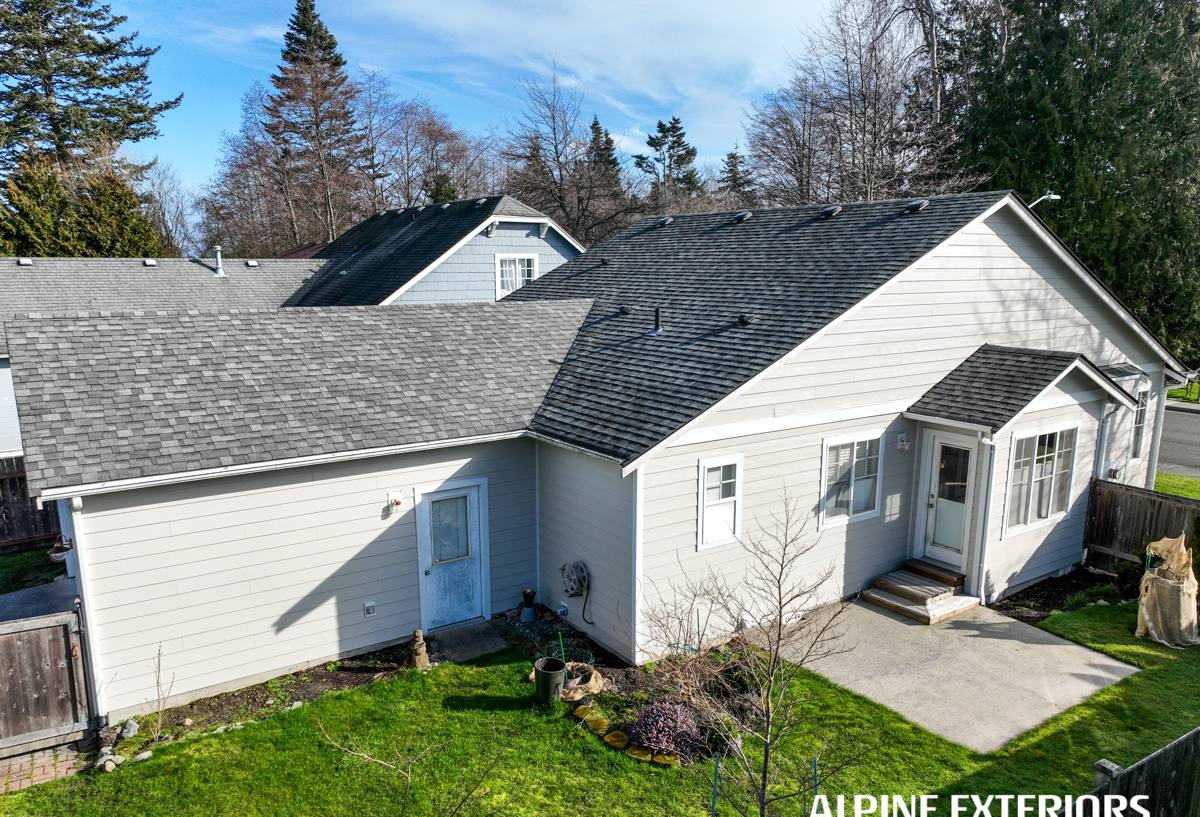
What We See on Olga Homes
Working across Orcas Island and the surrounding San Juan County islands, our crews see a recurring pattern of exterior wear tied directly to the local climate:
- Moss and algae staining on north-facing and shaded walls, especially under tree canopy
- Trim and corner boards that have absorbed moisture and started to soften or rot
- Caulk joints that have dried out, cracked, and opened a path for water behind the siding
- Paint and coatings failing early on wood-based or engineered wood products exposed to salt air
- Fastener corrosion and staining where lower-grade hardware wasn't matched to a coastal environment
None of this is unusual for the area. It's simply what happens when a home's exterior isn't matched to the conditions it actually faces year-round.
Why We Install Only James Hardie Fiber Cement Siding
We made a decision as a company to install one siding system: James Hardie fiber cement. We don't install vinyl, LP SmartSide, Cemplank, Allura, primed spruce, or cedar. That's not a marketing position — it's a standard we hold because of what we've seen happen to exteriors in this exact climate over time.
Fiber cement is a cement-and-cellulose composite that doesn't absorb water the way wood-based products do, and it doesn't soften, swell, or delaminate the way some engineered wood sidings can when moisture gets past a seam or a failed caulk joint. In a place like Olga, where damp conditions can persist for days or weeks at a stretch, that difference in how the material handles moisture matters more than color options or upfront cost.
Where Other Products Fall Short Here
Vinyl siding is affordable and low-maintenance in mild climates, but it becomes brittle in cold snaps, can warp under direct sun exposure on south-facing walls, and its seams and J-channels give wind-driven rain more opportunities to find a way behind the panel. Engineered wood products like LP SmartSide perform reasonably well when installation and maintenance are followed exactly to spec, but they remain wood-based at the core — meaning any breach in the factory coating or a missed caulk touch-up can lead to swelling at cut edges and panel joints. Primed spruce and cedar are traditional, attractive materials, but they require the most maintenance of any option: regular repainting or restaining, vigilant caulking, and quick attention to any moisture intrusion. In a climate with Olga's moss season and marine air, that maintenance schedule is demanding to keep up with.
We're not saying these products fail on every home. We're saying that after years of doing exterior work across the San Juan Islands, we decided the maintenance burden and failure modes we kept seeing weren't worth carrying forward, and we standardized on the one product line that held up best.
The James Hardie System We Install
James Hardie makes region-specific product lines engineered for different climate zones, and for Pacific Northwest homes we work within their HZ10 line, built for wetter, cooler coastal conditions like those found throughout San Juan County. Key features of the system:
- Non-combustible core — fiber cement doesn't contribute fuel to a fire, an increasingly relevant consideration for island and rural properties
- ColorPlus factory finish — a baked-on finish applied under controlled conditions, which holds color and resists fading and chipping far better than field-applied paint
- Engineered moisture resistance — the material is manufactured to resist swelling, cracking, and warping under sustained damp conditions
- Transferable warranty — Hardie's product warranty can transfer to a new owner if the home sells, which matters for resale value on an island where many buyers are looking closely at maintenance history
Hardie offers several siding profiles — lap siding, board-and-batten vertical siding, and shingle-style panels — so homes in Olga can maintain a traditional Pacific Northwest look, a more modern profile, or match an existing architectural style, without giving up the performance benefits of fiber cement.
Comparing Siding Options for a Coastal San Juan County Home
| Factor | Vinyl | Engineered Wood | Cedar / Primed Wood | James Hardie Fiber Cement |
|---|---|---|---|---|
| Moisture resistance | Moderate — seams are vulnerable | Moderate — depends on coating integrity | Low — absorbs water without upkeep | High — engineered for wet climates |
| Maintenance | Low, but limited repair options | Moderate — caulk and touch-up needed | High — regular repainting/staining | Low — factory finish holds up for years |
| Fire resistance | Poor — melts/deforms | Wood-based, combustible | Wood-based, combustible | Non-combustible core |
| Typical lifespan before major work | 15-25 years | 20-30 years with upkeep | 10-20 years with upkeep | 30+ years with proper install |
| Warranty transferability | Varies by manufacturer | Varies by manufacturer | Typically none | Transferable to new owners |
Why Installation Quality Matters as Much as the Product
Even the best siding material fails if it's installed wrong, and fiber cement is unforgiving of shortcuts in a few specific ways. Proper installation in a climate like Olga's requires:
- Correct fastener placement and spacing to avoid cracking and allow for material movement
- Proper flashing at windows, doors, and every horizontal trim break to direct water away from the wall assembly
- An engineered rain screen or drainage gap where conditions call for it, so any moisture that does get behind the panel can drain and dry rather than sit against sheathing
- Correct caulking at joints and penetrations — not over-caulking, which can trap moisture, and not under-caulking, which lets water in
- Manufacturer-specified clearances from grade, decks, and roof lines to keep the bottom edge of the siding from sitting in standing moisture
A crew that understands both the product and the specific demands of a marine climate will make decisions on site — around a tricky roofline, an exposed gable, a shaded north wall — that a generic installation crew working from a manual might miss.
Why a Local Crew Matters on Orcas Island
Working on Orcas Island isn't the same as working on the mainland. Ferry schedules dictate when materials and crews can arrive, weather windows are tighter, and a contractor who doesn't know the island's logistics can turn a straightforward project into a scheduling headache. We plan material deliveries and crew time around the realities of island access, so a project in Olga moves on a predictable timeline rather than getting stuck waiting on a missed ferry or a supply run that has to be re-planned.
Just as important is knowing the microclimates around the island. A home tucked into tree cover near Olga faces different moss and moisture exposure than one on an open, wind-exposed bluff a few miles away. A contractor who works this area regularly accounts for that when planning drainage details, fastener choices, and maintenance recommendations — rather than applying a one-size-fits-all approach.
Siding Is Only Part of the Exterior Picture
Siding, roofing, windows, and decks all interact on a home's exterior, and in a climate like San Juan County's, problems in one area often show up as damage in another. A roof with poor drainage can send water down a wall and cause siding failure at the base. Old windows with failed flashing can rot the wall framing behind new siding. A deck built without adequate ledger flashing can rot the band board it's attached to. Because we handle all four — siding, roofing, windows, and decks — we can look at a home as one connected system rather than treating each component in isolation, which matters when the goal is a home that holds up through another few decades of Pacific Northwest winters.
What to Check Before Hiring a Siding Contractor Here
- Do they carry current Washington state contractor licensing and insurance?
- Are they familiar with island logistics — ferry scheduling, material delivery timing, crew lodging if needed?
- Do they specify flashing and drainage details in writing, not just "siding installation"?
- Can they explain why they recommend a specific product for your home's exposure, rather than defaulting to whatever they normally install?
- Do they offer a manufacturer-backed warranty that's actually transferable if you sell the home?
Getting Started
If you're noticing moss buildup, soft trim, failing paint, or you're just planning ahead for a home in Olga or elsewhere on Orcas Island, we're glad to take a look and talk through what your home's exterior actually needs. There's no pressure and no obligation — just a straightforward assessment and a free estimate using the form below.