 Orcas Island Siding
 Why Orcas Island Roofs Wear Differently
A roof on Orcas Island doesn't age the same way a roof does forty miles inland. Salt-laden air off the surrounding waters works on metal fasteners and flashing year-round. Driving rain off winter storms finds every weak seam at a valley, chimney, or skylight curb. And the tree cover that makes the island beautiful — big firs, cedars, and madrones shading half the lots — keeps roofs damp long after a storm has passed, which is exactly what moss needs to take hold. None of this means an Orcas roof is doomed to constant trouble. It means repairs here have to account for conditions a mainland roofer might not think twice about.
We work roofs across San Juan County, and the repair calls we get on Orcas Island tend to follow a pattern: slow leaks that started as a small moss mat or a lifted shingle tab, corroded fasteners letting a flashing piece work loose, and gutter systems that can't keep up with how much water a shaded, moss-heavy roof actually sheds. Catching these early is cheaper and far less disruptive than waiting for a ceiling stain to show up inside.
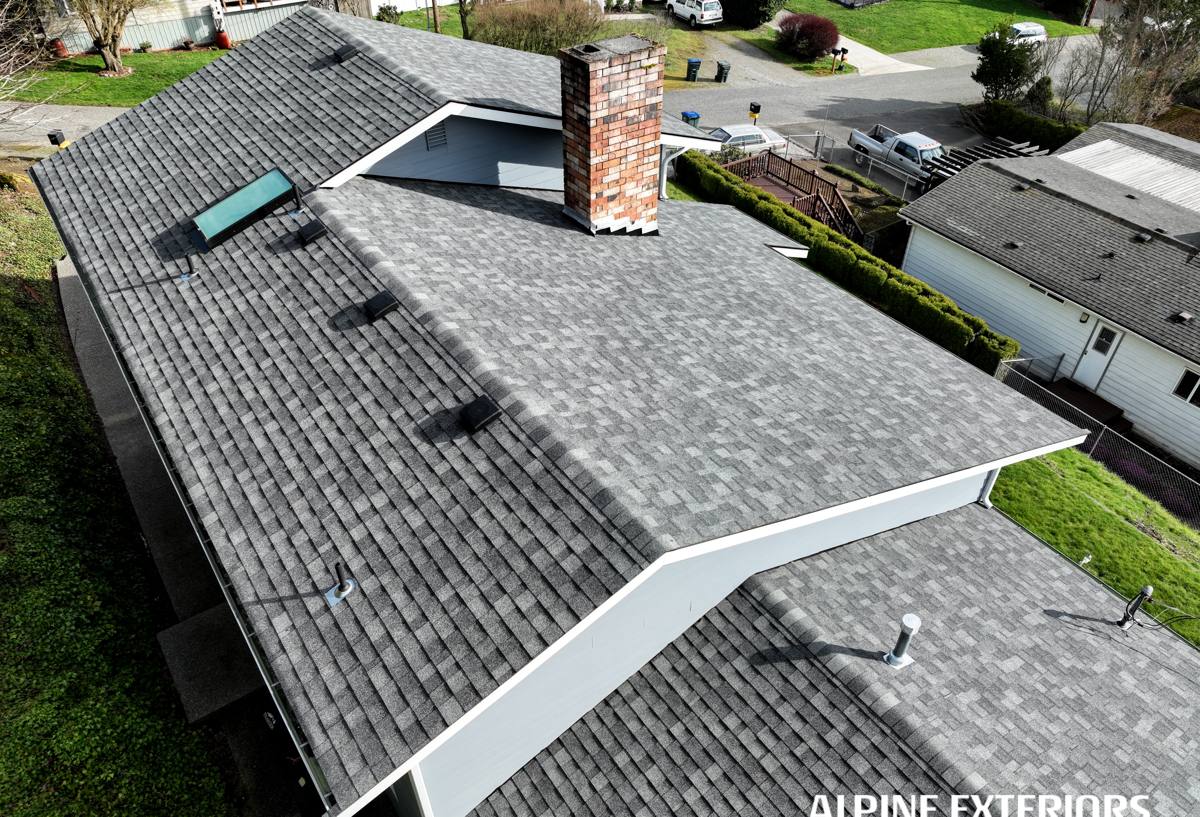
Common Roof Repair Calls We See on Orcas Island
Most repair visits fall into a handful of categories. Knowing which one you're dealing with helps you describe the problem accurately when you call, and helps you understand what a fair repair actually involves.
- Lifted or cracked shingles where wind has worked an edge loose, often on west- and south-facing slopes that catch the brunt of winter storms
- Moss mats holding moisture against shingles or shakes, especially on north-facing or heavily shaded sections
- Failed or corroded flashing at chimneys, skylights, and roof-to-wall transitions
- Valley leaks where two roof planes meet and debris or moss has slowed water down enough to back it up under the shingles
- Gutter and downspout failures that send water where it shouldn't go, sometimes leading owners to think the roof itself is leaking
- Nail pops and fastener corrosion from salt air, which loosen shingles or panels over several seasons
- Localized rot at eaves or fascia boards from prolonged moisture exposure
Any one of these can look like a "small" problem from the ground and still be doing real damage to the decking underneath. Roofing failures rarely happen all at once — they build for a season or two before you see a stain on a ceiling.
Moss, Shade, and the Island's Long Damp Season
Why moss is more than a cosmetic issue
On a lot ringed with conifers, a roof can stay damp for days after everyone else's has dried out. Moss doesn't just sit on top of shingles — it roots into the granule surface, lifts shingle edges as it grows, and holds a film of moisture against the roofing material long after a normal rain would have run off. Over a few seasons, that constant dampness accelerates granule loss on composition shingles and can promote rot on wood shakes.
Treating it correctly
Moss removal has to be done carefully. Aggressive scraping or high-pressure washing can strip granules and shorten the life of a perfectly good shingle. Our approach on a repair visit is to hand-clean affected areas, treat with a moss-control application appropriate to the roofing material, and address the underlying cause — usually overhanging branches or a shaded microclimate that never fully dries. Zinc or copper strips near the ridge can help slow regrowth on future maintenance, but they're a supplement to good cleaning and airflow, not a substitute for it.
Prevention between repairs
Keeping branches trimmed back from the roofline and gutters clear of needles and debris does more to prevent moss than any treatment applied after the fact. If your property backs up to trees, plan on a roof check at least once a year — twice is better through a wet Pacific Northwest winter.
Salt Air and Metal: What Holds Up, What Doesn't
Fasteners and flashing
Standard steel fasteners corrode faster in marine air than they would fifty miles inland. When we're repairing flashing or re-securing shingles on an Orcas Island roof, we default to corrosion-resistant fasteners and flashing materials suited to a coastal environment — it costs a little more up front and saves a callback in three years.
Gutters and metal roofing
Metal roofing and gutter systems are popular on the island for good reason — they shed moss better than shingles and handle heavy rain well. But not every metal product or coating is built for salt exposure, and the failure point is usually where dissimilar metals meet, or where a coating has worn through at a cut edge or fastener. A repair on a metal roof or gutter system means identifying exactly where corrosion started, not just patching the visible rust spot.
Getting a Roof Repair Right the First Time
A repair that isn't diagnosed correctly just delays the next call. Our process on Orcas Island roof repairs is straightforward:
1. Inspection from the roof, not just the ground
Photos from a ladder or the ground miss most of what actually causes leaks — lifted flashing, cracked pipe boots, and moss undergrowth are all easiest to spot up close.
2. Tracing the leak to its source
Water travels. A stain on an interior ceiling often shows up feet away from where the water actually entered the roof system. We trace the path before we start cutting into anything.
3. Matching materials
Where possible, we match existing shingle style, shake profile, or metal panel so a repair blends into the surrounding roof rather than standing out as an obvious patch. Exact color matching isn't always possible on an older roof that's weathered for years, but we get as close as the market allows.
4. An honest repair-vs-replace call
If a roof has enough underlying issues that a repair would just be the first of several visits, we'll tell you that plainly and lay out the tradeoffs — we're not going to sell you a patch that we know won't hold.
What Affects the Cost of a Roof Repair
Every roof and every leak is different, so we don't quote a flat number over the phone — but the factors that move the price are consistent. Most straightforward repairs on Orcas Island fall in a modest few-hundred to low-thousands range; larger flashing or decking repairs run higher. Here's what drives that range:
| Factor | Why It Matters |
|---|---|
| Roof pitch and access | Steep roofs and hard-to-reach sections take longer and require more safety setup |
| Extent of moss or moisture damage | A surface-level cleaning is quick; damage that's reached the decking means more material and labor |
| Roofing material | Cedar shake, composition shingle, and metal each require different repair techniques and materials |
| Flashing complexity | Chimneys, skylights, and multiple valleys mean more custom flashing work than a simple field repair |
| Age and condition of surrounding roofing | Older roofs may need extra care to blend a repair, or may reveal a repair isn't the right long-term fix |
| Material availability | Matching an older or discontinued product can take longer to source, which affects scheduling more than price |
Why a Crew That Already Works Orcas Island Matters
Island work has logistics that mainland jobs don't. Materials, crew, and equipment all have to move on a ferry schedule, and a contractor who isn't used to planning around that can turn a same-week repair into a multi-week wait. A crew that already works San Juan County keeps materials on hand for common repair scenarios and builds ferry timing into the schedule from the start, instead of figuring it out after the fact.
There's also a knowledge factor. A roofer who's worked multiple properties on Orcas Island has seen how differently a west-facing bluff lot weathers compared to a shaded interior lot, and how the island's older housing stock was built and re-roofed over the years. That context shortens the diagnosis and avoids repair approaches that don't hold up to how this specific island actually treats a roof.
Roof Types We Repair on Orcas Island
The island has a real mix of roofing, and repair technique depends on getting the material right.
Cedar shake
Common on older and custom-built island homes. Repairs involve replacing individual split or rotted shakes and checking the felt or skip sheathing underneath for moisture damage — cedar shake is unforgiving of a rushed repair.
Composition (asphalt) shingle
The most common roofing type overall. Repairs are usually more straightforward, but matching shingle color and profile on a roof that's weathered for a decade or more takes a careful eye.
Metal roofing
Increasingly popular for its moss and moisture resistance. Repairs focus on fastener condition, seam integrity, and flashing at penetrations, since a metal roof's few failure points are usually mechanical rather than material.
When a Patch Isn't Enough
Not every problem should be repaired. If you're seeing any of the following, it's worth an honest conversation about whether a repair will actually solve the issue or just delay a larger project:
- Multiple leaks in different areas of the roof rather than one isolated spot
- Soft or spongy decking felt underfoot during inspection
- Shingles or shakes that are brittle, cracking, or losing granules across large areas, not just one section
- A roof that's already had two or more repairs to the same general area within a few years
- Roofing that's approaching or past its expected service life for its material type
If your roof falls into one of these categories, we'll say so directly rather than billing you for a repair we don't expect to last.
If you're dealing with a leak, moss buildup, or storm damage on an Orcas Island roof, we're glad to take a look and give you a straight answer on what it needs. Reach out for a free, no-pressure estimate using the form below.