 Orcas Island Siding
 Vinyl Siding Isn't a Bad Product — It's a Bad Fit for This Island
We want to be upfront about something: vinyl siding isn't junk. It's inexpensive, it goes up fast, it never needs painting, and for a lot of the country it does a perfectly reasonable job protecting a house. If you've seen vinyl on homes that have held up fine for twenty years in a dry inland climate, that's not surprising. The problem isn't the material in the abstract. The problem is what Orcas Island asks of an exterior, year after year, and where vinyl's weak points line up almost exactly with our weak points.
We're a fiber cement contractor. We install James Hardie exclusively, and we get asked often enough why we won't quote vinyl that we think homeowners deserve a straight answer instead of a sales pitch. So here's the honest version — what vinyl does well, where it struggles in this climate, and why we made the call to stop installing it.
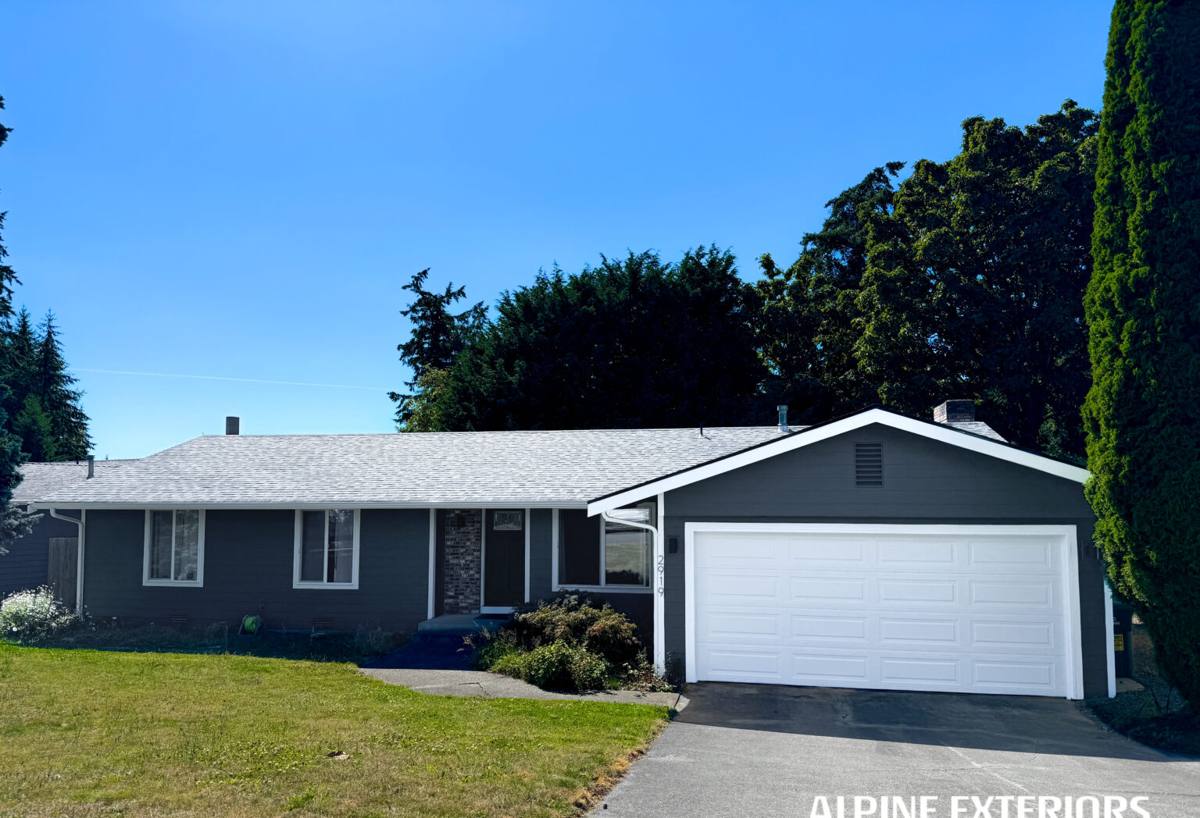
What Driving Rain and Salt Air Actually Do to a Wall
Orcas Island sits exposed to weather rolling off the Strait of Georgia and the open water of the Salish Sea. Storms here don't just drop rain straight down — wind-driven rain hits siding at an angle, again and again, for months at a stretch. That matters more than most homeowners expect, because almost every siding failure we get called out to inspect isn't about the face of the panel. It's about what happened behind it.
Add salt air into the mix, especially for the many Orcas homes with water views or waterfront exposure, and you've got a second stressor working on the material around the clock. Salt-laden moisture accelerates the breakdown of fasteners, adhesives, and plastics faster than plain fresh water does. It's a slow process, which is exactly why it's easy to underestimate — the damage shows up years after installation, long after the crew that hung the siding is gone.
Why Vinyl Struggles With This Combination Specifically
Vinyl siding is a thin extruded plastic panel that hangs loosely on nailing flanges, designed to expand and contract with temperature — it's built to move. That design works fine in dry, moderate climates. In a marine climate with sustained wind-driven rain, the loose-hanging design and the panel laps become an entry point. Water gets pushed behind the panels during storms, and vinyl's own installation spec assumes that water and just gives it somewhere to drain — it doesn't actually seal the wall the way homeowners assume a "siding" product should.
The Moss Problem Nobody Warns You About
San Juan County's long wet season — mild temperatures, low sun angle, persistent damp — is close to ideal growing conditions for moss and algae on exterior surfaces. This isn't unique to vinyl, but vinyl's textured woodgrain surface and its many horizontal laps give moss and mildew more grip points and more shaded, damp pockets than a smoother, better-drained material. Once moss establishes itself in the laps and J-channels, it holds moisture against the wall long after the rain has stopped, and it's genuinely difficult to clean without either damaging the panel or driving water into the seams you're trying to protect.
Over a full moss season, most Orcas homeowners we talk to end up pressure washing or scrubbing siding at least once a year just to keep it looking presentable — not because the siding failed, but because the climate keeps feeding the growth back.
Installation Sensitivity: Small Mistakes, Big Consequences
Vinyl siding is often marketed as easy to install, and mechanically it is — that's part of its appeal to budget crews. But "easy" and "forgiving" aren't the same thing. Vinyl has to be hung loose enough to expand and contract with temperature swings, nailed in the center of the slot rather than tight, and lapped correctly so wind-driven rain has a real drainage path instead of a shortcut behind the wall.
On a calm, dry-climate installation, a slightly-too-tight nail or a rushed lap might never cause a visible problem. On Orcas Island, where the wall assembly gets tested by driving rain most winters, those same shortcuts show up as buckled panels, water staining at the laps, or moisture intrusion behind the cladding within a few years. We've seen this pattern often enough on other people's work that we stopped being willing to bet a homeowner's wall assembly on every future crew nailing the tolerances exactly right, every single course, for the life of the house.
What Happens to Vinyl Over Time in a Marine Climate
Fading and Chalking
UV exposure combined with salt air tends to accelerate the fading of vinyl's color pigment faster than manufacturers' warranty literature suggests for milder climates. Darker colors fade faster and more visibly, which is part of why vinyl color options have historically skewed toward lighter, less committal shades.
Brittleness
Vinyl becomes more brittle with age and with repeated temperature cycling. A panel that flexed without issue in year two can crack under the same impact — a wind-thrown branch, a ladder bump — in year fifteen. Once a panel cracks, matching the faded color of the surrounding siding for a repair is rarely possible.
Seam and Fastener Wear
The overlapping joints and the nailing flange system that make vinyl fast to install are also the parts most exposed to repeated moisture cycling. Over enough years in this climate, those joints are where we most consistently find the first signs of water intrusion.
Vinyl vs. James Hardie Fiber Cement: A Straight Comparison
We're not going to pretend this comparison is neutral — we install one of these products and not the other. But the underlying facts hold up regardless of who's telling you:
| Factor | Vinyl Siding | James Hardie Fiber Cement |
|---|---|---|
| Base material | Extruded PVC plastic | Cement, sand, and cellulose fiber |
| Combustibility | Combustible, can melt or deform near heat sources | Non-combustible |
| Behavior in driving rain | Relies on drainage behind loose-hung panels | Installed as a tighter, more weather-resistant wall system |
| Moss/algae resistance | Textured surface holds moisture and growth | Denser, more paintable surface, easier to clean |
| Color retention | Fades and chalks with UV and salt exposure | ColorPlus factory finish baked on, warrantied against fading |
| Impact resistance | Becomes brittle, cracks with age | Rigid and impact-resistant at any age |
| Typical installed cost | Lower upfront | Moderate to higher upfront |
| Warranty structure | Often prorated after early years | Long-term, transferable non-prorated coverage on approved installs |
The upfront cost gap is real, and we won't pretend otherwise — vinyl is cheaper to buy and faster to hang. But "cheaper to install" and "cheaper over the life of the house" are two different claims, and in a climate this demanding, the second one tends to favor the more durable material.
Why We Standardized on James Hardie Instead
We didn't choose Hardie because it's trendy. We chose it because fiber cement, done right, handles the exact conditions that give vinyl trouble here: it doesn't rely on a loose-hung, self-draining design to survive wind-driven rain, it's non-combustible, its factory ColorPlus finish is engineered to hold color under UV and salt exposure far longer than vinyl's pigmented plastic, and Hardie's HZ5 product line is specifically engineered for climates with sustained moisture exposure — which describes San Juan County about as well as any region in the country.
It's also a product we can warranty with confidence. James Hardie backs correctly installed siding with a genuinely long, transferable warranty, which matters to buyers if you ever sell the home — a real consideration in a market where waterfront and view properties turn over regularly.
What Correct Fiber Cement Installation Actually Requires
Switching materials doesn't automatically solve anything if the installation is careless — fiber cement has its own tolerances, and the benefits above only hold if the work is done to spec. Here's what we hold every install to:
- Proper rain-screen or drainage gap behind the cladding, not direct-to-sheathing in high-exposure areas
- Correct nail spacing and fastener depth per the Hardie installation manual, not "close enough"
- Factory-cut and pre-primed edges sealed at every field cut, not left raw
- Proper flashing and kick-out details at every roof-to-wall intersection, deck ledger, and window head
- Manufacturer-specified clearance from grade, decks, and roof lines to avoid wicking moisture
- Caulking only where Hardie's spec calls for it — not as a substitute for correct flashing
- Color and product line matched to the home's specific sun and wind exposure
A homeowner shopping for any exterior contractor — for Hardie or otherwise — should ask to see these details specifically, not just take "we do siding" at face value.
When Vinyl Might Still Make Sense
We'll say this plainly: if you're renting out a property short-term, working with a very tight budget, or maintaining a structure you don't expect to own long-term, vinyl's lower upfront cost is a legitimate consideration and we're not going to tell you it's the wrong call for every situation. What we won't do is install it ourselves and represent it as a long-term solution for a primary residence exposed to Orcas Island's salt air and storm season, because that's not a standard we're willing to put our name behind.
Ready to Talk Through Your Options
If you're planning a siding project on Orcas Island, we're happy to walk your home, look at its specific exposure to wind, rain, and salt air, and give you an honest read on what will actually hold up — not just what's cheapest to hang. Reach out for a free, no-pressure estimate using the form below.