 Orcas Island Siding
 Siding Built for Island Weather
Friday Harbor and the rest of the San Juan Islands sit in a marine environment that's genuinely different from siding conditions on the mainland. Homes here face salt-laden air off the water, long stretches of driving rain, and shaded, moisture-trapping tree cover that keeps siding damp far longer than a typical dry-season afternoon. Add the logistics of getting materials and crews to an island by ferry or barge, and you have a place where the wrong siding choice, or the wrong installer, causes problems that don't show up for a few years and then show up all at once.
We work throughout Orcas Island and the surrounding San Juan County communities, including Friday Harbor, and we've built our entire approach around one decision: we install James Hardie fiber cement siding exclusively. Not because it's the only siding product on the market, but because after years of exterior work in this climate, it's the one we're willing to put our name behind.
What Salt Air and Marine Moisture Actually Do to a Home
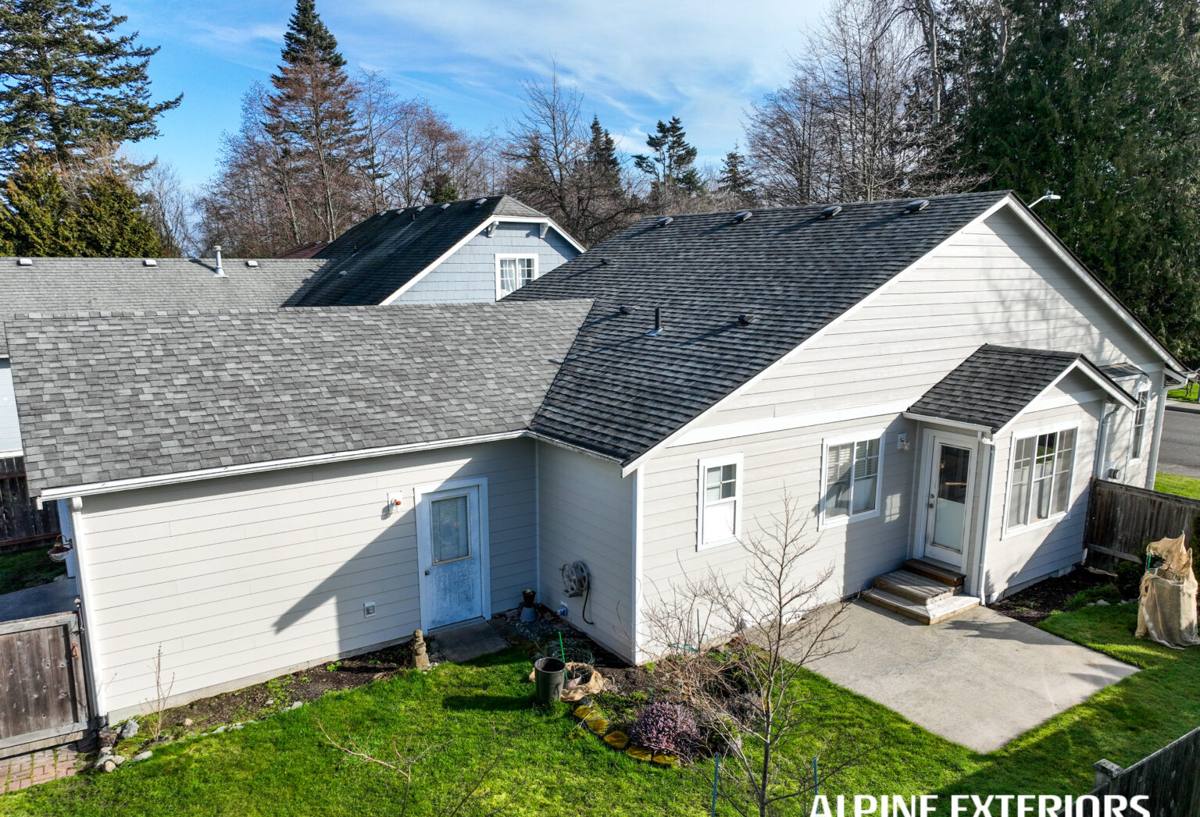
Coastal and island homes take on moisture in ways that inland homes simply don't. Salt spray carried on wind settles on exterior surfaces and accelerates corrosion of fasteners, trim, and any material that isn't engineered to resist it. Combined with near-constant humidity swings, that salt exposure is hard on paint film, hard on wood fiber, and hard on the adhesives and seams in some engineered products.
The result over time is predictable: fading and chalking on lower-grade finishes, soft spots where moisture has worked its way behind panels, and fastener staining that bleeds through paint. None of this happens overnight. It happens over five, eight, ten years of freeze-thaw cycles, wind-driven rain, and salt air doing slow, steady damage to a material that wasn't built for it.
Driving Rain and Wind Exposure
Storms coming off the Strait of Juan de Fuca and the Salish Sea don't just drop rain straight down, they drive it sideways into walls, seams, and trim. Siding that isn't installed with correct flashing, gapping, and drainage behind it will eventually let that water find a way in. This is as much an installation issue as a product issue, which is part of why we're careful about both.
Moss, Shade, and the Long Wet Season
A lot of San Juan County housing stock sits under tree cover, whether that's fir, cedar, or madrona canopy. Shade keeps siding cooler and slower to dry after rain, which is exactly the environment moss and algae prefer. On wood-based products, sustained moss growth can hold moisture against the surface long enough to start breaking down the material underneath. On any siding, moss buildup left unaddressed traps organic debris in seams and butt joints, which is where rot and moisture intrusion tend to start.
Fiber cement doesn't feed moss or algae growth the way wood fiber can, and it doesn't swell or soften when it stays damp for extended periods, which matters a great deal in a place where "extended periods of damp" describes about half the calendar year.
Why We Only Install James Hardie Fiber Cement
We get asked fairly often why we don't offer vinyl, LP SmartSide, cedar, or other fiber cement brands like Cemplank or Allura. The honest answer is that we looked at the real-world performance of each of those in this specific climate and decided the trade-offs weren't ones we wanted to hand our customers.
- Vinyl siding is affordable and low-maintenance in mild climates, but it can warp or crack in temperature swings, it's not fire-resistant, and its appearance is limited compared to a factory-finished fiber cement plank.
- LP SmartSide is an engineered wood product. It performs reasonably well when detailing is perfect, but wood-based substrates are inherently more vulnerable to sustained moisture exposure, which is exactly what island weather delivers.
- Cedar and primed spruce look great when new, but they demand a repainting and caulking maintenance schedule that most homeowners underestimate, and they're combustible, which matters more every year given regional wildfire risk.
- Other fiber cement brands (Cemplank, Allura) are legitimate products, but we've standardized on one manufacturer so we can guarantee consistent quality control, a single factory finish system, and one warranty structure across every job we do.
None of this means those products are junk. It means we made a professional call to specialize in one system we trust completely, rather than installing five different products to five different standards.
James Hardie's HZ5 System and ColorPlus Finish
James Hardie engineers its siding by climate zone, and the Pacific Northwest, including the San Juan Islands, falls under the HZ5 line, built specifically to resist moisture, freeze-thaw cycling, and the kind of sustained wet weather we get here. It's non-combustible fiber cement, which also matters for wildfire-conscious insurance considerations even on an island.
The ColorPlus factory finish is baked on under controlled conditions rather than field-applied, which means better fade resistance and a finish that holds up to UV and salt exposure far longer than a site-painted surface. It also comes with a stronger, transferable limited warranty, which is worth something concrete if you ever sell the home.
Where Fiber Cement Makes Sense vs. Where People Assume It Doesn't
| Factor | James Hardie Fiber Cement | Wood-Based / Vinyl Alternatives |
|---|---|---|
| Moisture resistance | Engineered for wet climates (HZ5) | More vulnerable to prolonged dampness |
| Salt air exposure | Finish holds up over time | Faster fading, chalking, corrosion at fasteners |
| Fire resistance | Non-combustible | Combustible (wood, vinyl melts) |
| Maintenance | Occasional wash, no repainting cycle | Regular repainting/caulking (wood), UV wear (vinyl) |
| Warranty | Strong, transferable limited warranty | Varies widely, often shorter or non-transferable |
A Full Exterior Approach: Siding, Roofing, Windows, and Decks
Siding rarely fails in isolation. A roof that's shedding water incorrectly, windows with failed flashing, or a deck ledger that's trapping moisture against the wall can all undermine even a well-installed siding job. Because we handle roofing, windows, and decks in addition to siding, we look at the whole envelope of a home rather than treating each surface as a separate project. On an island, where getting a crew back out for a second visit costs more time and coordination than it would in a mainland suburb, that matters even more.
When we're on site for a siding estimate in Friday Harbor or elsewhere in the San Juan Islands, we're also checking flashing details at roof lines and window openings, drainage planes, and any deck connections that touch the wall assembly, because those are the spots where water damage actually starts.
Why a Local Crew Matters Out Here
Island work has its own logistics. Materials have to be scheduled around ferry sailings or barge runs, weather windows for exterior work are tighter, and a crew that doesn't already know the rhythms of San Juan County scheduling will burn days you don't get back. A local crew also understands the specific microclimates around the islands, a shaded north-facing wall on Orcas Island behaves differently than an exposed south wall closer to the water in Friday Harbor, and that affects both product choice and installation detailing.
There's also a simple accountability argument: a contractor based in the islands is going to be around for the life of your warranty, not just for the install.
What to Expect From the Process
A typical siding project starts with an on-site assessment of your existing exterior, including any moisture damage, moss buildup, or flashing issues we find along the way. From there we walk through Hardie's plank profiles, textures, and ColorPlus color options, price out the scope honestly, and schedule around weather and ferry logistics. Installation itself involves correct fastening patterns, proper gapping and caulking at seams, and flashing details at every penetration, since that's where fiber cement's performance advantage actually gets realized or lost.
Homeowner Maintenance Checklist
- Rinse siding annually to clear salt residue and organic buildup, especially on shaded walls
- Inspect caulking at trim and window seams every year or two for cracking or gaps
- Trim back tree and shrub growth that keeps siding shaded and slow to dry
- Check gutters and downspouts before the wet season to keep water off wall surfaces
- Look for moss buildup at butt joints and corners, where debris tends to collect
- Have flashing at roof lines, windows, and decks checked periodically, not just siding itself
Get an Honest Look at Your Home
If you're weighing a siding project in Friday Harbor or anywhere else in the San Juan Islands, we're happy to come take a straightforward look at what your home's exterior is dealing with and what it would take to fix it right. There's no pressure and no obligation, just an honest assessment from a crew that works in this climate every week. Use the form below to request a free estimate.