 Orcas Island Siding
 What Orcas Island Does to a House's Siding
Orcas Island sits out in the San Juans, surrounded by saltwater on every side, and that changes what a house needs from its exterior. Salt-laden air corrodes fasteners and finishes faster than it does inland. Wind-driven rain off the Sound doesn't just fall straight down — it gets pushed sideways into seams, laps, and trim joints that would stay dry on a more sheltered lot. And the mild, wet San Juan County winters that make the island so green also make it a long moss season: shaded north walls and anything under tree cover can stay damp for weeks at a stretch. Siding on Orcas isn't decorative — it's the first line of defense against a climate that works on a house year-round, not just during a few storms.
When we talk about "siding replacement" on Orcas, we mean tearing off failing material down to the sheathing, correcting whatever let moisture in the first time, and installing a system engineered to hold up in a marine environment — not just swapping old boards for new ones in the same condition they failed in.
How to Tell Your Siding Has Reached the End of the Road
Most Orcas homeowners don't wake up one day and decide to replace siding — they notice a problem, watch it for a season or two, and eventually realize patching isn't going to cut it. Common signs we see on the island:
- Soft or spongy spots when you press on the siding, especially near the bottom courses or under windows
- Paint that won't hold — blistering, peeling, or needing repainting every couple of years
- Persistent moss or black-green staining that comes back within months of cleaning
- Visible warping, cupping, or buckling of boards or panels
- Gaps opening up at seams, corners, or trim where caulking has failed repeatedly
- Rot at the bottom edges, corners, or anywhere siding meets a deck, porch, or roofline
Any one of these can sometimes be spot-repaired. Several at once, or rot that's spread past the surface into the sheathing, usually means the smarter long-term move is a full replacement done correctly rather than another round of patches.
Why We Only Install James Hardie Fiber Cement
We standardized on James Hardie fiber cement siding for every home we work on, including Orcas Island, and we don't install vinyl, LP SmartSide, or unfinished wood siding as alternatives. That's not a marketing position — it's a practical one, based on what actually survives a marine climate without constant upkeep.
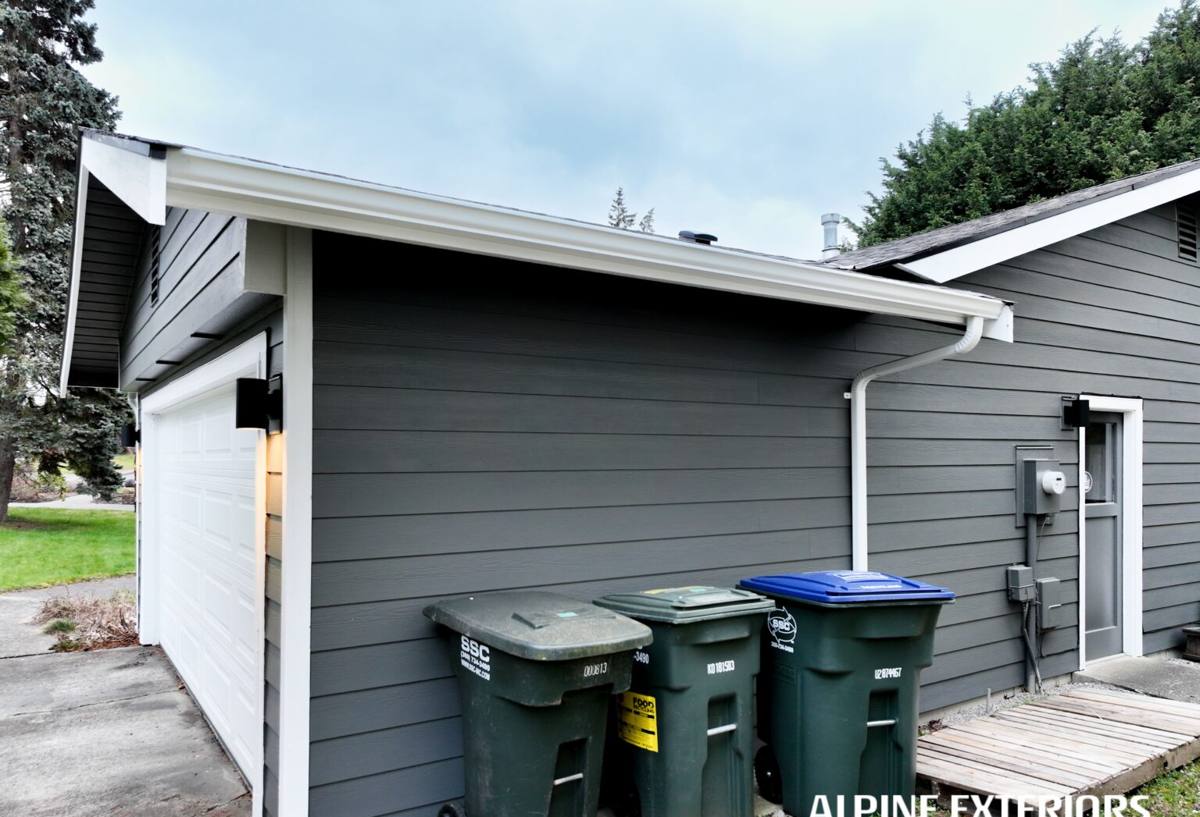
Fiber cement is non-combustible, which matters in a county where wildfire risk and burn bans are a real seasonal concern. It doesn't feed mold or moss the way wood fiber can, and it doesn't warp, crack, or go brittle in cold, damp winters the way some engineered wood products can when moisture gets past a cut edge or fastener hole. James Hardie's ColorPlus factory finish is baked on under controlled conditions, which gives it better fade and chip resistance than field-applied paint — a real advantage on an island where getting a painter back out for touch-ups means scheduling around a ferry.
James Hardie also makes climate-specific product lines, including HZ5 formulations engineered for regions with more moisture cycling and freeze-thaw exposure — which describes the Pacific Northwest coast, including the San Juans, better than a one-size-fits-all siding product does. Combined with a transferable warranty that stays with the house if you sell, it's the product we're comfortable standing behind on every job.
What We Don't Install, and Why
We get asked about vinyl and LP SmartSide fairly often, since both are common on the mainland. Vinyl can crack in a hard freeze and tends to fade unevenly over time, with no factory finish to fall back on once it does. LP SmartSide is a wood-strand product — well-engineered, but still wood at its core, meaning cut edges and fastener penetrations need to be sealed perfectly and stay sealed, which is a harder standard to hold up over decades in a wet marine climate. Cedar and primed spruce look great on day one but demand a repainting and caulking schedule that most homeowners underestimate. None of these are bad products in the right context — they're just not what we're willing to warranty and maintain a reputation on for island homes exposed to this much salt air and rain.
What a Correct Siding Replacement Actually Involves
The siding itself is only part of the system. Most siding failures we find on Orcas trace back to something behind the boards, not the boards themselves. A proper replacement addresses the whole wall assembly:
- Full tear-off down to the sheathing so we can inspect for hidden rot or water damage before it's covered up again
- Repair or replacement of any damaged sheathing, framing, or trim found underneath
- A correctly lapped water-resistive barrier (weather barrier) installed shingle-style so water sheds outward, not into the wall
- Proper flashing at every window, door, deck ledger, and roofline intersection — the spots where most leaks actually start
- Correct fastener spacing and type, matched to Hardie's installation specs, not generic nail schedules
- Manufacturer-specified gaps and sealant at butt joints, corners, and penetrations to allow for expansion without trapping moisture
- Final inspection of caulking, trim, and paint lines before we call the job finished
Skipping any one of these steps is how a siding job looks fine for a year or two and then fails early — usually right where the shortcut was taken.
Our Process, Start to Finish
1. On-Site Assessment
We walk the exterior with you, note problem areas, and check for soft spots, staining, and failed trim or flashing — not just the parts visible from the driveway.
2. Honest Scope and Estimate
You get a clear breakdown of what needs full replacement versus what can reasonably be left alone, with a written estimate before any work starts.
3. Material Ordering and Scheduling
Because Orcas is ferry-dependent, we plan material deliveries and crew scheduling around ferry sailings up front, so a missed boat doesn't turn into a stalled project.
4. Tear-Off and Wall Inspection
Old siding comes off, the sheathing and framing get inspected, and any hidden damage is documented and discussed with you before we close the wall back up.
5. Weather Barrier, Flashing, and Installation
We install the water-resistive barrier, flashing, and James Hardie siding to manufacturer specification, with attention to the details that matter most in a wet, salty climate.
6. Final Walkthrough
We go around the house with you, point out what was done, and address anything on your list before we consider the job complete.
What Drives the Cost
Every home is different, but the same handful of factors move the price of a siding replacement up or down. This isn't a quote — it's a way to think about where your project will land.
| Factor | Why It Matters |
|---|---|
| Extent of existing damage | Rotted sheathing or framing found during tear-off adds repair work beyond the siding itself |
| Home size and wall complexity | More corners, dormers, and trim details mean more cutting, flashing, and labor time |
| Siding profile chosen | Lap siding, shingle-style panels, and board-and-batten each have different material and labor costs |
| Access and site conditions | Steep lots, limited staging area, or tree cover can slow crew logistics on island properties |
| Trim and detail work | Window and corner trim, fascia, and soffit work add scope beyond flat wall siding |
| Ferry and delivery logistics | Material timing on Orcas is planned around sailings, which affects scheduling more than mainland jobs |
Why a Crew That Already Works on Orcas Island Matters
Island jobs run differently than mainland ones. Every delivery, every crew trip, and every supply run depends on a ferry schedule, and a contractor who hasn't planned for that will burn days waiting on a boat instead of working. A crew already familiar with Orcas knows how to batch material orders, plan crew days around sailing times, and avoid the stop-and-start delays that come from treating an island job like any other job. That experience also shows up in smaller ways — knowing how exposed a given lot is to wind-driven rain off the water, or how much moss pressure a shaded north wall near tree cover is going to see, informs decisions about flashing details and product selection before a single board goes up.
After Installation: What Upkeep Actually Looks Like
One of the real advantages of James Hardie fiber cement with a factory ColorPlus finish is how little it asks of you afterward compared to wood or field-painted siding. A rinse down once or twice a year to knock off salt residue and any moss starting to take hold, an annual walk-around to check caulking at trim and penetrations, and prompt attention if you ever notice a soft spot or gap is about the extent of it. That's a meaningfully lighter maintenance load than a product that needs repainting on a multi-year cycle — which, on an island where scheduling outside help means working around ferries, is worth factoring into the decision up front.
Get a Straightforward Estimate
If your siding on Orcas Island is showing wear, soft spots, or a moss problem that keeps coming back, we're happy to take a look and give you a straight answer about what it needs. Reach out for a free, no-pressure estimate using the form below.