 Orcas Island Siding
 Siding in Eastsound: Built for Orcas Island's Weather, Not Just the Mainland's
Eastsound sits at the head of Orcas Island's central bay, and it takes the weather that comes with that location: salt-laden air off the water, long stretches of driving rain through the fall and winter, and a damp shoulder season that keeps north-facing walls and shaded siding wet for days at a time. Homes here don't fail the same way a house in Spokane or even Seattle proper does. The problems that show up on Orcas Island siding are slower, quieter, and often hidden until they're expensive: moss creeping up a wall, paint that won't hold, trim that's gone soft at the corners.
We install and repair siding, roofing, windows, and decks across Orcas Island, and Eastsound is one of the areas we work in most often because of its concentration of older homes, cabins, and year-round residences that all face the same combination of salt exposure and moisture. This page covers what that climate actually does to exterior materials, how our process is built around it, and why we standardized on one siding product instead of offering the usual menu of options.
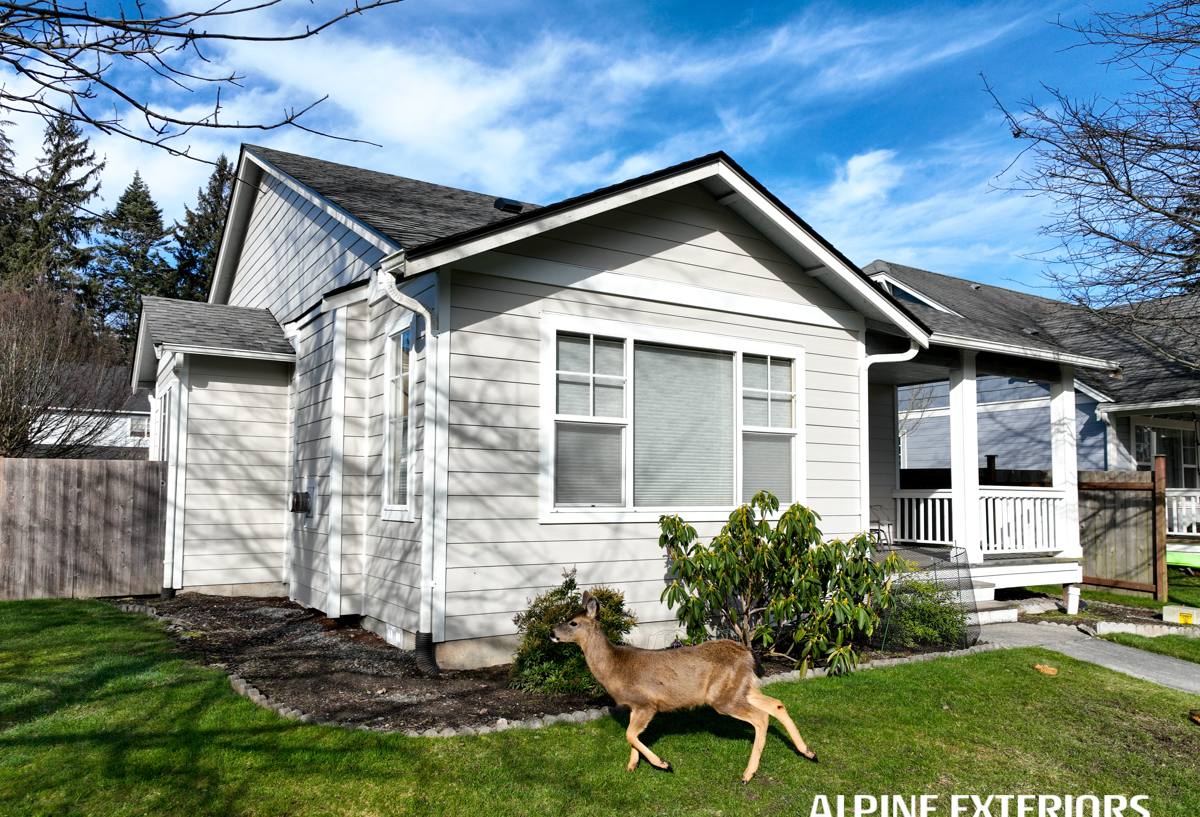
What San Juan County's Marine Climate Does to a House
Salt Air and Slow Corrosion
Being surrounded by saltwater means airborne salt settles on every exterior surface — siding, fasteners, flashing, window frames. It doesn't cause dramatic damage overnight, but over years it accelerates corrosion in exposed metal fasteners and can pit or dull finishes that aren't rated for coastal exposure. Homes closer to the water tend to show this first, but Eastsound's setting means very few properties are fully sheltered from it.
Driving Rain and Wind-Driven Moisture
San Juan County storms often come with sideways rain rather than straight-down rain, which pushes water into laps, seams, and trim joints that a calmer climate would never test. Siding systems that rely on paint film alone, or that swell and shrink with moisture, are the ones that struggle most under this kind of exposure. Water intrusion at poorly flashed windows and trim is one of the most common repair calls we get on the island.
Moss, Algae, and the Long Damp Season
Orcas Island's moss season isn't a few weeks — it's most of the year on shaded, north-facing, or tree-covered walls. Moss and algae hold moisture against the surface of siding and trim, which is exactly the condition that rots wood-based products and stains lighter-colored finishes. A siding choice that resists moisture absorption at the material level, not just at the paint layer, holds up dramatically better here than one that doesn't.
Why We Only Install James Hardie Fiber Cement Siding
We get asked fairly often why we don't offer vinyl, LP SmartSide, or other fiber cement brands like Cemplank or Allura alongside Hardie. The honest answer is that after years of doing repair and replacement work across the San Juans, we stopped installing products that don't hold up to this specific climate, and we built our business around the one that does.
Why Not Vinyl
Vinyl siding is inexpensive and easy to install, and it does fine in mild, dry climates. On Orcas Island, its weaknesses show up faster: it expands and contracts with temperature swings, can warp or crack in wind-driven weather, and its seams and J-channels are common points where wind-blown rain gets behind the panel. It's also a poor match visually for the timber-and-shingle character of most island homes.
Why Not LP SmartSide
LP SmartSide is an engineered wood product — strand board with a resin-saturated overlay. It performs reasonably in drier regions, but it's still wood at its core, which means it's more vulnerable to sustained moisture exposure than fiber cement. In a climate with a moss season as long as ours, and rain that drives into seams and cut edges, engineered wood siding is more likely to swell, delaminate, or take on rot at exposed edges over time than a cement-based product.
Why Not Other Fiber Cement Brands
Cemplank and Allura are legitimate fiber cement products and share the same basic non-combustible, moisture-resistant material advantages Hardie does. Where we draw the line is factory finish and product engineering specific to marine and wet climates. James Hardie's ColorPlus finish is baked on and warrantied against fading and chipping in a way we've found more consistent in the field, and Hardie's HZ5 product line is specifically engineered for wet, cold, coastal climates like ours — freeze-thaw cycling, humidity, and moisture exposure all factored into the plank formulation. We'd rather install one product we trust completely than several we have reservations about.
What Hardie Gets Right for This Climate
- Fiber cement doesn't absorb water the way wood-based products do, so it resists the rot that moss and prolonged dampness cause
- It's non-combustible, which matters given the island's reliance on wildfire-aware building practices in dry summer months
- ColorPlus factory finish holds color and resists chipping better than field-applied paint, reducing repainting cycles
- HZ5 formulation is built for exactly this combination of moisture and temperature swing
- Backed by a strong transferable warranty, which matters on an island where homes change hands often and buyers want documented exterior condition
How We Approach a Siding Job in Eastsound
Assessment First
Before we talk product or price, we look at what's actually happening on the house: where moisture is getting in, which walls take the worst weather exposure, whether existing sheathing or framing has taken damage, and what the trim and flashing details look like. On older Orcas Island homes this step often turns up problems that predate any decision about siding material.
Flashing and Water Management
Given how much of our regional damage comes from wind-driven rain finding its way behind siding rather than through it, correct flashing at windows, doors, and horizontal trim is as important as the siding product itself. We install James Hardie panels with attention to weather-resistive barrier integration, proper lap and gap spacing, and flashing details sized for driving rain, not just vertical rainfall.
Fastening for Coastal Exposure
We use corrosion-resistant fasteners appropriate for salt air exposure. This sounds like a small detail, but fastener corrosion is one of the more common hidden failure points we find when we open up older siding on the island — streaking, staining, and eventual loosening all trace back to it.
Comparing Siding Options for a Coastal Island Home
| Factor | Vinyl | Engineered Wood (LP SmartSide) | James Hardie Fiber Cement |
|---|---|---|---|
| Moisture resistance | Moderate; seams vulnerable | Lower; wood-based core | High; cement-based, doesn't swell or rot |
| Performance in wind-driven rain | Weak at seams and channels | Moderate; edges are vulnerable | Strong when properly flashed |
| Moss/algae resistance | Surface growth only | Growth plus underlying rot risk | Surface growth only; material unaffected |
| Fire resistance | Low; melts/deforms | Combustible | Non-combustible |
| Finish longevity | Can fade, doesn't repaint well | Field paint required over time | Factory ColorPlus finish, long fade resistance |
| Typical lifespan when installed to spec | 20-30 years | 20-30 years | 30-50+ years |
These are general industry patterns, not guarantees for any specific project — actual performance always depends on installation quality, site exposure, and maintenance.
Roofing, Windows, and Decks in the Same Climate
Siding rarely fails in isolation on Orcas Island. A roof that's shedding water onto a wall, or a window that isn't flashed correctly, will undermine even the best siding installation. Because we handle roofing, windows, and decks as well, we look at the whole exterior envelope rather than treating siding as a standalone project. Deck framing and ledger connections in particular take a beating from the same moisture and moss exposure that affects siding, and we see rot at deck-to-house connections often enough that we always check it during a siding assessment.
Maintenance Homeowners in Eastsound Should Actually Do
- Rinse siding and trim yearly, especially on shaded or north-facing walls, to slow moss and algae buildup
- Keep gutters clear so overflow isn't running down siding during heavy rain events
- Trim back vegetation and tree cover that keeps walls damp longer than they need to be
- Check caulking and sealant at trim joints and window edges every couple of years — this is where wind-driven rain gets in first
- Have flashing and fastener condition checked periodically, particularly on homes within sight of the water
None of this is unique to Hardie siding, but fiber cement gives you more margin for error if maintenance slips for a season, which happens on a lot of Orcas Island properties that are seasonal or vacation homes.
Why a Local Crew Matters on Orcas Island
Working on an island changes how a project has to be planned. Material deliveries depend on ferry schedules, weather windows for exterior work are narrower than on the mainland, and access to some properties is limited by narrow roads or seasonal conditions. A crew that works San Juan County regularly plans around these realities instead of treating them as surprises. It also means we've seen how James Hardie siding actually performs on Orcas Island homes over years, not just in a manufacturer's climate data sheet — which is part of why we trust it enough to install nothing else.
If you're planning a siding project in Eastsound or elsewhere on Orcas Island, we're happy to take a look at your home and give you a straightforward, no-pressure estimate — use the form below to get started.