 Orcas Island Siding
 Building Exteriors for Shaw Island's Marine Climate
Shaw Island sits in the middle of San Juan County, surrounded by the same saltwater channels and weather patterns that shape every island in the archipelago. Homes here face a version of the Pacific Northwest climate that's more concentrated than what you'd find on the mainland: more wind off open water, more moisture that lingers in shaded, tree-covered lots, and a shorter window each year when siding, trim, and roofing actually get to dry out completely. If you own property on Shaw Island, you already know your house works harder than a house in a drier, more sheltered part of the state.
We're a siding, roofing, window, and deck contractor serving Orcas Island and the surrounding San Juan Islands, including Shaw. This page is meant to be useful whether you're planning a renovation this year or just trying to understand why your current siding is struggling.
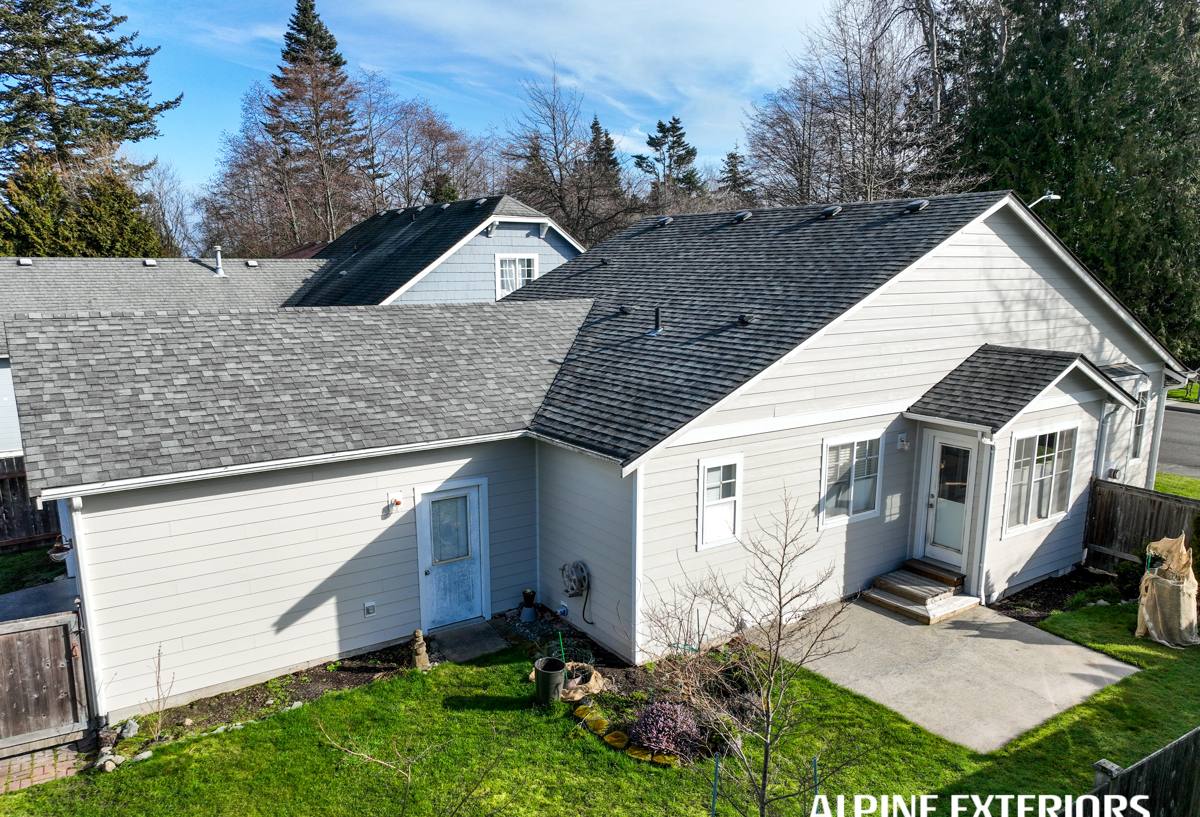
What the Climate Actually Does to a House Here
Salt Air and Wind-Driven Rain
Salt-laden air is corrosive to fasteners, flashing, and unprotected wood fiber, and it doesn't stay near the shoreline — wind carries it well inland on an island this size. Combine that with wind-driven rain, which pushes water sideways into laps, seams, and trim joints instead of letting it run straight down, and you get a building envelope that's under more stress than standard siding installation instructions usually assume. Poorly detailed flashing or caulk-dependent joints that might hold up fine in a drier climate tend to fail faster out here.
The Long Moss Season
San Juan County's wet season stretches long, and shaded, tree-sheltered building sites — common on Shaw Island — stay damp for months at a stretch. That's exactly the environment moss and algae need to take hold on north-facing walls, roof valleys, and anywhere airflow is limited. Once moss establishes on a porous or damaged siding surface, it holds moisture against the material, and that ongoing dampness accelerates rot, delamination, and finish failure. Roofing sees the same pressure, which is part of why we treat siding and roofing as one connected system rather than separate problems.
Freeze-Thaw and UV Cycling
Shaw Island doesn't get the deep freezes of inland Washington, but it does see enough freeze-thaw cycling in winter to matter, especially where water has already gotten into a seam or a cracked coating. Summer brings the opposite stress: strong UV off open water that fades paint and breaks down lesser coatings faster than homeowners expect. A material that can't handle both ends of that cycle ages visibly within a few years.
Why We Install Only James Hardie Fiber Cement
We made a deliberate decision not to install LP SmartSide, vinyl siding, Cemplank, Allura, primed spruce, or cedar. That's not a knock on every homeowner who has one of those products on their house — plenty of them are maintained well and look fine. It's a standard we hold for what we're willing to put our name behind, based on how these materials perform specifically in a marine, wet-winter environment like the San Juan Islands.
The trade-offs we see in the alternatives
- Vinyl siding is affordable and low-maintenance in the sense that it doesn't need paint, but it's a petroleum-based product that can warp in temperature swings, crack on impact in cold weather, and fade under sustained UV — and once the color fades, there's no refinishing it, only replacing it.
- LP SmartSide and other engineered wood products use wood strand cores that are more moisture-resistant than raw lumber but still wood at heart. In a climate with this much sustained dampness, edge-swelling and moisture intrusion at cut ends and seams are a real long-term risk if installation and caulking aren't kept up perfectly, year after year.
- Cemplank and Allura are both fiber cement products and share Hardie's basic moisture and fire resistance advantages. Our decision to standardize on Hardie comes down to product line depth, factory finish options, and warranty structure in our market, not a claim that competing fiber cement is defective.
- Primed spruce and other traditional wood siding can look beautiful, but it demands a repainting cycle that gets harder to keep up with the longer a homeowner owns an island property remotely, and any gap in that maintenance shows up fast as rot in a climate this wet.
What Hardie gets right for this climate
James Hardie fiber cement is non-combustible, doesn't support rot the way wood-based products can, and holds up to sustained moisture exposure without the swelling or delamination risk of engineered wood. The ColorPlus factory finish is baked on under controlled conditions rather than field-painted, which matters a lot in a place where good painting weather is limited and access for touch-ups is never as simple as it is on the mainland. Hardie also engineers specific product lines — its HZ5 and HZ10 climate zones — for different moisture and temperature exposures, so the material specified for a Shaw Island install is matched to what this climate actually demands rather than a one-size-fits-all board.
Why a Local Crew Matters Out Here
Access to Shaw Island runs through the Washington State Ferries system, and that reality shapes everything about how exterior work gets scheduled and staged. A crew that isn't used to island logistics will underestimate material staging, weather windows, and ferry timing, and that shows up as delays, rushed work, or contractors who simply stop taking island jobs partway through a project. We plan material deliveries and crew schedules around ferry sailings and weather from the start, not as an afterthought, because that's the only way to keep an island job moving at the pace it should.
Working this coastline regularly also means we see, year after year, which flashing details, seam treatments, and product choices actually hold up in this climate and which ones create callbacks. That kind of pattern recognition only comes from doing the work here repeatedly, not from a general contracting background applied to an island job as a one-off.
Our Services for Shaw Island Properties
Siding
Full siding replacement and repair using James Hardie lap, shingle, and panel products, with attention to the flashing and moisture-management details that matter most in wind-driven rain — proper weather-resistive barrier installation, correctly lapped flashing at every horizontal joint, and rainscreen or drainage detailing where the site calls for it.
Roofing
Roofing and siding fail for related reasons in this climate — moisture intrusion at transitions, moss buildup, and UV degradation — so we look at both together. A roof that's shedding water improperly onto a wall below will undermine even well-installed siding.
Windows
Window replacement and the flashing integration around them is one of the most common places wind-driven rain finds its way into a wall assembly. We treat window flashing as part of the siding envelope, not a separate trade handed off without coordination.
Decks
Outdoor living space on an island property takes the same salt air and moisture exposure as the siding above it. Deck framing, fasteners, and decking material all need to be specified for a marine environment, not a general Pacific Northwest spec.
Comparing Siding Materials for This Climate
| Material | Moisture/Salt Air Behavior | Maintenance Demand | Typical Longevity Here |
|---|---|---|---|
| Vinyl | Can warp, crack, and fade; not repaintable once faded | Low, but no refinishing option | Moderate; UV and cold-impact sensitive |
| LP SmartSide / engineered wood | Vulnerable at cut edges and seams if maintenance lapses | Ongoing caulk and paint upkeep required | Moderate, maintenance-dependent |
| Primed spruce / cedar | Absorbs moisture without diligent finish upkeep | High; regular repainting cycle | Shorter without consistent maintenance |
| James Hardie fiber cement | Resists moisture intrusion and rot; factory-cured finish | Low; periodic cleaning and inspection | Long, with a strong transferable warranty |
What to Expect From the Process
An exterior project on Shaw Island generally starts with an on-site assessment, since photos alone rarely capture how a specific lot's tree cover, sun exposure, and wind exposure are affecting the existing siding or roof. From there, we scope material needs, plan delivery and crew timing around ferry access, and sequence the work to take advantage of the driest available weather window. Moisture-sensitive work — tear-off, sheathing repair, and weather-resistive barrier installation — gets prioritized to minimize the time a wall is open to the weather.
Questions Worth Asking Before You Hire
- Does the contractor carry Washington state licensing and insurance, and can they provide proof without hesitation?
- Do they have direct, recent experience with island logistics — ferry scheduling, material staging, weather windows — or is this their first island job?
- What siding material are they proposing, and can they explain specifically why it's suited to a marine, wet-winter climate rather than just what's cheapest or fastest to install?
- How do they detail flashing and moisture management at seams, windows, and transitions — can they describe it, not just gesture at it?
- What does the warranty actually cover, and is it transferable if you sell the property?
If your Shaw Island home is due for new siding, a roof update, replacement windows, or a deck rebuild, we're glad to come out, take a real look at your specific site conditions, and put together a straightforward, no-pressure estimate. There's a form below to get that started.