 Orcas Island Siding
 Storm Damage Looks Different on an Orcas Island Roof
A roof on Orcas Island takes a different kind of beating than a roof twenty miles inland. You've got salt-laden wind coming off the Salish Sea, driving rain that comes in sideways during a winter blow, and a moss season that can run from October well into spring under the island's heavy tree cover. None of these things act alone — wind loosens a shingle tab, rain finds the opening, and moss holds the moisture against the roof deck long after the storm has passed. That combination is why storm damage here often looks minor from the ground and turns out to be worse once someone gets on the roof.
San Juan County sits in a wind corridor that funnels gusts through the channels between the islands, and Orcas's tree-heavy terrain means most homes have douglas fir, cedar, or madrona limbs hanging somewhere over the roofline. When a windstorm comes through, it's rarely just wind — it's wind plus falling branches plus hours of rain on a roof that may already have weak spots from the last storm nobody got around to fixing.
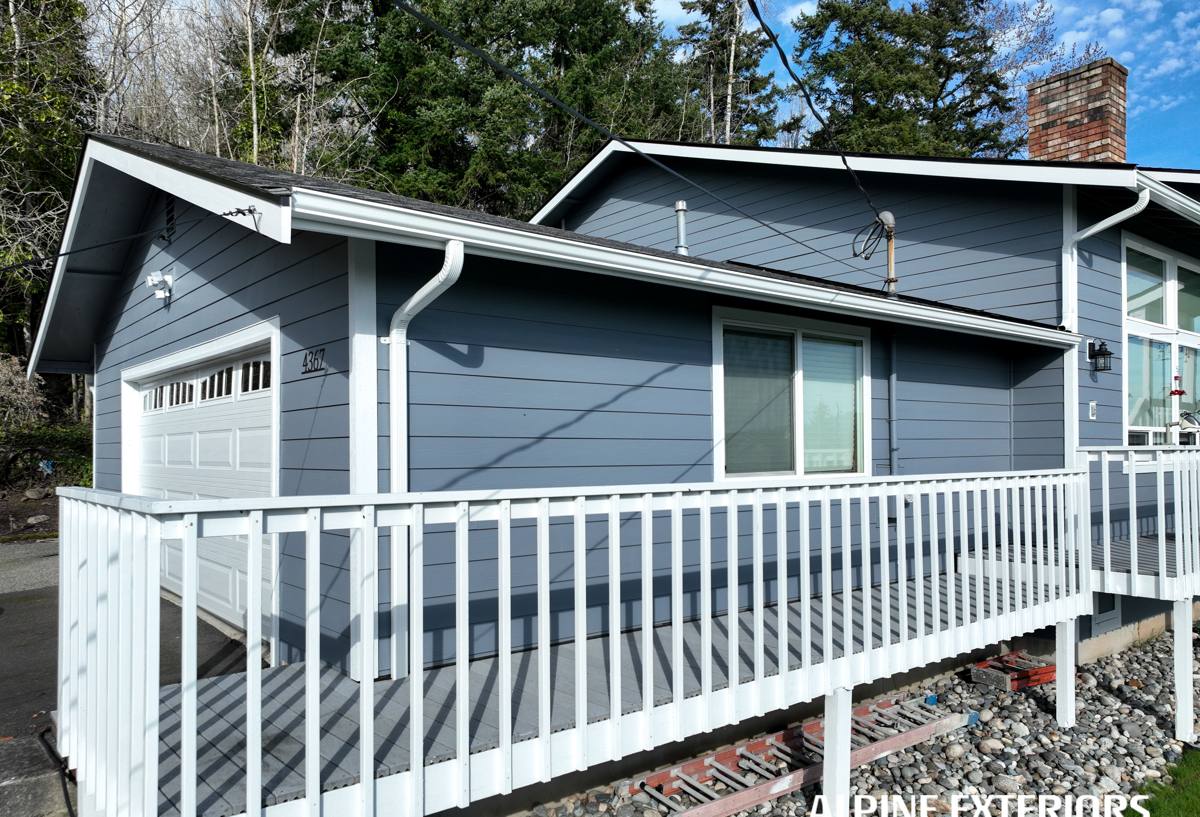
What Storm Damage Actually Looks Like Up Close
Wind-Lifted and Torn Shingles
Sustained gusts get under shingle tabs and break the seal strip, even when nothing visibly blows off. Once that seal is broken, the shingle can flap in the next wind event and let water underneath, even if it looks fine from the driveway.
Displaced or Cracked Shakes
Older Orcas homes still carry cedar shake roofs. Shakes split under impact and can shift out of their coursing during a hard blow, opening gaps that are easy to miss from the ground but obvious once you're walking the slopes.
Flashing and Valley Failures
Valleys, chimney flashing, and skylight curbs take the brunt of wind-driven rain. Flashing that's been quietly corroding from years of salt air can fail all at once during a storm rather than gradually — that's often the real point of entry, not the shingles themselves.
Falling Limb and Debris Impact
Direct hits from branches crack shingles, dent metal roofing, and can punch through decking in the worst cases. Even a glancing hit can bruise a shingle enough that it fails months later, well after the storm is forgotten.
Why Waiting Makes It Worse
A roof leak rarely stays a roof problem. Once water gets past the roofing material, it soaks the underlayment and decking, then finds its way into insulation and drywall. On an island, that timeline matters more than it might elsewhere — a delayed inspection means a delayed tarp, and a delayed tarp means another storm system has time to make the damage worse before anyone's addressed it. Wet insulation loses its R-value and stays wet long after the leak is patched, and damp wood framing left too long invites rot that no longer counts as a simple repair.
The moss factor compounds this. A gap that lets water in during a storm is also a gap that lets moss spores settle in and take hold through the wet months, so a repair that gets pushed off doesn't just sit there unchanged — it tends to get worse on its own even between storms.
How We Handle a Storm Damage Call on Orcas
Inspection and Documentation
We get on the roof, not just in the yard with binoculars. That means checking every slope, valley, and penetration for damage that isn't visible from below, and photographing everything before any repair work starts — you'll want that record for insurance regardless of who ends up doing the work.
Temporary Protection
If there's active leaking or exposed decking, the priority is stopping water intrusion the same day with tarping or temporary flashing, then scheduling the permanent repair. A roof that's actively taking on water doesn't wait for a full material order.
Permanent Repair
Depending on what the inspection shows, that's anything from replacing a section of shingles or shakes to rebuilding a valley or re-flashing a chimney. We match materials as closely as possible so a repair doesn't stand out as an obvious patch, and we check the decking underneath before closing anything back up — no covering a soft spot and hoping it holds.
Final Walkthrough
Before we call it done, we walk the repair with you, explain exactly what was found and what was fixed, and leave you with photos for your records.
Repair or Replace? What Actually Drives That Decision
Not every storm-damaged roof needs to come off. The honest answer depends on a few specific factors, and a legitimate contractor will walk you through them rather than defaulting to the biggest job.
| Factor | Leans Toward Repair | Leans Toward Replacement |
|---|---|---|
| Roof age | Under 10-12 years, otherwise sound | Near or past its expected service life |
| Extent of damage | Isolated to one slope or feature | Spread across multiple slopes or the deck itself |
| Underlying decking | Dry, solid when probed | Soft, delaminated, or rotted in multiple spots |
| Moss/moisture history | First significant issue | Repeated moss and leak problems over several seasons |
| Insurance scope | Claim covers a defined repair area | Adjuster's scope already points to full replacement |
When a roof is otherwise healthy, a targeted repair is the honest call and the right use of your money. When the damage exposes a bigger pattern — old decking, chronic moss intrusion, a roof already near the end of its service life — we'll say so plainly instead of patching something that's going to need redoing in a year or two.
Materials That Hold Up to Salt Air and Moss
What we use to make a repair matters as much as the repair itself, especially this close to saltwater. Standard electro-galvanized fasteners and flashing corrode faster in a marine environment than they would inland, so for exposed and coastal-facing homes we favor stainless steel fasteners and heavier-gauge, corrosion-resistant flashing metals. It costs a little more up front and it's worth it on a roof that's going to face the same salt air for another fifteen years.
For moss, the more useful move is often prevention built into the repair itself rather than a one-time treatment. Zinc or copper strips installed near the ridge let rainwater carry trace metal ions down the roof slope, which slows moss regrowth in shaded, tree-covered areas without chemical treatments that need reapplying every year. We also make sure valleys and gutters are clear and properly pitched during any repair, since standing water and trapped debris are what let moss get a foothold in the first place.
Documenting the Damage for Your Insurance Claim
Most storm damage repairs on Orcas end up going through homeowners insurance, and the strength of that claim usually comes down to documentation. We photograph the damage before touching anything, note moisture readings where relevant, and provide a clear, itemized scope of what's damaged and what it takes to fix it correctly. We write that scope based on what the roof actually needs — not padded to match what an adjuster might approve, and not trimmed to make a lowball offer look sufficient. If you want a second opinion alongside your adjuster's assessment, we're glad to walk the roof with you and explain, in plain terms, where we agree and where we don't.
Why a Crew Already Working Orcas Matters After a Storm
Every contractor conversation on the island eventually comes back to the ferry. A mainland crew responding to storm damage has to work around Washington State Ferries' schedule just to get a truck and materials onto the island, which can turn a same-day tarp job into a two- or three-day wait. That gap is exactly when a small leak becomes a soaked ceiling.
Being based and working regularly on Orcas means we're not starting that clock from the mainland. We know the island's roof styles, from older cedar shake homes near Eastsound to newer metal and architectural-shingle roofs out toward West Sound and Deer Harbor, and we keep an eye on what island exposure does to a roof over time rather than learning it fresh on every job. That familiarity is also what lets us give you a straight answer about repair versus replacement instead of a generic estimate written for a house that isn't sitting on an island.
Keeping the Next Storm From Doing the Same Damage
A good repair fixes what a storm broke. A little maintenance keeps the next storm from breaking the same thing again.
- Clear moss and debris from valleys and gutters before the wet season builds up
- Trim tree limbs back from the roofline, especially fir and madrona branches that overhang the structure
- Have flashing around chimneys, skylights, and valleys checked annually, not just after a storm
- Confirm attic ventilation is adequate — poor airflow traps moisture and accelerates moss and rot from underneath
- Walk the roofline visually after any major windstorm and call for an inspection if anything looks off, rather than waiting for a leak to show up inside
If a recent storm has left your roof with missing shingles, damaged flashing, or you're just not sure what shape it's in, we're happy to take a look. Reach out for a free, no-pressure estimate using the form below and we'll tell you honestly what we find.