 Orcas Island Siding
 New-Construction Windows, Done Right the First Time
Orcas Island is building. Whether it's a new home going up off one of the island's rural roads, an addition on an existing house, or a shop or ADU with its own window package, new-construction windows are one of those details that either gets buried and forgotten under siding for the next 30 years, or gets done right while the wall is still open and easy to fix. There's no third option once the siding is on.
New-construction windows are different from replacement windows in a way that matters a lot here in San Juan County. They come with a nailing flange (also called a nailing fin) that gets fastened directly to the wall sheathing and integrated into the water-resistive barrier before any exterior finish goes on. That's your one real shot to get the flashing sequence correct. On Orcas, where the marine climate doesn't forgive shortcuts, we treat that install sequence as the whole job — not a step to rush through so the siding crew can get started.
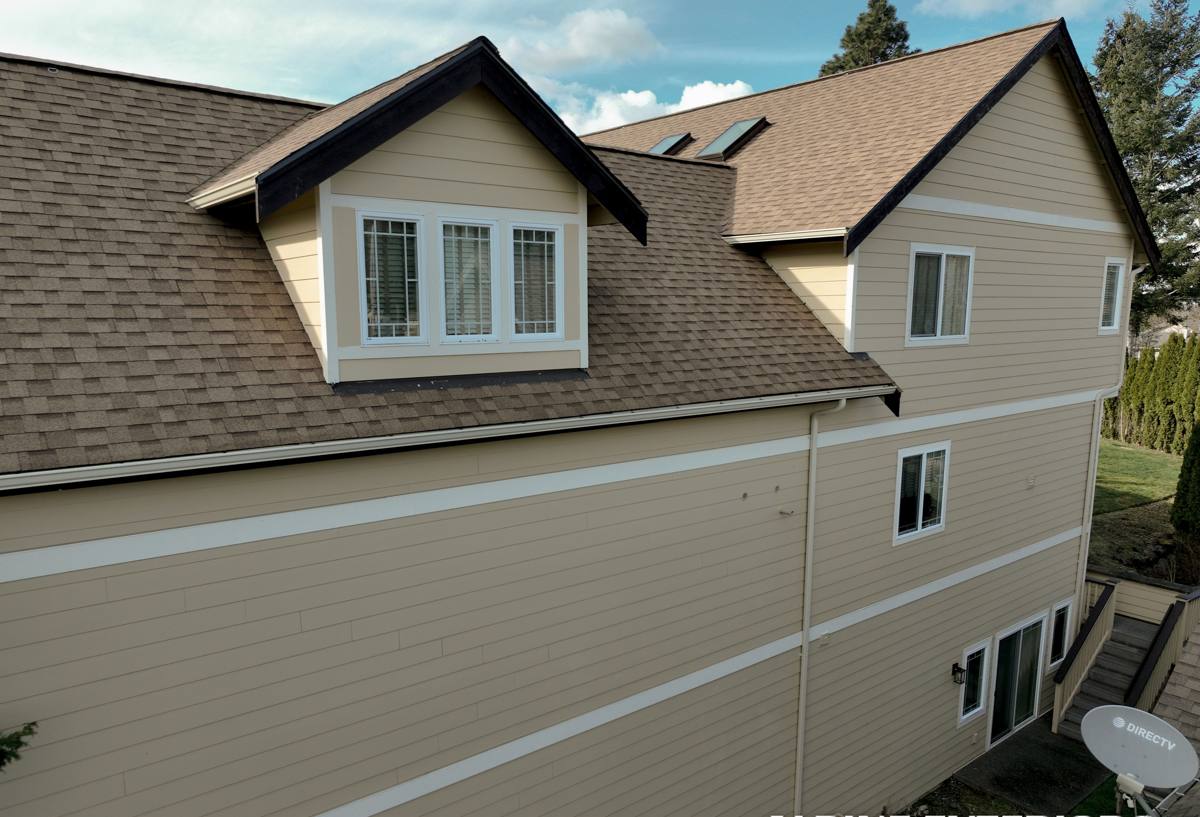
What Orcas Island's Climate Demands From a Window Install
San Juan County sits in Puget Sound's rain shadow, which means Orcas gets less annual rainfall than Seattle — but that statistic misleads people. What the island actually deals with is salt-laden air off the water, long stretches of driving rain that comes in sideways on exposed elevations, and a wet, low-sun season that keeps north- and west-facing walls damp for weeks at a time. None of that shows up in a rainfall total, but all of it shows up in how a window opening either sheds water or holds it.
Salt Air and Corrosion
Homes near the shoreline, or up on a bluff catching wind off the water, deal with airborne salt settling on fasteners, flashing, and hardware. Untreated or mismatched metal flashing and fasteners corrode faster here than they would twenty miles inland. We spec corrosion-resistant fasteners and compatible flashing metals for anything within reach of salt air, and we say so up front rather than letting it become a five-year surprise.
Wind-Driven Rain and Flashing
Rain that falls straight down is easy to shed. Rain that's being pushed sideways by wind off the water finds every gap, lap error, and skipped bead of sealant. A new-construction window opening has to be flashed so that water is directed out and down at every layer — head flashing lapping over the WRB, side flashing lapping over the sill pan, sill pan sloped and lapped under the WRB below it. Get the lap order backward anywhere in that sequence and wind-driven rain will find it, usually in a wall you can no longer see into.
Moss Season, Humidity, and Wood Rot
The wet season on Orcas runs long, and shaded, north-facing walls stay damp well after the rain stops — the same conditions that grow moss on roofs and siding. Any framing lumber or sheathing that stays wet during construction, or that traps moisture behind an improperly sealed window, is on the same clock. A correct install keeps water out of the wall cavity in the first place, which is a lot cheaper than dealing with rot later.
New-Construction vs. Replacement Windows
We get asked often why we can't just "swap in" a new-construction window on a remodel, or why a builder spec'd nailing-fin windows instead of pocket replacements. The short answer is that they solve different problems.
| Factor | New-Construction Window | Replacement (Insert) Window |
|---|---|---|
| When it's used | New builds, additions, or when siding is being removed down to the studs | Existing openings where the frame stays and siding is not being disturbed |
| How it attaches | Nailing fin fastened to sheathing, fully integrated with the WRB and flashing | Fits inside the existing frame; relies on the old frame's condition |
| Water management | Built from the framing out — flashing and sill pan installed as part of the wall assembly | Depends heavily on sealant and the health of the original opening |
| Best fit on Orcas | New homes, additions, full re-sides with siding removal | Sound existing openings where the wall isn't being opened up |
If your project has the wall open — new construction, an addition, or a full siding tear-off — a nailing-fin window installed correctly will outperform an insert every time, because the whole opening is built as one water-managed system instead of a window dropped into an old hole.
What a Correct New-Construction Window Install Involves
This is the part that's invisible once the siding goes back on, which is exactly why it has to be right the first time.
Flashing and Sill Pan Sequence
Every opening gets a sloped sill pan so water that reaches the sill drains back outside instead of pooling. The WRB gets cut and lapped in the correct order — sill pan first, then side flashing over the pan's edges, then the window, then head flashing lapping over the WRB above it. Shortcutting this order is the single most common cause of hidden window leaks we find when we open up older Orcas homes for re-siding.
Nailing Fin Fastening and WRB Integration
The fin gets fastened at the pattern and spacing the window manufacturer specifies — not "close enough." Under-fastening lets a window rack or leak under wind pressure; over-fastening or fastening through the wrong point in the fin can distort the frame and cause the sash to bind. Once fastened, the fin gets taped or lapped into the WRB so the wall's drainage plane stays continuous across the opening.
Sealant and Backer Rod
Sealant is the last line of defense, not the first — a window that relies on caulk alone to stay dry will eventually fail. Where sealant is used (typically the interior air seal and select exterior joints per the manufacturer's instructions), we use backer rod to control joint depth and a sealant rated for the substrate and our climate, not whatever tube is left on the truck.
- Rough opening checked square, level, and sized correctly before the window goes in
- Sill pan installed with a slight outward slope and end dams
- WRB and flashing lapped in the correct shingle-style order — sill, sides, window, head
- Nailing fin fastened per manufacturer spec, corrosion-resistant fasteners near salt air
- Interior and exterior sealed per the manufacturer's installation instructions, with backer rod where called for
- Window operates smoothly and closes flush before the crew leaves the opening
- Photos taken of the flashing sequence before it's covered, for your records
Choosing Frame Materials and Glazing for the San Juans
There's no single "best" window for Orcas Island — the right call depends on the home's exposure, budget, and how close it sits to the water. What we won't do is install a product outside its intended use just because it's cheaper up front; that trade-off usually shows up as a callback in a few years, and we'd rather have the honest conversation before the order goes in.
| Frame Material | How It Handles Salt Air & Moisture | Trade-Offs to Know |
|---|---|---|
| Vinyl | Won't rust or rot; performs fine in most Orcas locations away from direct salt spray | Lower up-front cost; expands/contracts more with temperature swings; limited color options |
| Fiberglass | Very stable in wet, variable climates; strong resistance to warping and corrosion | Higher cost than vinyl; fewer installers stock it, so lead times can run longer |
| Wood-clad | Warm interior look with a protective exterior cladding; needs sound flashing to keep water off the wood core | Highest maintenance burden if cladding or sealant fails; typically the most expensive option |
On glazing, most Orcas homes do well with a dual-pane, low-E package rated for the Pacific Northwest — it balances heat retention through our gray winters with condensation resistance. Homes on more exposed, wind-heavy sites sometimes benefit from a heavier glass package or upgraded weatherstripping; we'll talk through what actually fits your site rather than upselling a package you don't need.
How We Coordinate With Builders and GCs on Orcas
Most of our new-construction window work happens as a sub to a general contractor or in direct coordination with a homeowner acting as their own GC. Either way, timing matters: windows need to go in after the WRB is on and before siding starts, and the rough openings need to be framed to the exact window schedule — not "close enough" sizes that force field modifications. We review the window schedule against the framing plans before the order goes in, so there are no surprises when the units show up and the openings don't match.
We also flag sequencing issues early — for example, making sure the WRB detailing at each opening is done before we show up, or that a covered, dry area is available for the delivery given how fast weather can turn on the island. A crew that's used to working new construction on Orcas builds that coordination into the schedule instead of discovering it on-site.
Working an Island Job Site — Logistics That Matter
Building on Orcas Island comes with logistics that a mainland crew doesn't think about until it costs them a day. Materials, crew, and equipment all move by ferry, and ferry schedules don't bend for a job site. Weather windows for exterior work can close fast, which matters even more with an open wall waiting for windows and flashing. And once a project is underway, running back for a forgotten part or a wrong-size fastener isn't a quick errand — it's a missed sailing and a lost afternoon.
We plan window deliveries and crew scheduling around the realities of getting to and around Orcas Island, order what the job needs before the crew boards the ferry, and build weather buffer into the schedule so an open rough opening isn't sitting exposed longer than it has to be.
Why an Orcas-Based Crew Matters for New Construction
New-construction window installation is unforgiving of guesswork, and it's the kind of work where local experience actually changes the outcome. A crew that already works Orcas Island knows which elevations catch the worst of the wind-driven rain, which sites need extra attention to salt exposure, and how San Juan County's building department expects the work documented and inspected. That's not something you can fake with a general playbook written for a different climate.
It also matters after the install. If a question comes up during a county inspection, or a builder needs a flashing detail confirmed six months into the project, we're already on the island and already familiar with the job — not scheduling a special ferry trip to deal with something that should've taken twenty minutes.
Get a Straight Answer on Your Window Package
If you're framing a new build, planning an addition, or working through a window schedule with your builder, we're glad to look at the plans and give you a straightforward read on what the openings need for Orcas Island's climate — no pressure, no upsell. Reach out below for a free estimate.