 Orcas Island Siding
 Picking a siding color feels like it should be the fun part of a project — until you're standing in a driveway on Orcas Island holding four nearly-identical gray swatches, trying to guess how each one will actually look under our specific light, against our specific trees, after a few winters of salt air and moss. Color choice on this island isn't the same exercise as picking a color in a hardware store fifty miles inland. The marine environment changes how colors read, how finishes hold up, and how much maintenance you'll be doing to keep that color looking the way it did on day one.
This page walks through how James Hardie's ColorPlus Technology system actually works, why factory-applied color behaves differently than field-painted siding out here, and how to choose a color that will still look right on your San Juan County home in fifteen years — not just in the first six months.
What ColorPlus Technology Actually Is
ColorPlus is James Hardie's factory finishing process. Instead of shipping raw fiber cement boards to a jobsite for field priming and painting, Hardie applies multiple coats of color in a controlled factory environment, then bakes each coat on before the next goes on. The result is a finish that's more uniform, more consistently cured, and considerably more resistant to fading and chipping than a coat of exterior paint applied on-site with a sprayer in variable weather.
That factory-controlled process matters more here than in a lot of places. Field-applied paint depends on temperature, humidity, and dry time all lining up on the day the crew is out — and on an island where fog rolls in off the water and afternoons can turn damp without much warning, getting a field finish to cure properly isn't always straightforward. ColorPlus removes that variable entirely. The color is already cured before the boards ever reach your property.
Why This Matters for Touch-Ups and Repairs
Because ColorPlus colors are factory-matched and cataloged, if a board ever gets damaged — a tree limb during a windstorm, an accidental ding during a remodel — a replacement board in the same ColorPlus color can be ordered and installed without a repaint of the whole wall. Field-painted siding doesn't offer that same precision; matching an old, weathered field-paint color exactly is much harder than pulling a factory-matched replacement board.
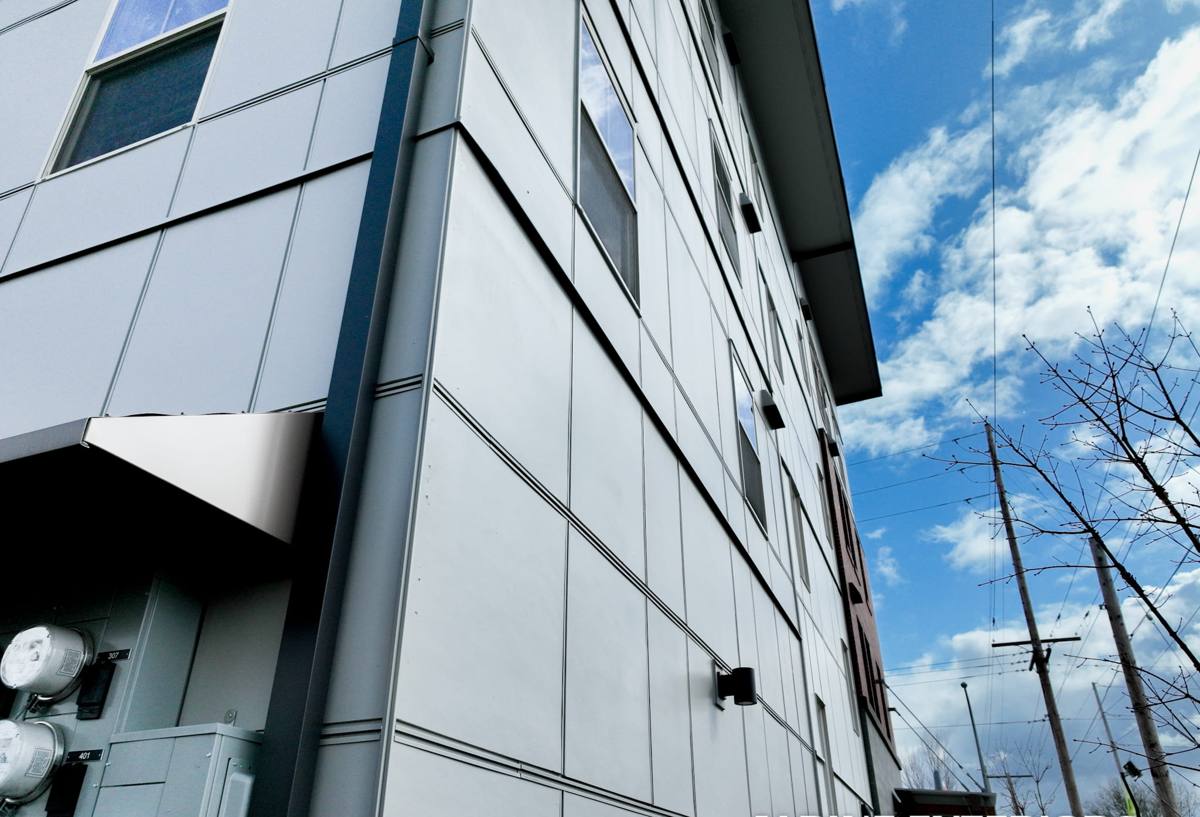
Why Color Behaves Differently in a Marine Climate
Orcas Island sits in a salt-air environment with driving rain off the water and a long stretch of the year where moss, algae, and general dampness are just part of life on an exterior wall. Three things happen to siding color out here that don't happen the same way in drier inland climates:
- Salt air accelerates UV and oxidation effects on lower-quality finishes, which is part of why a cheap paint job fades unevenly faster near the water.
- Persistent moisture and shade support moss and algae growth, especially on north-facing walls and anything tucked under fir or cedar canopy — dark, matte colors show this growth differently than lighter, satin-finish colors.
- Overcast, diffuse light — which dominates a good chunk of the year here — makes colors read cooler and flatter than they do in direct sun, so a color chosen on a bright showroom sample can look noticeably different against a gray San Juan County sky.
None of this means color choice is a gamble. It means the color and finish should be picked with this specific environment in mind, not picked off a sample chip under fluorescent light in a store on the mainland.
Choosing a Color That Works With the Island's Landscape
Most Orcas Island homes sit against a backdrop of Douglas fir, madrone, rock outcropping, and water views — and the siding color either works with that setting or fights it. A few practical patterns tend to hold up well here:
Warm Neutrals and Deep Earth Tones
Warm grays, weathered browns, and deep greens tend to sit naturally against evergreen tree cover and gray-blue water, and they're forgiving of the moss and organic debris that's simply part of maintaining a home under tree canopy in this climate.
Whites and Light Neutrals
Lighter colors read as bright and clean, especially on more exposed, open properties, but they show moss, algae, and dirt streaking more visibly than darker tones — which is a maintenance conversation worth having up front, not a reason to avoid light colors altogether.
Matching Trim and Body Colors
ColorPlus lines are designed with coordinated trim, soffit, and fascia colors in mind, which takes the guesswork out of pairing — something that's harder to do well with field-painted siding where the trim paint and the siding paint may age and fade at different rates.
Comparing Finish Approaches
| Factor | ColorPlus Factory Finish | Field-Applied Paint |
|---|---|---|
| Cure conditions | Controlled factory environment | Dependent on jobsite weather |
| Color consistency | Uniform across all boards | Can vary by coat, crew, and batch |
| Repainting timeline | Typically well beyond a decade under normal conditions | Often needed every 5-8 years in marine climates |
| Repair matching | Cataloged colors, precise replacement | Harder to match aged, weathered paint |
| Warranty on finish | Backed by Hardie's ColorPlus finish warranty | Typically only the paint manufacturer's product warranty, if any |
Reading a Color Sample the Right Way
A small paint chip or an online swatch is a starting point, not a decision. A few habits make a real difference in getting the color right the first time:
- View large-format samples outdoors, not just indoors under artificial light.
- Look at the sample at different times of day — morning light and late-afternoon light on Orcas Island can shift how a color reads noticeably.
- Hold the sample against your actual roofline, trim, stone, or landscaping — not a neutral background.
- Check the sample on both a sunny day and an overcast day, since the island sees plenty of both.
- Ask to see the color on a full board, not just a swatch chip — fiber cement's texture affects how light plays across the surface.
Maintenance Realities by Color Choice
Color choice isn't purely aesthetic out here — it has a direct relationship to how much upkeep a homeowner signs up for. Homes tucked into heavier tree cover with less direct sun exposure are more prone to moss and algae regardless of color, but darker, matte finishes tend to hide organic growth and water staining better between cleanings than very light or high-gloss colors. That's a genuinely practical consideration for a property with a lot of shade or a north-facing elevation.
Regardless of color, periodic gentle washing extends the life of any exterior finish here — but ColorPlus's baked-on, multi-coat finish holds up to that washing and to the general dampness of the climate considerably better than a field-applied coat, which is one of the reasons color longevity is part of why this company standardized on Hardie's factory-finished product rather than offering primed siding for field painting.
Why We Don't Offer Site-Painted Siding as an Alternative
Some fiber cement and wood-based siding products are sold primed, with the expectation that a painter finishes the color on-site after installation. We don't install those products, and color performance is a real part of why. A site-applied finish depends on weather conditions lining up during a narrow install window, on paint quality decisions made after the siding contract is already signed, and on a repaint cycle that, in a driving-rain, salt-air climate like ours, tends to arrive sooner than homeowners expect. ColorPlus removes that dependency by finishing the color before the boards ever leave the factory, under conditions a jobsite simply can't replicate.
Practical Checklist Before You Choose
- Request large physical ColorPlus samples, not just a printed or digital chip.
- View the samples against your home's actual roof, trim, and landscaping.
- Consider how much direct sun versus tree shade your walls actually get.
- Factor in moss and algae exposure on north-facing or heavily shaded elevations.
- Confirm the ColorPlus finish warranty terms for the specific color and product line you're considering.
- Decide on trim and body color pairing together, not as two separate decisions.
If you're weighing colors for a siding project on Orcas Island, we're happy to bring ColorPlus samples out to your property and walk the exterior with you in your own light, against your own landscape, before anything gets ordered. Reach out for a free, no-pressure estimate — there's no obligation, and it's the best way to see how a color will actually look on your home.