 Orcas Island Siding
 Exterior Work Built for Obstruction Pass Conditions
Obstruction Pass sits on the southeastern shoulder of Orcas Island, where the water is close on more than one side and the tree cover is thick enough to keep everything shaded, damp, and slow to dry. That combination — salt-laden air, driving rain off the strait, and long stretches of the year where moss and algae have every advantage — is hard on exterior building materials in ways that don't always show up right away. A siding job that looks fine at installation can start failing at the seams, the fastener points, or the bottom courses within a few winters if it wasn't chosen and installed with this specific environment in mind.
We work throughout San Juan County, and Obstruction Pass is a good example of why we don't treat every property the same way. Homes tucked into the trees deal with different moisture patterns than homes with open water exposure nearby. A crew that shows up once, from off-island, doesn't always catch that distinction. A local crew that's worked this stretch of Orcas before generally does.
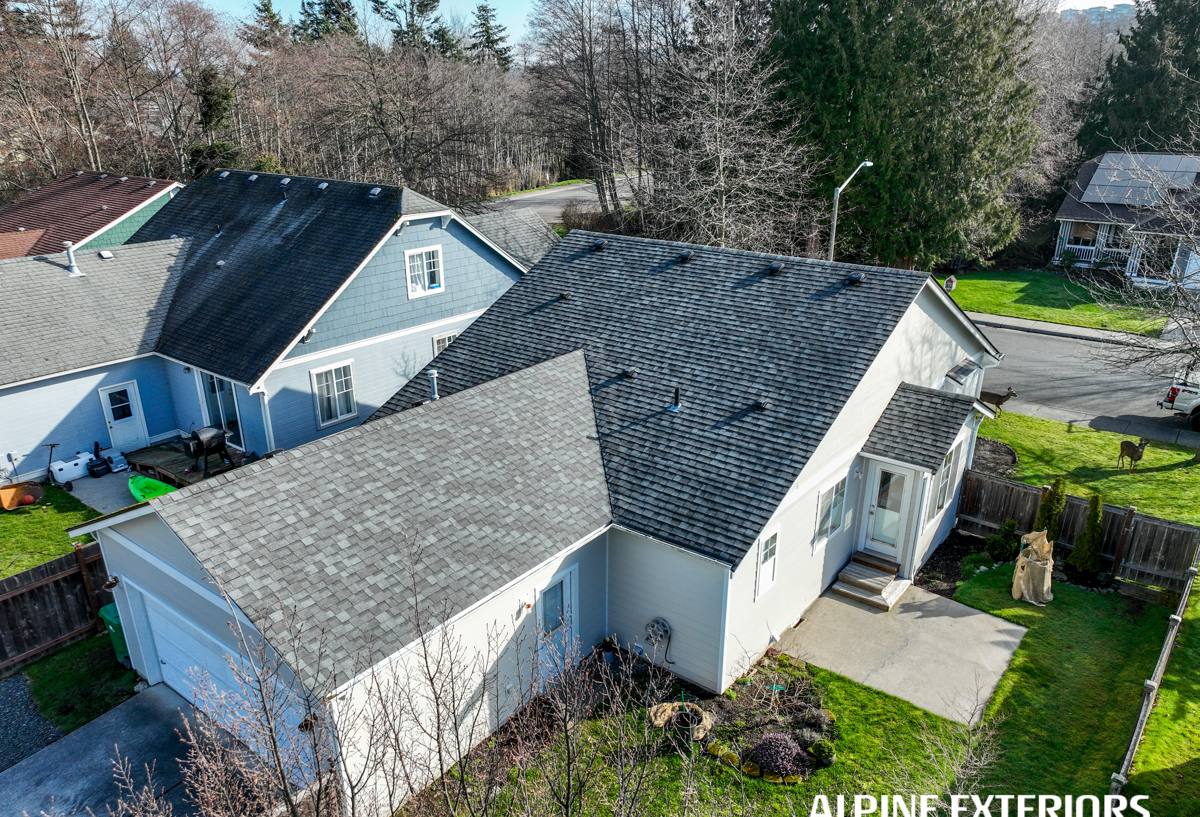
What the Climate Actually Does to a House Here
Salt Air and Metal Fatigue
Even homes set back from the shoreline get salt-bearing air moving through on a regular basis. Over years, that air accelerates corrosion on exposed fasteners, flashing, and any metal trim that isn't rated for coastal exposure. It also degrades cheaper paint films faster than inland siding jobs, which is part of why factory-applied, baked-on finishes hold up so much better here than field-applied paint.
Driving Rain and Wind-Driven Moisture
San Juan County storms don't always come in straight down. Wind off the water pushes rain sideways into wall assemblies, which means flashing details, house wrap laps, and siding overlaps all have to be installed correctly — not just close enough. A shortcut that would never show up in a drier climate can turn into a real moisture problem here within a couple of seasons.
The Long Moss Season
Shade, moisture, and mild temperatures are exactly what moss and algae need, and Orcas Island gives them all three for a good part of the year. Roofs are the most visible casualty, but siding, trim, and deck boards all pick up growth too, especially on north-facing walls and anything under tree canopy. Materials that hold surface moisture — or that develop the small surface cracks that give moss a foothold — struggle here more than materials engineered to shed water and resist that kind of buildup.
Why We Only Install James Hardie Fiber Cement Siding
We get asked fairly often why we don't offer vinyl, LP SmartSide, or some of the other fiber cement brands on the market. It's a fair question, and the honest answer is that we made a standardization decision based on what actually holds up in this climate over decades, not what's cheapest to install this month.
- Vinyl can crack in cold snaps, warps under sustained heat and sun exposure, and its seams and fastening system give wind-driven rain more opportunities to get behind the panel over time. It's also difficult to match years later if a section is damaged.
- LP SmartSide is an engineered wood product, and wood-based siding — even treated wood — depends heavily on unbroken paint and sealant coverage at every cut edge. In a climate this wet, any gap in that coverage is an invitation for moisture intrusion, and repairs have to be exact or the problem comes back.
- Cedar and primed spruce look great initially but require an ongoing maintenance commitment — refinishing, caulking, and moisture monitoring — that most homeowners underestimate until they're a few years in.
- Other fiber cement brands (Cemplank, Allura) are legitimate products, but we standardized on one manufacturer so our crews install one system extremely well, with one warranty structure and one set of factory specs, rather than juggling several.
James Hardie fiber cement is non-combustible, dimensionally stable in wet-dry cycling, and available in HardiePlank, HardiePanel, and HardieShingle lines engineered for different climate zones — including the HZ10 product line built for regions like ours. The ColorPlus factory finish is baked on under controlled conditions, which holds color and resists the fading and chalking that field-applied paint experiences faster in salt air. It comes with a strong transferable warranty when installed to Hardie's published specifications, which matters if the home changes hands.
How We Approach a Siding Job in Obstruction Pass
Every property here is a little different depending on tree cover, sun exposure, and how close it sits to open water. Our process starts with actually looking at those factors before we talk product.
Assessment
We look at existing siding condition, moisture staining, trim and flashing details, and where the home takes the worst weather exposure — usually the west or south-facing walls that catch the prevailing storm direction, though tree cover can shift that on a given lot.
Installation Details That Matter Here
Correct fastener placement, proper clearance between siding and grade or decking, correctly lapped house wrap, and flashing at every penetration aren't optional extras — they're the difference between siding that lasts its full service life and siding that fails early despite being a good product. We install to Hardie's fastening and clearance specifications because that's what protects the warranty and the wall assembly behind it.
Timing Around Island Weather
We plan siding and exterior work around drier stretches where possible. Installing fiber cement over a damp substrate, or rushing flashing details to beat incoming weather, is how problems get built into a wall. A local crew that knows the seasonal patterns here can plan around that more reliably than a crew unfamiliar with the island.
Roofing, Windows, and Decks Under the Same Conditions
Siding doesn't work in isolation — the whole exterior envelope has to handle the same salt air, rain, and moss pressure together.
Roofing
Roofs in tree-shaded areas of Orcas Island are the first thing to show moss growth, and moss holds moisture against roofing material longer than an open, sun-exposed roof would. Proper ventilation, valley flashing, and material choice all affect how much moss maintenance a roof needs over its life.
Windows
Window flashing and sealant integration with the siding plane is one of the most common failure points we find on older homes here. If the window isn't properly integrated with the water-resistive barrier and the siding overlap, wind-driven rain finds a way in regardless of how good the window itself is.
Decks
Outdoor decks in this climate deal with near-constant moisture exposure and the same moss and algae pressure as roofs and siding. Material choice, gap spacing for drainage, and ledger board flashing all matter more here than they would in a drier climate.
Cost Factors for Siding Projects Near Obstruction Pass
Every project is different, but the following factors tend to move the price up or down the most on homes in this area:
| Factor | Why It Matters Here |
|---|---|
| Existing siding removal and disposal | Homes with moisture-damaged sheathing underneath need repair before new siding goes on |
| Access and site conditions | Tree cover, slope, and driveway access on wooded island lots affect staging and equipment |
| Trim and flashing complexity | Homes with more corners, dormers, or window penetrations need more detail work per square foot |
| Hardie product line selected | Lap plank, panel, and shingle profiles carry different material and labor costs |
| ColorPlus vs. field-painted finish | Factory finish costs more upfront but removes a full repaint cycle from the maintenance schedule |
| Barge or material delivery logistics | Island delivery scheduling can affect project timeline and, occasionally, cost |
What to Ask Before Hiring an Exterior Contractor on Orcas Island
Not every contractor who says they can do siding on the island actually works here regularly, and that shows up in the quality of the install. Before hiring anyone for siding, roofing, window, or deck work in Obstruction Pass or elsewhere on Orcas, it's worth asking:
- Are they licensed and insured to work in Washington State, and can they show proof?
- Do they regularly work on the island, or is this an occasional trip over?
- What siding product do they install, and why did they choose it?
- Will they follow the manufacturer's published fastening and clearance specifications, or their own shortcuts?
- What does the warranty actually cover, and is it transferable if the home sells?
- How do they handle flashing at windows, doors, and roof intersections?
A Local Crew Matters More Here Than Most Places
Orcas Island isn't a place where you want a contractor learning the local climate on your dime. Ferry schedules, weather windows, and the specific moisture behavior of a wooded, water-adjacent lot all take experience to plan around well. A crew that's done this work on the island before knows to check for the things that matter here — moss buildup patterns, salt exposure on fasteners, and how wind-driven rain actually moves against a wall in this part of San Juan County — before the first panel goes up.
If you're weighing a siding, roofing, window, or deck project for a home in or near Obstruction Pass, we're happy to take a look and talk through what your specific property is dealing with. There's no pressure and no obligation — just a straightforward assessment and an honest recommendation. Reach out below to schedule a free estimate.