 Orcas Island Siding
 Siding on Orcas Island's Doe Bay Coast
Doe Bay sits on the exposed east side of Orcas Island, where San Juan County's marine weather comes straight off the water and into the trees. Homes here deal with a different set of conditions than a house twenty miles inland: salt-laden air, wind-driven rain that finds every gap in a building envelope, and a shade-and-moisture combination that keeps roofs and siding damp for weeks at a stretch during the fall and winter. Add in the tall stands of fir and cedar that shelter a lot of Doe Bay properties, and you get a climate that's beautiful to live in and genuinely hard on exterior building materials.
We work throughout San Juan County, and Doe Bay is one of the areas where the difference between a siding job done right and one done to minimum spec shows up fastest. Materials that hold up fine in a drier part of the state can start failing within a few seasons out here. That's part of why, as a company, we made a decision that shapes everything we do: we install James Hardie fiber cement siding, exclusively. Not vinyl, not LP SmartSide, not primed spruce or cedar lap. We'll explain why below, and what it means for a home in the Doe Bay area specifically.
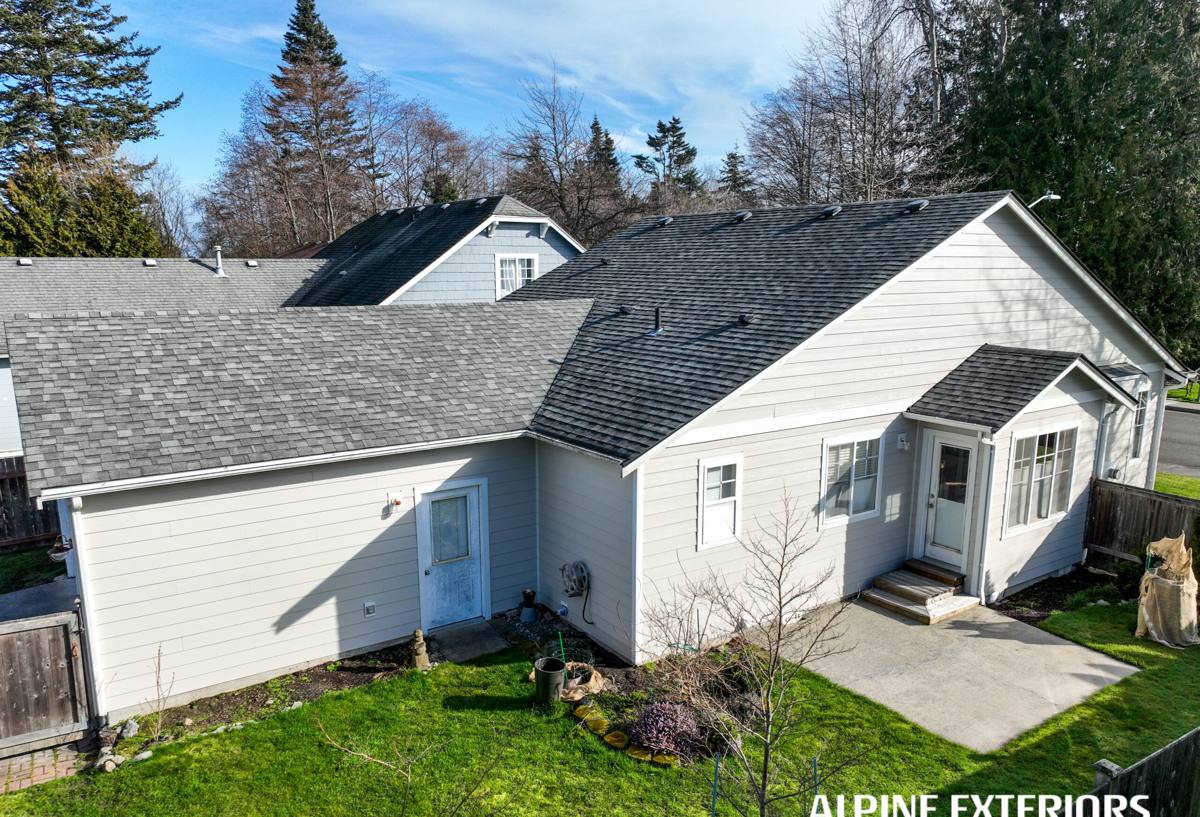
What the Climate Actually Does to a House
Salt Air and Corrosion
Waterfront and near-waterfront homes on Orcas Island take in airborne salt that settles on every exterior surface. Over years, that salt exposure accelerates corrosion on fasteners, flashing, and any metal trim that isn't rated for a marine environment. Siding materials that rely on thin metal components or unprotected steel fasteners tend to show rust streaks and premature wear well before their rated lifespan is up. It's not dramatic — it's slow, and it's the kind of thing a homeowner doesn't notice until the finish starts telling on it.
Driving Rain and Moisture Intrusion
Storms coming off Rosario Strait and the surrounding waters don't just fall straight down — wind pushes rain sideways, into seams, laps, and any spot where flashing or caulking has started to fail. Siding systems that swell, warp, or wick moisture when saturated are working against the climate here, not with it. Once moisture gets behind a wall assembly on a home that stays damp for days at a time, drying out takes a lot longer than it would somewhere sunnier and less humid.
Moss, Algae, and Shade
Doe Bay's tree cover is part of its character, but it also means long stretches where siding and roofing stay shaded and damp. That's exactly the environment moss and algae need. Wood-based and wood-composite siding products are more vulnerable here because organic growth can take hold in the surface material itself, not just sit on top of it. A siding material's real-world moss resistance in a shaded, wet microclimate matters as much as its published moisture rating.
Why We Install Only James Hardie Fiber Cement
James Hardie siding is fiber cement — a blend of cement, sand, and cellulose fibers, engineered and factory-finished specifically to handle conditions like the ones Doe Bay sees every winter. A few things about it matter directly for this area:
- Non-combustible core. Fiber cement doesn't burn, which matters on an island where wildfire risk and emergency response times are real considerations for homeowners and insurers alike.
- Climate-engineered product lines. Hardie's HZ5 formulation is built for wetter, colder climate zones, which is a better match for the Pacific Northwest than the product lines designed for hot, dry regions.
- ColorPlus factory finish. The color is baked on at the factory under controlled conditions, rather than field-applied. That finish holds up better against UV and moisture cycling than a job-site paint job, and it comes with its own finish warranty separate from the substrate warranty.
- Dimensional stability. Fiber cement doesn't swell and shrink with moisture the way wood-based products do, which means fewer open joints for wind-driven rain to exploit over time.
- A strong, transferable warranty that stays with the house if it sells — a real factor for buyers evaluating a home on the island.
None of that means fiber cement is magic or maintenance-free. It still needs to be installed to spec — correct clearances, proper flashing, caulking at the right joints — and installation quality matters as much as the material itself. But it gives us a starting point that's actually suited to this coastline, instead of fighting the climate from day one.
Why We Don't Install Vinyl, LP SmartSide, or Cedar
We get asked about all three regularly, and it's a fair question — they're common products, and each has real strengths. Here's the honest comparison we give homeowners:
| Material | Strength | Trade-off in this climate |
|---|---|---|
| Vinyl | Low upfront cost, low maintenance in mild climates | Can warp or crack in temperature swings; seams and fastening are more vulnerable to wind-driven rain; color is molded-in and fades over time with no refinish option |
| LP SmartSide (engineered wood) | Workable, budget-friendly, good appearance | Wood-strand core is more sensitive to sustained moisture exposure; edge sealing and caulking maintenance is more critical in a wet, shaded environment like Doe Bay |
| Cedar / primed spruce | Natural look, traditional Pacific Northwest aesthetic | Needs ongoing refinishing to hold up; more susceptible to moss, rot, and insect damage without diligent upkeep; higher long-term maintenance burden |
| James Hardie fiber cement | Non-combustible, dimensionally stable, factory-finished, climate-engineered | Higher upfront material cost than vinyl; heavier product requires correct installation technique |
We're not going to tell a homeowner that vinyl or cedar siding is a bad product in every setting — they're not. But given what we see on Orcas Island homes over the years, we decided we'd rather install one product well than install several products to a lower standard. That's the whole reason our company standardized on Hardie.
Roofing, Windows, and Decks in Doe Bay
Siding is rarely the only thing showing wear on a Doe Bay home — roofing, windows, and decks face the same salt air and moisture load, and they interact with each other. A roof that's shedding granules or has failing flashing sends water down onto siding and trim. Windows with degraded seals let moist air into wall cavities behind otherwise sound siding. Decks exposed to the same driving rain and shade need materials and fastening that account for standing moisture, not just foot traffic.
Because we handle all four — siding, roofing, windows, and decks — we look at a Doe Bay property as one connected exterior system rather than four separate trades. A siding estimate often turns up a roofing or window issue worth flagging, and vice versa. That's useful on an island where getting a specialist back out for a second visit isn't as simple as it would be in a mainland suburb.
What Working on an Island Property Actually Involves
Doe Bay's location adds real logistics that a mainland job doesn't have — ferry scheduling, material staging, and weather windows for tear-off and installation days all need to be planned around, not worked out on the fly. A crew that regularly works San Juan County knows to batch material deliveries, plan installation sequencing around forecasted dry stretches, and avoid leaving a home's weather barrier exposed longer than necessary. That planning matters more here than almost anywhere else we work — an unplanned delay on an island job can mean days, not hours.
Maintenance Homeowners in Doe Bay Should Actually Do
Even with a climate-appropriate material, a Doe Bay home benefits from some regular attention:
- Rinse siding annually to clear salt residue and organic buildup, especially on shaded or north-facing walls
- Check caulking at trim, window, and door joints each fall before the wet season sets in
- Keep gutters clear so overflow isn't running down the siding face
- Trim back vegetation and tree limbs that keep sections of the house shaded and slow to dry
- Watch for moss starting at the bottom courses of siding or roof valleys and address it early, before it spreads
- Have flashing and caulking around windows and doors inspected periodically — that's where moisture intrusion usually starts
Hiring a Local Contractor for Orcas Island Work
Whoever you hire for exterior work in Doe Bay, it's worth confirming a few things upfront:
- Do they carry Washington state contractor licensing and current liability insurance?
- Have they worked on San Juan County islands before, and do they understand the ferry and scheduling logistics involved?
- Will they give you a written scope and product specification, not just a price?
- Do they install to the manufacturer's actual fastening, clearance, and flashing requirements — not just "close enough"?
- Are they willing to explain trade-offs between materials honestly, instead of just upselling whatever they have on hand?
A contractor's answers to those questions tell you more about the job you'll get than any brochure will.
Get a Free Estimate for Your Doe Bay Property
If your Doe Bay home is showing moss buildup, worn siding, or you're just planning ahead for an eventual replacement, we're glad to take a look and walk you through what we're seeing — no pressure, no obligation. Use the form below to request a free estimate.