 Orcas Island Siding
 Why Siding Fails Differently on Orcas Island
Siding on Orcas Island doesn't fail the same way it does across the water in Bellingham or over in Anacortes. San Juan County sits in a marine environment where salt-laden air moves off the Sound, driving rain comes in sideways off exposed points, and shaded, tree-covered lots hold moisture long after a storm has passed. Add in a moss season that can stretch from October through May on north-facing walls, and you have a set of conditions that will find every weakness in a siding system faster than a drier inland climate would.
Most siding doesn't fail all at once. It fails slowly, in ways that are easy to write off as cosmetic until the damage has already reached the wall sheathing behind it. This page walks through what to look for, wall by wall, so you can catch problems while they're still a repair and not a rebuild.
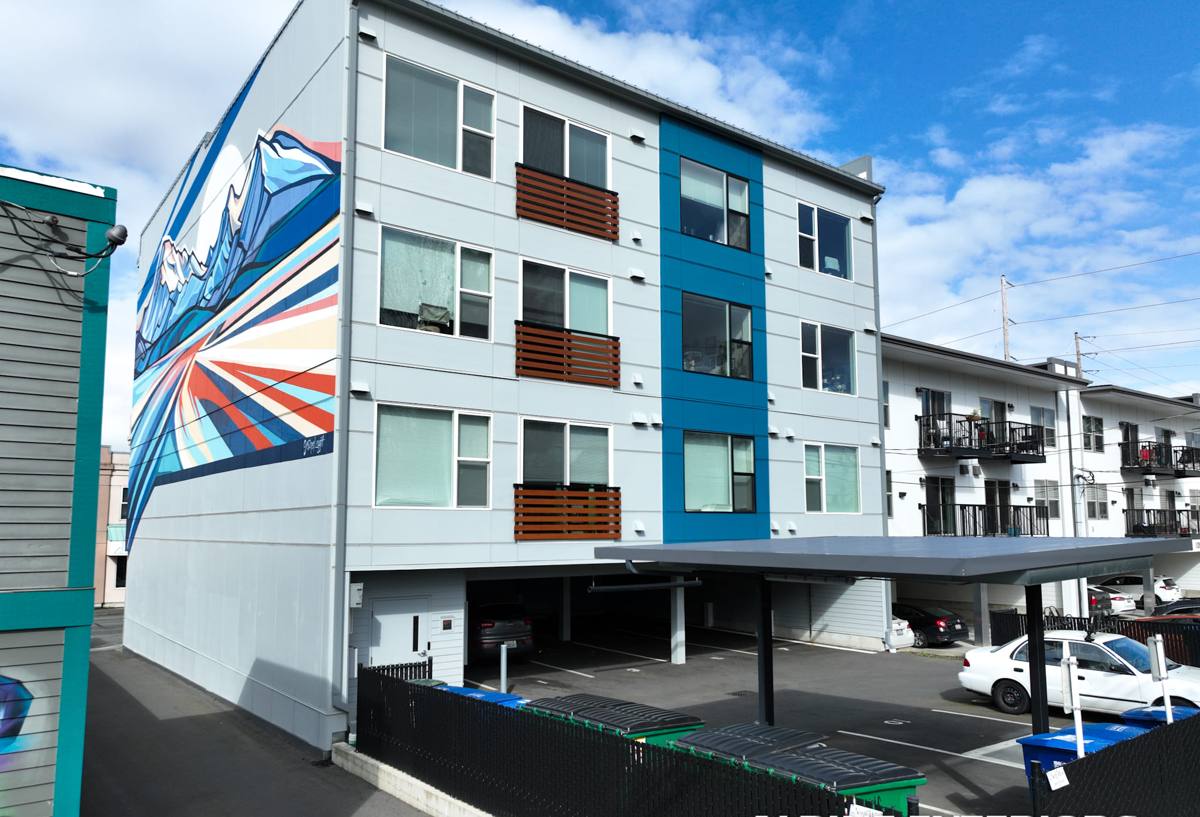
The Early Warning Signs Homeowners Miss
Paint and Finish Breakdown
Chalky residue on your hand after you touch the siding, paint that's peeling in sheets rather than wearing evenly, or color that's gone noticeably flat and dull are all signs the factory or field finish has given up its job of shedding water. Once the finish fails, the substrate underneath is exposed to every rain event and every freeze-thaw cycle that follows.
Soft Spots and Give
Press on your siding in a few spots, especially low on the wall and near ground level. If it flexes, feels spongy, or gives under light thumb pressure, moisture has likely gotten into the material itself. This is one of the most reliable tells on wood-based products and something we check for on every estimate.
Warping, Bowing, or Buckling
Boards that no longer sit flat against the wall, that curl at the edges, or that show a visible wave when you sight down the wall are telling you the material has absorbed moisture unevenly and is moving. Siding is supposed to stay dimensionally stable. When it doesn't, that's a materials or installation problem, not a paint problem.
Moss, Mold, and the Green Film Problem
On Orcas Island, a light green or black film on north- and west-facing walls is common enough that a lot of homeowners assume it's just how houses look here. It isn't inevitable, and it isn't harmless. Moss and mold hold moisture directly against the siding surface, which accelerates whatever failure process is already underway underneath. A little algae staining on a healthy, water-resistant surface is a cosmetic wash-and-forget issue. The same staining on a compromised surface is a sign the material is actively absorbing and retaining water.
- Green or black film that returns within weeks of pressure washing usually means the surface is porous or damaged, not just dirty
- Moss growing in seams or at butt joints often signals a gap where water is pooling rather than shedding
- Persistent mildew smell near an exterior wall, especially indoors, points to moisture that's already made it past the siding
The Difference Between Grow-On-Top and Grow-Because-It's-Failing
Any siding on a shaded, damp San Juan County lot will eventually pick up some surface algae — that's biology, not a defect. The distinction that matters is whether the growth wipes or washes off cleanly, or whether it keeps coming back in the same spots no matter how often you clean it. Recurring growth in a fixed location is usually the material telling you it's holding water there.
Cracking, Splitting, and Impact Damage
Hairline cracks running with the grain, splits at nail points, or corners that chip when bumped are structural tells, not just appearance issues. Once a crack opens in siding, it becomes a direct path for water into the wall assembly, and freeze-thaw cycles work that crack wider every winter. This is especially common on products that were never engineered for a wet marine climate in the first place — a mismatch we see often enough on the island that it's worth understanding before you replace anything.
Where Cracking Shows Up First
| Location | What to Look For | What It Usually Means |
|---|---|---|
| Butt joints between boards | Gaps, dark staining, soft edges | Water intrusion at the seam |
| Below windows and trim | Vertical staining, bubbling paint | Failed flashing or caulk allowing runoff behind siding |
| Bottom courses near grade | Swelling, discoloration, soft material | Splashback moisture and prolonged ground-level dampness |
| Inside and outside corners | Cracked caulk, visible gaps | Movement or shrinkage opening entry points |
| Under eaves and roof valleys | Concentrated streaking, faster algae growth | Heavier, more frequent water exposure than the rest of the wall |
Warping and Buckling: What's Really Happening Underneath
When siding warps, it's almost always because the board is absorbing moisture on one face faster than it can release it on the other, so the material expands unevenly. Wood-based and some engineered wood products are particularly prone to this in a climate like ours, where boards rarely get a long, dry stretch to fully release humidity between rain events. Fasteners can also work loose as the board moves, which opens more gaps for water to enter and accelerates the cycle. Once you see visible waviness across more than a board or two, that's usually not a spot-repair situation anymore — it's a sign the whole wall section has been wet longer than it should have been.
What's Happening Behind the Siding
The siding itself is often the least of the problem. By the time you can see failure on the surface, there's a good chance moisture has already reached the house wrap, sheathing, or framing behind it. Signs that damage has moved past the siding layer include:
- Interior drywall staining, bubbling, or a musty smell on an exterior wall
- Soft or spongy sheathing you can feel by pressing near an outlet or window on that wall
- Visible rot or dark staining when a piece of siding is pulled or falls off
- Insect activity — carpenter ants and similar pests are drawn to damp wood framing
- Rising utility bills that track with a wall showing surface damage, suggesting insulation has gotten wet and lost its R-value
This is why we tell homeowners not to wait for the siding to look bad before getting it looked at. Surface symptoms are usually a lagging indicator of what's already happening in the wall.
A Practical Self-Inspection Checklist
Twice a year — after the wet season eases in spring and again before the fall rains ramp up — walk your home's exterior and check the following:
- Press-test siding at the bottom three courses on every wall, especially the north and west sides
- Look for recurring moss or algae in the same spots after cleaning
- Check caulk lines at windows, doors, and corners for cracking or gaps
- Sight down each wall for waviness, bowing, or boards sitting proud of their neighbors
- Note any paint that's chalking, peeling in sheets, or has gone flat and dull
- Check indoor walls that back up to problem exterior areas for staining or soft drywall
- Look at fastener heads for rust streaking or backing out of the board
Why We Only Install James Hardie Fiber Cement
We stopped installing several common siding products years ago, and this climate is the reason. San Juan County's combination of salt air, sustained rain, and long damp shoulder seasons is hard on any material that relies on paint film integrity or moisture-resistant treatments to stay dry, because those defenses degrade over time and this climate doesn't give them much of a break to recover.
James Hardie fiber cement is what we install instead, and it's not a marketing preference — it's a materials decision. Fiber cement doesn't absorb and swell the way wood-based products do, it's non-combustible, and Hardie's ColorPlus factory finish is baked on and warranted rather than field-applied and dependent on perfect weather during installation. Hardie's HZ5 product line is specifically engineered for cold, wet climates, which matches Orcas Island's conditions better than a generic national product. It also carries a strong transferable warranty, which matters if you ever sell the home. None of that makes fiber cement maintenance-free or installation-proof — it still has to be installed to Hardie's spec, with correct clearances, flashing, and fastening, or you can undermine even a good product. But it gives us a material that's built for exactly the conditions this island throws at a house, rather than one we're hoping performs despite them.
When to Call a Contractor vs. When to Wait
Not every issue you spot needs an immediate call. Here's a rough guide to urgency:
| What You See | Urgency |
|---|---|
| Light surface algae that washes off and doesn't return | Low — routine cleaning |
| Chalking paint on an otherwise solid, non-soft board | Moderate — plan for repainting or evaluate replacement timeline |
| Soft spots, recurring moss in the same location, visible cracking | High — get it inspected before the next wet season |
| Warping, buckling, interior staining, or soft sheathing | Urgent — moisture has likely reached the wall assembly |
If you're not sure which category your situation falls into, that's a reasonable reason to get a second set of eyes on it rather than guess. Catching a wall in the "high" column instead of the "urgent" column is usually the difference between a siding job and a siding-plus-sheathing job.
If you're seeing any of these signs on your Orcas Island home, we're happy to take a look. We offer free, no-pressure estimates — no obligation, just an honest read on what's going on with your siding and what it would take to fix it right.