 Orcas Island Siding
 Exterior Work Around Cascade Lake, Orcas Island
Cascade Lake sits inland from the saltwater shoreline that wraps most of Orcas Island, but "inland" on this island is a relative term. Moraine Park and the lake basin still sit under a tree canopy that holds moisture long after a storm has passed, and the same marine air that moves through the San Juan Islands reaches homes here too, carried on wind off the water and settling into low ground near the lake. Homes in this pocket of the island face a specific combination of problems: shaded, damp siding that never fully dries, moss and algae that take hold on roofs and north-facing walls, and driving rain that comes in sideways during winter storms rolling off the Salish Sea.
We're a local crew that works the whole island, not a mainland company that ferries over for a quote and disappears. That matters here more than in most places — Orcas Island living means every trip on and off is a ferry schedule, every delivery of siding or roofing material takes planning, and a contractor who doesn't understand island logistics will either overcharge for the hassle or under-deliver on follow-through. We handle siding, roofing, windows, and decks, and we plan every Cascade Lake job around the realities of getting materials, crews, and equipment onto the island and back off again without wasted trips.
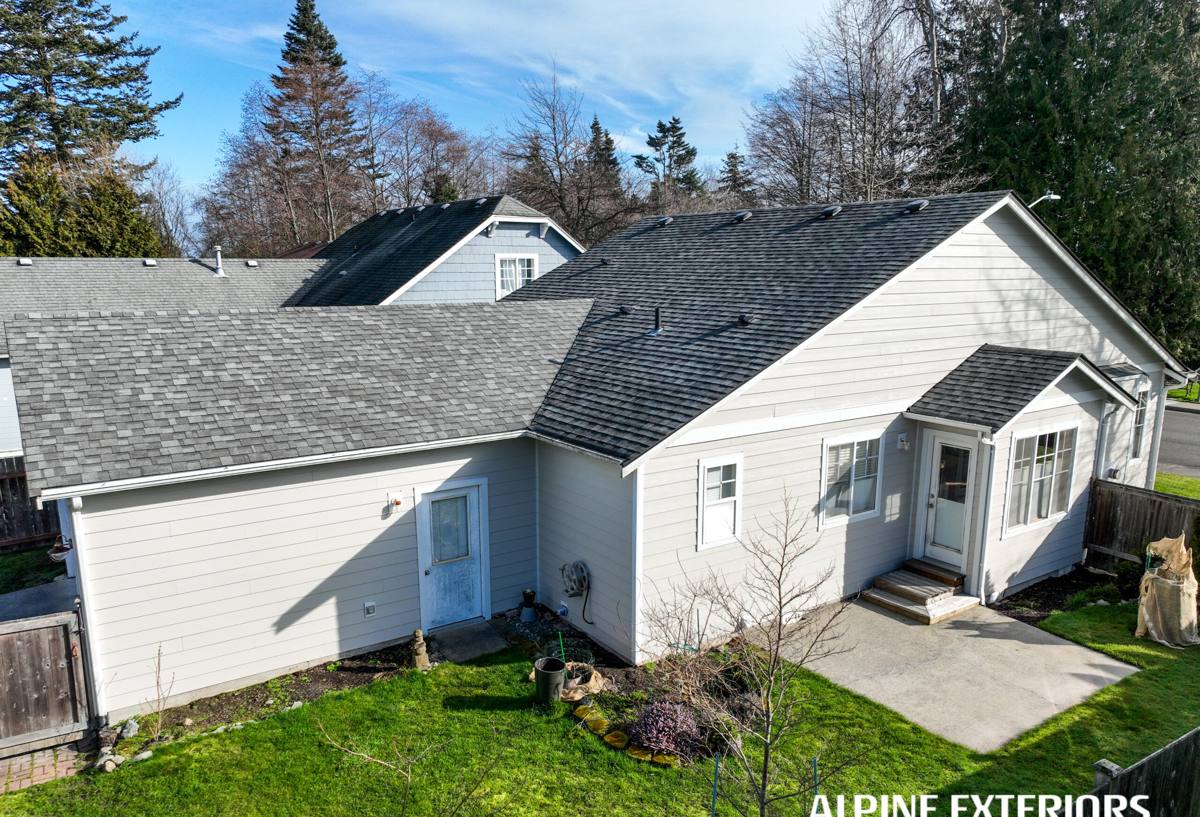
What the Cascade Lake Climate Does to a House
Shade, Moisture, and Moss
The tree cover around Cascade Lake is part of what makes the area beautiful, and it's also what keeps siding and roofing damp longer than homes closer to open water or cleared lots. Shaded north and east walls dry slowly after rain, and that extended dampness is exactly what moss, algae, and mildew need to get established. On wood-based siding products, that moisture cycle — wet, slow-dry, wet again — is what eventually causes swelling, delamination, and paint failure at the seams.
Salt Air and Driving Rain
Even set back from the water, Cascade Lake homes aren't shielded from the salt-laden air that moves across the whole island. Salt accelerates corrosion on fasteners, flashing, and metal trim, and it works into any small crack or seam in siding and roofing over time. Combine that with the driving, wind-blown rain typical of San Juan County winter storms, and you get water finding its way into joints and laps that would stay dry in a calmer climate.
Long Wet Seasons
Western Washington's wet season isn't a few storms — it's months of sustained damp weather. Materials on a Cascade Lake home don't get long dry stretches to recover between rain events the way they might in a drier climate. Anything prone to absorbing moisture will absorb it, again and again, over a season, and that cumulative exposure is what shortens the working life of the wrong exterior products.
Why We Install Only James Hardie Fiber Cement Siding
We don't install vinyl, LP SmartSide, cedar, primed spruce, Cemplank, or Allura. That's not a marketing angle — it's a standard we set because of what we've seen these products do in exactly the conditions Cascade Lake homes face. Wood-based siding, even engineered wood, is still an organic material at its core, and organic materials absorb moisture. In a shaded, damp, salt-air environment, that means swelling at cut edges, softening around fasteners, and paint or coating failure well before a homeowner expects to be repainting.
Vinyl siding has the opposite problem: it doesn't rot, but it isn't rigid, and it isn't fire-resistant. Cold snaps and wind-driven rain can work at loose seams and fasteners over years, and vinyl's appearance options are limited compared to a factory-finished fiber cement product. Cemplank and Allura are fiber cement products too, and they're not unreasonable materials — but we've standardized on James Hardie specifically because of its ColorPlus factory finish, its HZ5 product engineering for moisture and climate exposure, and the depth of its installation network and warranty support in this region.
James Hardie fiber cement is non-combustible, doesn't swell or rot from moisture the way wood-based products do, and holds its factory-applied finish far longer than field-painted alternatives. For a home dealing with shade, salt air, and a long wet season all at once, that combination is what actually holds up — not just on a spec sheet, but on the wall, year after year.
How the Products Compare
| Material | Moisture Behavior | Maintenance Burden | Fire Resistance |
|---|---|---|---|
| James Hardie Fiber Cement | Doesn't swell or rot; engineered for wet climates | Low — factory finish holds color for years | Non-combustible |
| Cedar / Primed Spruce | Absorbs moisture; prone to swelling and rot | High — repainting and caulking cycles | Combustible |
| Vinyl | Doesn't rot, but seams and fasteners can fail | Low, but limited repair options | Melts/warps under heat |
| LP SmartSide | Engineered wood — better than raw wood, still moisture-sensitive at cut edges | Moderate — edge sealing is critical | Combustible |
Roofing for a Shaded, Damp Lot
Cascade Lake roofs deal with the same moss and moisture pressure as the siding, often worse, since roofs collect standing debris from overhanging trees. A roof in this area needs attention to moss prevention, proper ventilation to let trapped attic moisture escape, and flashing details that account for salt-air corrosion over the roof's lifetime. We inspect for early moss growth, soft spots from long-term moisture retention, and flashing or fastener corrosion whenever we're on a roof here, whether the visit started as a roofing call or a siding estimate.
Windows That Hold Up to Wind-Driven Rain
Older or poorly sealed windows are one of the most common points of water intrusion we find on island homes, especially on walls exposed to prevailing wind. Around Cascade Lake, where trees create wind tunnels and rain angles change with the terrain, window flashing and sealant integrity matter as much as the window unit itself. When we replace or install windows, we pay close attention to the flashing and integration with the surrounding siding — a well-built window with poor flashing will leak just as fast as a bad window with good flashing. Both parts have to work together.
Decks: Built for Shade and Standing Moisture
Decks near Cascade Lake often sit under partial tree cover, which means slower drying, more surface debris, and a higher risk of rot at ledger boards and post bases where water tends to collect. We build and repair decks with attention to drainage, proper flashing at the house connection, and materials suited to standing moisture rather than just aesthetics. A deck that looks fine in July can be hiding a soft ledger board that's been absorbing runoff all winter.
What a Cascade Lake Project Typically Involves
Assessment
We start by walking the exterior and identifying moisture-exposed areas — shaded walls, low rooflines, areas where trees overhang the structure — since these are usually where problems start first on lake-area homes.
Planning Around Access
Material delivery and crew scheduling on Orcas Island work differently than on the mainland. We plan logistics — ferry timing, material staging, site access — as part of the estimate, not as an afterthought that shows up as a surprise delay later.
Installation to Spec
James Hardie siding performs the way it's engineered to only when it's installed correctly — proper clearances, fastening patterns, and flashing details matter as much as the product itself. We install to manufacturer spec because a warranty is only as good as the installation behind it.
Signs a Cascade Lake Home May Need Exterior Attention
- Moss or dark streaking building up on shaded siding or roof sections
- Paint that's peeling, bubbling, or chalking faster than expected
- Soft or spongy siding near ground level or under overhangs
- Window frames with visible gaps, drafts, or staining below the sill
- Deck boards or ledger areas that stay damp long after rain has stopped
- Corroded or rust-streaked fasteners and flashing
Why a Local Crew Matters Here
An off-island contractor pricing a Cascade Lake job often has to guess at logistics, which either inflates the quote or leads to delays once they realize what getting a crew and materials to the site actually takes. We work San Juan County regularly, understand the ferry-dependent scheduling, and know how the local climate — shade, salt air, and sustained wet weather — actually behaves on a house over years, not just on a single visit. That local knowledge shapes how we scope, price, and sequence every project here.
If you're noticing moss buildup, aging siding, a roof that needs a closer look, or windows that let in more draft than they used to, we're happy to come take a look. We offer free, no-pressure estimates for homes around Cascade Lake and the rest of Orcas Island — just fill out the form below and we'll get in touch.