 Orcas Island Siding
 Exterior Work in Rosario: A Different Set of Conditions
Rosario sits on the east side of Orcas Island, close enough to the water that salt air, wind-driven rain, and shade-heavy moss growth are simply part of owning a home there. Homes in this part of San Juan County don't fail because owners neglect them — they fail because the exterior products were never built for this specific combination of marine exposure, rainfall, and low winter sun angles that keep north and east walls damp for weeks at a time.
We've worked on enough siding, roofing, window, and deck projects around Orcas Island to know that a product that performs fine in a drier inland climate can struggle here within a decade. That's the lens we bring to every estimate in Rosario: not "what's the cheapest option," but "what actually holds up on this lot, in this microclimate, facing this direction."
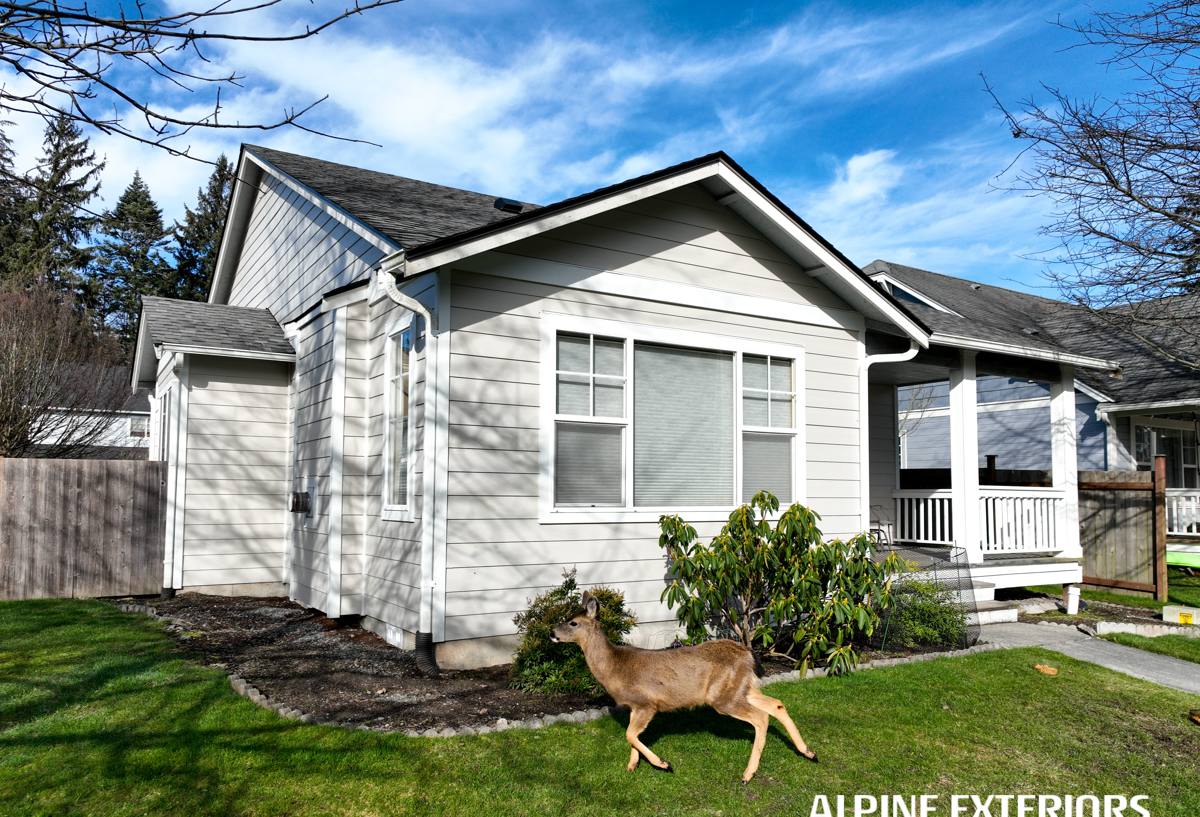
What Salt Air, Rain, and Moss Actually Do to a House
Salt Air and Fasteners
Airborne salt doesn't just sit on the surface of your siding — it works into fastener heads, trim joints, and any exposed metal. Over years, that accelerates corrosion in staples, nails, and flashing that weren't rated for coastal exposure. Once a fastener starts to rust, the water path into the wall assembly follows right behind it.
Driving Rain
Orcas Island gets rain that doesn't fall straight down — wind pushes it sideways into wall assemblies, especially on west- and south-facing elevations that catch weather rolling in off the water. Lap siding with poor overlap, under-caulked trim, or butt joints that were never properly flashed will let water behind the cladding long before the surface shows visible damage.
Moss and Prolonged Dampness
Shaded, tree-covered lots — common around Rosario — mean siding and roofing surfaces can stay damp for extended stretches, especially in the fall and winter months. Moss and algae hold moisture against the surface, which is a slow but steady problem for wood-based products and a real factor in how often a roof needs attention.
Why This Matters More for Some Siding Materials Than Others
Every siding material handles moisture differently, and the honest answer is that some handle it far better than others when installed on a home like the ones in Rosario.
| Material | Moisture Behavior in This Climate | Long-Term Consideration |
|---|---|---|
| Untreated or primed wood (cedar, spruce) | Absorbs moisture, prone to swelling, cupping, and rot at joints | Repainting and caulk maintenance every few years; vulnerable where moss holds moisture |
| Vinyl siding | Doesn't absorb water, but seams and J-channels can trap moisture behind panels | Can warp or crack in wind events; color fades under UV over time |
| Engineered wood (LP SmartSide and similar) | Treated to resist moisture, but edges and cut ends are vulnerable if not field-sealed correctly | Performance depends heavily on installer discipline at every cut and seam |
| Fiber cement (James Hardie) | Non-combustible, dimensionally stable, engineered moisture-resistant core | Factory-applied ColorPlus finish reduces the repainting cycle; performs consistently when installed to spec |
This is exactly why we standardized on James Hardie fiber cement and don't install LP SmartSide, vinyl, Cemplank, Allura, primed spruce, or cedar. It's not that every one of those products is a bad product in every climate — it's that we've seen how coastal Pacific Northwest exposure tests the weak points in each of them, and we'd rather stand behind one system we trust completely than offer several we'd have reservations about.
Why We Install Only James Hardie
James Hardie fiber cement is engineered specifically for climate zones like ours through its HZ5 product line, which is formulated for the moisture and freeze-thaw patterns of the Pacific Northwest. A few things make it the product we're willing to put our name behind in Rosario:
- Fiber cement doesn't burn, rot, or attract insects — it holds up structurally in ways wood-based products can't
- The ColorPlus factory finish is baked on under controlled conditions, which means better fade and chip resistance than field-applied paint
- It's dimensionally stable, so it doesn't swell, shrink, or warp the way wood and some engineered products can with repeated wet-dry cycles
- Hardie backs the product with a strong, transferable warranty — meaningful when a home changes hands, which happens often with island properties
- It's been installed and tested in wet coastal climates for decades, so we're not guessing at how it performs here
None of that replaces correct installation. Fiber cement performs the way it's supposed to only when flashing, fastener spacing, caulking, and clearances are done right — which is where a crew that actually understands this island's exposure conditions matters as much as the material itself.
How We Approach a Rosario Project
Every home we look at gets evaluated for its specific exposure — which walls take the worst of the wind-driven rain, where moss and shade are keeping surfaces damp longer, and where old flashing or trim details may already be letting water in. On older Rosario homes, that often means uncovering evidence of moisture behind existing siding that wasn't visible from the outside.
From there, our process typically includes:
- A full exterior walkthrough, checking trim, window and door flashing, and any areas with visible moss, staining, or soft wood
- An honest assessment of whether the existing sheathing and weather barrier are sound enough to build on, or need attention first
- A written scope covering siding, and — where relevant — roofing, window, or deck work that touches the same building envelope
- Installation to Hardie's published specifications, including correct fastener type, clearance from grade and roof lines, and properly lapped and sealed joints
Roofing, Windows, and Decks: The Same Envelope, One Crew
Siding doesn't work in isolation — water that gets past a roof edge, a window flashing detail, or a poorly built deck ledger board ends up in the same wall cavity a new siding job is trying to protect. Because we handle roofing, windows, and decks in addition to siding, we can look at a Rosario home as one connected system rather than a series of separate trades that may not talk to each other.
That matters most at transition points: where a deck ledger meets the wall, where a window is set into new siding, or where roof edge flashing ties into the top course of trim. These are common places for leaks to start, and they're easiest to get right when one crew is planning the whole envelope rather than coordinating around someone else's prior work.
Why a Local Crew Matters on Orcas Island
Working in Rosario and the rest of Orcas Island isn't the same as working on the mainland. Materials, equipment, and crews often move by ferry, which means scheduling has to account for sailing times and weather delays that can push a delivery back a day. Permitting and setback questions run through San Juan County, and lot access on some island properties is tighter than what a mainland crew might be used to planning around.
A crew that works this island regularly knows how to sequence a job so material deliveries line up with the ferry schedule, how to plan around narrow driveways and septic systems that weren't designed with a construction crew in mind, and what county inspectors are actually looking for. That local knowledge saves real time and avoids the kind of costly surprises that come from a crew learning the island for the first time on your project.
What Affects the Cost of a Siding Project in Rosario
| Factor | Why It Matters |
|---|---|
| Existing siding removal and disposal | Tear-off adds labor and haul-away costs, especially with multiple layers of old siding |
| Sheathing and moisture repair | Hidden rot or soft sheathing found during tear-off needs to be addressed before new siding goes on |
| Home size and complexity | Multiple stories, dormers, and trim detail all add labor time |
| Material and delivery logistics | Ferry scheduling can affect project timeline more than it would on the mainland |
| Color and trim selection | ColorPlus factory colors versus site-painted trim affect both cost and long-term maintenance |
We give straightforward, honest estimates — no invented numbers here, since every Rosario home and lot is different enough that a real number only comes from an actual walkthrough.
Signs Your Rosario Home May Need Siding Attention
- Visible moss or algae buildup that doesn't wash off and keeps coming back
- Soft spots, bubbling paint, or staining near trim, corners, and window edges
- Gaps opening up at butt joints or where siding meets trim boards
- A noticeable increase in heating cost, which can point to moisture-compromised insulation behind the siding
- Visible warping, cupping, or separation in wood-based siding, especially on shaded, north-facing walls
Get a Straightforward Estimate
If your Rosario home is showing any of these signs, or you're simply planning ahead for a siding, roofing, window, or deck project, we're happy to take a look and give you an honest read on what your home actually needs. There's no pressure and no obligation — just a straight answer from a crew that knows this island's climate and works in it every week. Use the form below to request a free estimate.