 Orcas Island Siding
 West Beach: A Beautiful Place to Live, A Tough Place to Own an Exterior
West Beach sits on the exposed western edge of Orcas Island, facing open water with little to break the wind coming off the strait. That same exposure that makes the sunsets and the views worth the drive out is exactly what makes siding, roofing, windows, and decks work harder here than almost anywhere else in San Juan County. Homes in West Beach take on salt-laden air, driving rain that comes in sideways more often than straight down, and long stretches of damp, low-light months that keep every north- and west-facing surface wet far longer than the rest of the island.
We've built our business around understanding what that combination does to a home's exterior over years and decades, not just what looks good on installation day. If you own or manage property in West Beach, this page walks through what your home is up against, how we approach the work out there, and why we've standardized on one siding product instead of offering a menu of options.
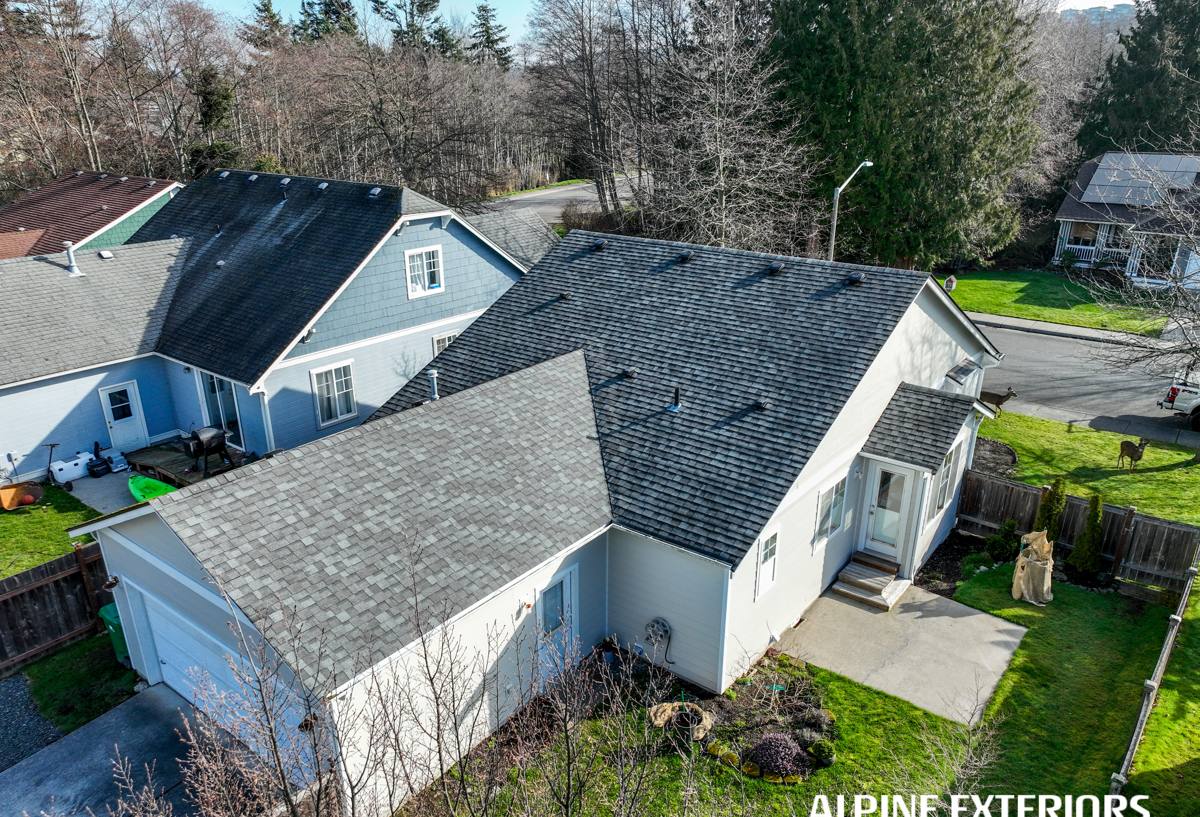
What Salt Air, Wind-Driven Rain, and Moss Actually Do to a Home
Salt Air and Corrosion
Airborne salt doesn't just sit on the surface — it works into fasteners, flashing, and any exposed metal on a home's exterior. Over time it accelerates corrosion on nails, screws, hinges, and trim fasteners that weren't rated for a marine environment. Once a fastener starts to fail, whatever it's holding — a siding board, a piece of trim, a deck railing — starts to move, and movement is where water intrusion begins.
Wind-Driven Rain
Straight-down rain is relatively easy for a building envelope to shed. Rain that's being pushed sideways by wind off the water finds every gap, lap joint, and penetration a home has. West-facing walls in particular take this on directly, which means those elevations wear out faster than the sheltered sides of the same house. Poorly sealed siding joints, undersized flashing, and gaps around window and door openings are where wind-driven rain gets past the exterior and into the wall assembly.
Moss, Algae, and the Long Damp Season
San Juan County's marine climate means long stretches of the year where surfaces simply don't dry out between rain events. On roofs, shaded siding, and anything under tree cover, that moisture retention feeds moss and algae growth. Beyond looking bad, moss holds water against a surface and, on wood-based products, that constant moisture is what drives rot. Roofs are usually the first place homeowners notice moss, but it grows on siding too, especially on the north and west walls that get less direct sun.
Why This Adds Up to Faster Wear on the Wrong Materials
None of these stresses — salt, wind-driven rain, extended dampness — are dramatic on their own. The problem is that they're constant and cumulative. A siding product that performs fine in a drier, more sheltered part of the county can wear out noticeably faster on a directly exposed West Beach elevation. That's the reason we don't treat every job on Orcas Island the same way, and it's a big part of why we're selective about what we'll put on a home in a spot like this.
Why We Install Only James Hardie Fiber Cement Siding
We install James Hardie fiber cement exclusively — we don't offer vinyl, LP SmartSide, Cemplank, Allura, or wood siding as alternatives. That's not because those products don't have a place in the industry; it's because after years of exterior work in this specific climate, we standardized on the product we trust to hold up here.
Fiber cement is non-combustible and dimensionally stable, meaning it doesn't expand, contract, warp, or absorb moisture the way engineered wood or solid wood products can. Hardie's ColorPlus factory-applied finish is baked on under controlled conditions rather than field-painted, which matters in a climate where paint failure from repeated wet-dry cycling is a real, recurring problem. Hardie also engineers specific product lines (their "HZ" designations) for different climate zones, and the Pacific Northwest's wet, moderate climate is one they specifically account for. Combined with a strong transferable warranty, it's the product we're comfortable standing behind on a directly exposed site like West Beach — where we don't want to be having a "why is this failing already" conversation five years after installation.
How Siding Material Choice Plays Out in a Marine Climate
| Factor | James Hardie Fiber Cement | Vinyl | Wood / Engineered Wood |
|---|---|---|---|
| Moisture absorption | Very low; doesn't swell or rot | Doesn't absorb, but can warp and gap | Absorbs moisture; prone to rot without diligent upkeep |
| Salt air / corrosion resistance | Not affected by salt; correct fasteners matter | Panels resist salt, but hardware can corrode | Susceptible to accelerated decay near salt air |
| Finish durability | Factory-baked ColorPlus finish, long fade resistance | Color molded through, but can chalk/fade | Field-applied paint or stain; needs recoating on a cycle |
| Fire resistance | Non-combustible | Combustible, can melt/deform | Combustible |
| Typical maintenance | Occasional wash, repaint on a long cycle | Low, but cracks/fades over time | Regular repainting or restaining, moss and rot monitoring |
This isn't a knock on every other product on the market broadly — it's specific to what performs well under sustained salt air and wind-driven rain, which is the environment West Beach homes actually sit in.
Our Services for West Beach Homes
Siding is where we started, but most homes out here need more than one exterior system addressed at the same time, especially if the house hasn't had attention in a while.
Siding
James Hardie lap, panel, and shingle-style siding installed to manufacturer spec, including correct fastener selection, flashing details, and joint sealing for a directly exposed marine site.
Roofing
Roofs on the exposed side of Orcas Island deal with the same wind-driven rain and moss pressure as siding, often worse, since they're the first surface to catch it. We address moss buildup, flashing condition, and ventilation as part of any roofing work.
Windows
Window replacement is frequently paired with siding work because the flashing and integration around window openings is one of the most common failure points on older homes. Doing both together lets us get the water management details right in one pass instead of patching around an existing installation later.
Decks
Outdoor living space matters on Orcas Island, and decks facing the water take the same salt and moisture exposure as the siding above them. We build and repair decks with attention to the same drainage and material durability concerns.
What Working Locally Actually Means Out Here
Getting exterior work done right on Orcas Island isn't the same as a mainland job. Materials, crews, and equipment all move by ferry, which means scheduling has to account for sailing times and weather windows rather than just a calendar date. A contractor who doesn't work the islands regularly can underestimate this and let a project stall waiting on a delayed materials delivery or a missed boat.
Working West Beach specifically also means understanding the site conditions before the crew shows up — access roads, staging space, and how exposed a given property is to wind matter for how we sequence a job. A crew that's done this kind of exposed-site work before plans around it instead of discovering it mid-project.
Signs Your West Beach Home's Exterior Needs Attention
- Moss or dark streaking on north- or west-facing siding and roof surfaces
- Paint that's peeling, bubbling, or chalking faster than a normal repaint cycle would suggest
- Soft spots, visible gaps, or warping at siding joints and trim
- Rust staining running down from fasteners or metal flashing
- Drafts, fogged glass, or visible gaps around window frames
- Deck boards that feel spongy or fasteners that have visibly corroded
- Any interior sign of moisture — stains, musty smell, or soft drywall near exterior walls
Catching these early is almost always cheaper than waiting until there's structural repair involved, especially in a climate that doesn't give a damaged exterior much chance to dry out on its own.
What Affects the Cost of Exterior Work on an Exposed Site
Every property is different, but a few factors consistently move the number on a West Beach project: how much of the existing siding, sheathing, or trim needs to be removed and replaced versus reused; how much of the house faces directly into wind and rain versus sitting in a more sheltered spot; whether roofing, windows, or decking are being addressed at the same time as siding; and site access for staging materials and equipment. We walk all of this with you during an estimate rather than quoting blind.
Get a Straight Answer on Your West Beach Home
If you're dealing with an aging exterior on West Beach — or you just want an honest read on how much life is left in your current siding, roof, windows, or deck — we're glad to come take a look. There's no pressure and no obligation, just a straightforward assessment from a crew that works this exposure regularly. Fill out the form below for a free estimate.