 Orcas Island Siding
 Windows on Orcas Island Work Harder Than Windows Almost Anywhere Else
A window on Orcas Island isn't just holding back weather — it's holding back a marine environment. Salt-laden air drifts in off the water and settles on every exterior surface, including window frames, hardware, and fasteners. Add driving, wind-pushed rain that hits homes at an angle instead of straight down, and a long, damp moss season that keeps north-facing walls and window sills shaded and wet for months at a time, and you have a combination that ages ordinary windows faster than most manufacturers' spec sheets assume. Window installation here isn't the same job as window installation in a dry inland climate, and treating it that way is how homeowners end up with leaks, fogged glass, and rot within a few years of a "new" window.
We install windows across Orcas Island and the surrounding San Juan County islands, and everything about how we approach the job — the products we recommend, the flashing details we insist on, the timing we suggest — is shaped by what actually happens to a window here over ten, twenty, and thirty years.
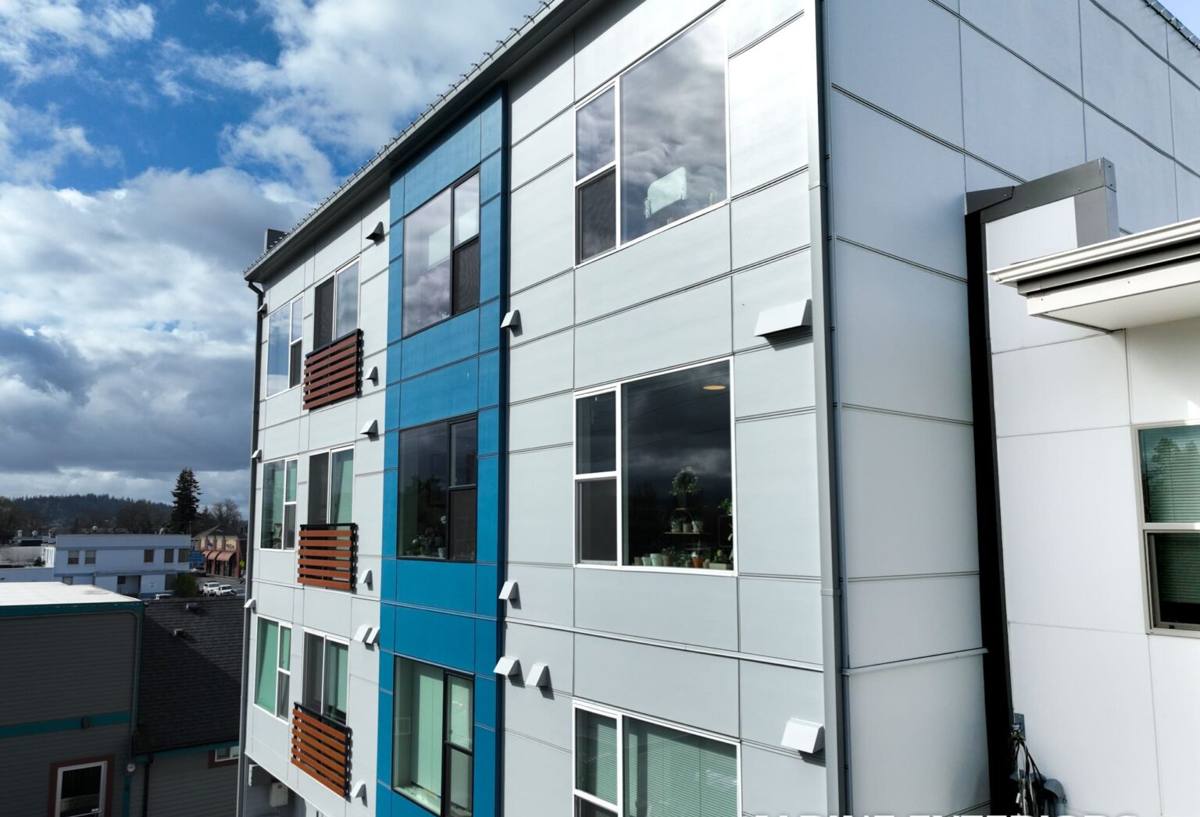
What Salt Air, Rain, and Moss Actually Do to a Window Over Time
Salt Air and Metal Components
Salt accelerates corrosion on anything metal — hinges, cranks, balance systems, screws, and cladding. On a standard window, these components are often the first parts to fail on a coastal property, sometimes years before the glass unit or the frame itself shows any problem. Once hardware seizes or corrodes, the window stops sealing properly even if it still looks fine from across the room.
Wind-Driven Rain and Water Intrusion
Straight-down rain is a fairly forgiving load for a window to manage. Wind-driven rain, common on Orcas Island's exposed and waterfront-adjacent lots, pushes water sideways and upward against the building envelope, testing every seam, every piece of flashing, and every bead of sealant around a window opening. A window that's watertight in calm conditions can still leak during a wind event if the flashing details weren't done correctly.
Moss Season and Trapped Moisture
The extended damp season that lets moss thrive on roofs and siding also keeps window sills, trim, and the wall assembly around a window wet longer than in a drier climate. Wood trim and sills that stay damp for weeks at a stretch are far more prone to rot, and moss or algae growth right up against a window frame holds moisture against the material instead of letting it dry.
Signs Your Orcas Home's Windows Need Attention
Because coastal deterioration is often gradual, many homeowners don't notice a problem until it's significant. Watch for these signs:
- Stiff, sticky, or corroded cranks, locks, or hinges on operable windows
- Soft or discolored wood trim or sill material around the window frame
- Fogging or condensation between the panes of a double-pane unit (a sign the seal has failed)
- Visible daylight, drafts, or whistling around the frame during windy weather
- Peeling paint, bubbling, or staining on interior drywall near a window
- Moss, algae, or dark streaking building up on the sill or lower frame
- Difficulty opening, closing, or latching a window that used to operate smoothly
Any one of these on its own might be minor. Several at once, especially on a window that's ten-plus years old, usually means the window and its surrounding flashing need a real assessment, not just a caulk touch-up.
What a Correct Window Installation Actually Involves
Window installation is judged almost entirely on what you can't see once the trim goes back on. The visible frame and glass matter, but the flashing, sealing, and integration with the wall assembly behind it are what determine whether the window performs for twenty years or leaks in three.
Flashing and the Moisture Barrier
Every opening needs a proper flashing sequence — sill pan, side flashing, and head flashing installed in the correct shingle-lap order so water is always directed out and down, never trapped behind the siding. On a home exposed to driving rain, this sequence isn't optional detailing; it's the difference between a dry wall cavity and a hidden rot problem that surfaces years later.
Frame Material and Hardware Selection
Given the corrosive salt air, hardware quality matters as much as the frame material itself. We look at corrosion-resistant fasteners and hardware, not just the window brand's standard package, especially for homes closer to the water or in more exposed locations on the island.
Sealing, Shimming, and Insulation
A window needs to be shimmed level, plumb, and square before it's fastened, then sealed with the right sealants at the right points — never sealed everywhere, which can trap moisture instead of letting incidental water drain out. Low-expansion foam or backer rod and sealant around the frame perimeter closes air gaps without distorting the frame.
Interior and Exterior Finish Work
Trim, casing, and sill work are finished to shed water on the exterior and seal properly on the interior, so the finished look matches the performance underneath it.
Choosing the Right Window for Coastal San Juan County Conditions
There's no single "best" window for every home, but some materials and features hold up more predictably in this climate than others. We walk homeowners through the real trade-offs rather than pushing one product line.
| Frame Material | Salt Air / Corrosion Resistance | Maintenance | Typical Trade-Offs |
|---|---|---|---|
| Vinyl | Good — won't corrode, may fade slightly over decades in strong UV/salt exposure | Low | Cost-effective; frame color and structural options are more limited than other materials |
| Fiberglass | Very good — dimensionally stable, resists corrosion and moisture | Low | Higher upfront cost; strong long-term performance in coastal conditions |
| Wood (clad exterior) | Depends on cladding quality — the wood interior needs the exterior cladding to stay intact | Moderate to high | Attractive interior wood look; any breach in the exterior cladding exposes wood to moisture |
| Aluminum | Fair — prone to corrosion and pitting near salt air unless properly coated | Moderate | Strong and slim sightlines, but generally not our first recommendation for exposed coastal walls |
Hardware finish matters too — we recommend corrosion-resistant hardware options over standard-grade hardware on any home within reach of salt air, which on Orcas is most of the island.
Glass Package Considerations
Beyond frame material, the glass package affects comfort and condensation control through Orcas Island's damp winters and mild summers. Low-E coatings and properly gas-filled sealed units help manage heat loss and reduce interior condensation on cold, wet days — a real everyday comfort issue in this climate, not just an energy-bill line item.
How Our Installation Process Works
- On-site assessment. We evaluate existing windows, the condition of the surrounding wall assembly, and any signs of past water intrusion before recommending anything.
- Honest product recommendation. We walk through frame material and glass options suited to your home's exposure — waterfront-adjacent, wooded, or more sheltered — and your budget.
- Measurement and ordering. Because materials and product orders often route through the mainland, we build realistic lead times into the schedule and communicate them upfront.
- Removal and opening prep. Old windows are removed carefully, and we inspect the framing and sheathing underneath for hidden rot or moisture damage before installing anything new.
- Flashing and installation. Sill pan, flashing, shimming, and sealing are done in the correct sequence for a coastal wind-driven-rain environment.
- Finish work and walkthrough. Interior and exterior trim is completed, every window is tested for smooth operation, and we walk the job with you before calling it done.
Why an Island-Based Crew Matters for This Job
Window installation logistics on Orcas Island are genuinely different from a mainland job. Materials, specialty hardware, and any warranty or return items have to move by ferry, which means scheduling has to account for sailing times and weather delays rather than same-day mainland delivery. A crew that already works the islands builds that reality into the project timeline instead of promising a mainland-standard schedule and missing it.
There's also the matter of knowing the housing stock. Orcas Island has a mix of older cabins, additions built in stages, and newer construction, each with different framing quirks and different histories of past repairs. A crew that regularly works on San Juan County homes has seen how these openings were framed and flashed (or weren't) and knows what to check for before assuming a straightforward install.
Permitting is another local detail worth knowing: window replacements that change the size of an opening, or work on homes in certain zones, may require a permit through San Juan County. We factor that into project planning rather than leaving homeowners to sort it out mid-project.
Timing Your Window Project Around Orcas Weather
Window installation can happen across most of the year here, but scheduling around the wettest, windiest stretches reduces the number of days an opening sits exposed mid-install. We plan installations to minimize the time a wall opening is open to weather, sequence multiple windows so no home is left with more exposure than necessary, and keep an eye on the forecast rather than pushing through a job during a driving-rain event just to stay on schedule. If your project also touches areas prone to moss buildup — north-facing walls, shaded rooflines near window headers — we'll flag that during the assessment, since ongoing moss control nearby protects the new installation's long-term performance too.
If your windows are showing their age, feel drafty, or you're planning a renovation that includes new window openings, we're happy to take a look. Reach out for a free, no-pressure estimate — we'll assess your home's specific exposure and give you a straight answer on what it actually needs.