 Orcas Island Siding
 Why Crow Valley Homes Take a Different Kind of Beating
Crow Valley sits in the interior of Orcas Island, tucked between wooded ridgelines rather than facing open water directly, but that doesn't mean the exterior of a home there gets an easy ride. San Juan County's marine climate still reaches inland: salt-laden air moves through the valley on prevailing winds, driving rain arrives sideways during winter storms, and the tree cover that makes the area beautiful also keeps moisture sitting on north-facing walls and rooflines long after a storm passes. Add in a moss season that can run from late fall through spring, and you have an exterior environment that punishes anything less than a genuinely weather-engineered siding system.
Homes in wooded, shaded valleys like this one often see slower drying times than homes on open, sun-exposed lots elsewhere on the island. Bark, needles, and organic debris collect in siding laps, behind trim, and in gutters, holding moisture against the wall assembly. Over years, that's exactly the kind of slow, quiet exposure that breaks down siding materials that aren't built for sustained dampness.
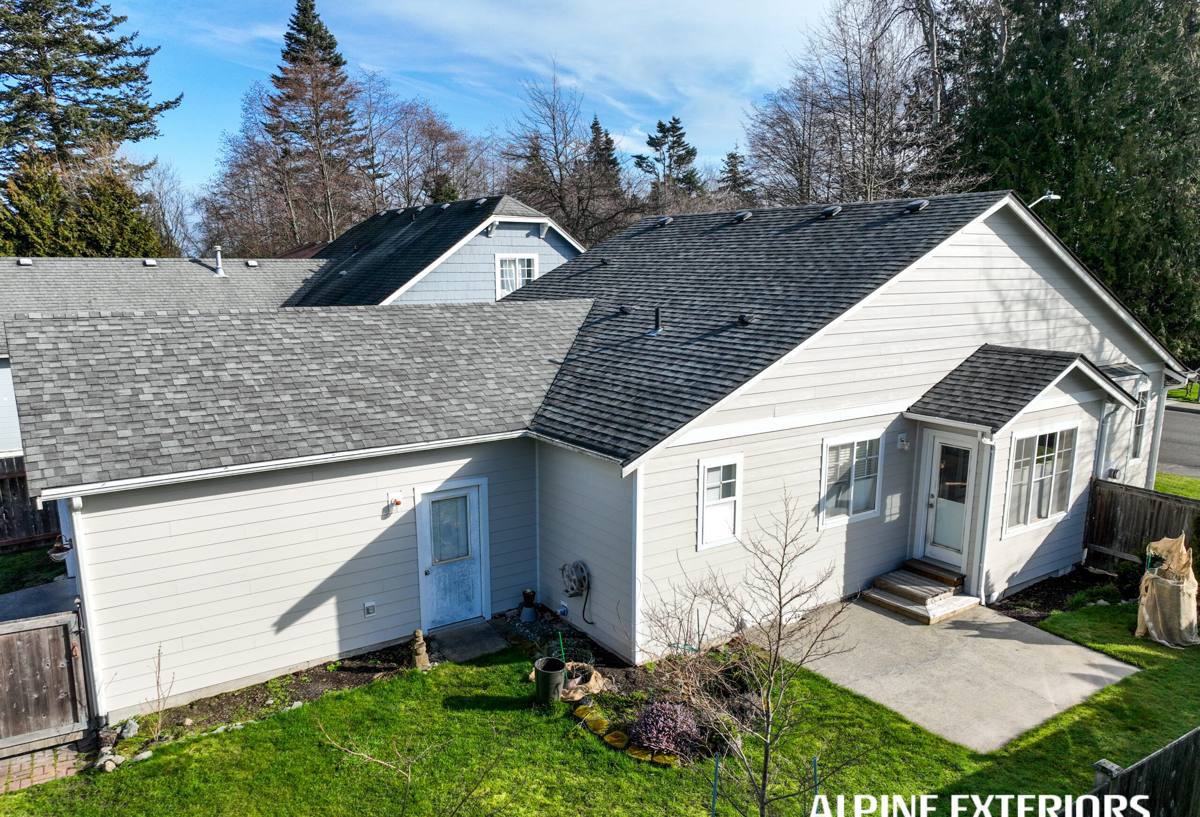
What We See on Older Crow Valley Exteriors
When we're called out to look at siding or trim on a Crow Valley home, a handful of patterns show up again and again:
- Moss and algae staining concentrated on shaded, north- and east-facing walls where sun doesn't reach long enough to dry the surface
- Paint failure and soft or swollen wood trim around windows, door casings, and butt joints where water has worked its way in
- Caulk joints that have separated at seams, letting moisture behind the cladding instead of shedding it
- Rot at the bottom courses of siding near grade, decks, and areas where sprinklers or landscaping keep the wall damp
- Gutter overflow staining where forest debris has clogged the system during a wind event
None of this is unique to any one house — it's the predictable result of a wet, shaded, salt-influenced climate meeting a siding product that wasn't designed to handle all three at once.
Our Position: James Hardie Fiber Cement, Full Stop
We install James Hardie fiber cement siding exclusively. We don't install vinyl, LP SmartSide, Cemplank, Allura, primed spruce, or cedar. That's not a marketing line — it's a standard we hold because of what we've seen these products do over time in exactly this kind of climate, and because we'd rather stand behind one system we trust completely than offer several we have reservations about.
Why Not the Alternatives
Vinyl siding is inexpensive and low-maintenance in the sense that it doesn't need painting, but it's a petroleum-based product that expands, contracts, and can become brittle in cold, damp conditions — and it offers essentially no fire resistance, which matters increasingly in the Pacific Northwest. Engineered wood products like LP SmartSide use wood strand cores that, despite treated resin edges, remain vulnerable at cut ends and fastener penetrations if moisture gets in and isn't caught early. Other fiber cement brands such as Cemplank or Allura are chemically similar to Hardie, but we've standardized on one manufacturer so our crews install one system with total familiarity, one warranty structure, and one factory finish process we know inside and out. Primed spruce and cedar are traditional, attractive choices, but they demand a maintenance commitment — regular repainting, caulking, and moisture vigilance — that most homeowners underestimate until the wood has already started to fail.
What James Hardie Gets Right for This Climate
Fiber cement is cement, sand, and cellulose fiber — not wood, not vinyl. That composition is what makes it suited to a valley environment with heavy moisture and organic debris:
- It doesn't rot, and it isn't a food source for the moss and mildew that thrive in shaded, damp conditions
- It's non-combustible, which matters given the island's wildfire risk during dry summer stretches
- ColorPlus factory-applied finish is baked on under controlled conditions, resisting the fading and chalking that field-applied paint suffers under UV and salt exposure
- Hardie's HZ5 product line is engineered specifically for climates with freeze-thaw cycling and sustained moisture exposure, which fits the Pacific Northwest better than a generic national product
- It carries a strong, transferable manufacturer warranty when installed to Hardie's specifications — something that matters to future buyers if the home sells
Comparing the Options Homeowners Actually Consider
| Material | Moisture Behavior | Maintenance | Fire Resistance | Typical Lifespan |
|---|---|---|---|---|
| Vinyl | Doesn't rot, but can warp/crack in cold and impact | Low, but not repairable — panels are replaced | Poor — melts and contributes fuel | 15-25 years |
| Cedar / Primed Spruce | Absorbs moisture; needs sealed end cuts and joints | High — repainting and caulk cycle every few years | Poor untreated | 10-20 years without diligent upkeep |
| LP SmartSide | Engineered to resist moisture, but vulnerable at cuts/fasteners if maintenance lapses | Moderate — periodic repainting and joint inspection | Moderate | 20-30 years |
| James Hardie Fiber Cement | Non-organic, doesn't rot or feed mold/moss | Low — occasional wash, no repainting for many years | Non-combustible | 30-50 years with correct install |
Cost is often the first question, and it's a fair one: fiber cement typically costs more upfront than vinyl and is comparable to or somewhat higher than engineered wood, largely reflecting material weight, cutting tools, and installation labor. Over a 20-30 year ownership horizon, though, the lower maintenance spend and avoided repaint cycles usually close that gap.
Why Installation Quality Matters as Much as the Material
Fiber cement's long-term performance depends almost entirely on correct installation — proper clearances from grade and roof lines, correct fastener placement, factory-caulked or properly flashed joints, and ventilation behind the cladding. A Hardie board installed with the wrong nail pattern or without proper flashing at window heads can still trap moisture and fail early, which is why we treat installation detail as inseparable from the product itself. This is especially true in a shaded valley setting where drying time after rain is already slower than average.
What Correct Installation Includes
- Manufacturer-specified clearances between siding and roofing, decks, and grade
- Proper flashing and drainage plane behind the siding, not just caulk at the surface
- Blind or face-nailing per Hardie's fastening schedule for the specific product line and exposure
- Factory-primed or ColorPlus-finished cut edges sealed in the field per spec
- Attention to butt joints and corners — the most common failure points on any siding job
Roofing, Windows, and Decks: The Whole Building Envelope
Siding doesn't work in isolation. On a shaded, moisture-heavy lot, a roof that's shedding water poorly, windows with failed seals, or a deck ledger board trapping water against the wall will undermine even a perfectly installed Hardie exterior. We handle roofing, windows, and decks alongside siding because these systems interact constantly — flashing at a roof-to-wall transition, window head details, and deck attachment points are exactly where most moisture intrusion problems in this climate actually start. Addressing siding without looking at the rest of the envelope is a partial fix at best.
Moss and Gutter Maintenance Specific to Wooded Lots
Because Crow Valley properties often sit under significant tree cover, gutter and downspout maintenance plays a bigger role in siding longevity here than it would on an open, treeless lot. Debris buildup causes overflow that runs directly down exterior walls, concentrating moisture in one spot repeatedly through the wet season. We look at gutter condition and roof drainage as part of any siding evaluation, since fixing the siding without addressing where water is actually landing on it just delays the same problem.
Why a Local Crew Matters Here
An exterior contractor working across San Juan County understands things that don't show up in a generic install manual: how ferry logistics affect material staging and scheduling, which parts of the island stay wet longest into spring, and how tree cover changes drying time from one lot to the next even within the same neighborhood. That local knowledge shapes real decisions — where to prioritize flashing detail, when to schedule work around the wettest months, and how to sequence a job so materials aren't sitting exposed during a stretch of driving rain.
Planning a Siding Project in Crow Valley
If you're weighing a full re-side, a partial repair, or just want a second opinion on moss and moisture damage you're seeing on your home, it helps to get a straightforward, in-person assessment before making decisions. We'll walk the exterior, look at where water and shade are actually causing problems, and give you a clear picture of scope and options — including how siding, roofing, windows, and deck condition all factor into the recommendation.
If you're in Crow Valley or elsewhere on Orcas Island and want to talk through your home's exterior, we're happy to come take a look. Reach out for a free, no-pressure estimate using the form below.