 Orcas Island Siding
 Siding in Lopez Village: A Different Kind of Wear
Homes in the Lopez Village area live with a combination of stresses that most mainland siding never has to survive. Salt-laden air moves in off the water and settles into every exterior surface, cedar shake roofs and evergreen tree cover keep yards shaded and damp for long stretches, and driving rain off the water pushes moisture sideways into wall assemblies instead of just falling straight down. Add a moss season that can run for months out of the year, and you have an exterior environment that quietly wears down the wrong materials faster than most homeowners expect.
We work throughout San Juan County and see the same pattern on house after house: siding that looked fine for the first several years starts showing stress right where the climate is hardest on it — north-facing walls that never fully dry out, lower courses near grade where splash-back keeps wood or composite products damp, and trim details where caulk joints were the only thing keeping water out. A siding system built for this island climate has to handle all of that, not just look good on installation day.
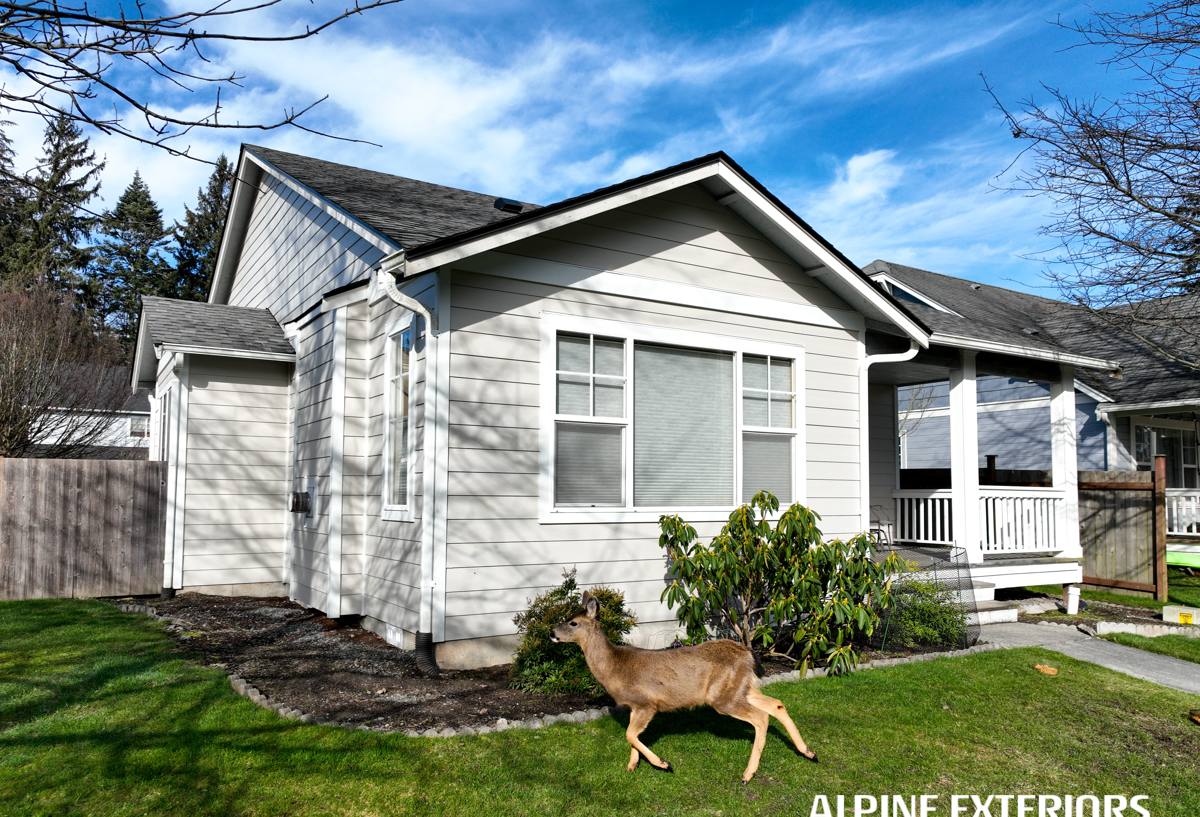
What Salt Air, Rain, and Moss Actually Do to Exterior Materials
Salt Air
Airborne salt is corrosive to exposed fasteners and metal flashing, and it accelerates the breakdown of paint films and lower-grade coatings. Materials that rely on a factory or field-applied finish need that finish to hold up against salt exposure for decades, not just a few seasons.
Driving Rain
Wind-driven rain doesn't behave like a normal rainstorm. It gets forced up under laps, into seams, and behind trim if the water-resistive barrier, flashing details, and siding profile aren't installed correctly. On an exposed island lot, installation quality matters as much as the material itself.
Moss and Sustained Moisture
Extended damp periods and shade from tree cover create ideal conditions for moss, algae, and mildew to take hold on exterior surfaces. Materials that absorb moisture or trap it against the substrate stay wet longer, which is exactly what organic growth needs to establish itself.
Signs Your Siding Is Losing the Battle
- Paint that's peeling, bubbling, or chalking well before the interval on the can
- Soft spots, bubbling, or a spongy feel when you press on the siding, especially near the bottom courses
- Visible swelling at butt joints, corners, or panel edges
- Persistent moss or dark streaking that comes back within a season of cleaning
- Gaps opening up at caulked joints and trim seams
- Rising exterior maintenance costs — repainting more often, patching more often
Any one of these on its own might be minor. Several of them together usually mean the siding system as a whole is struggling to keep up with the environment it's in.
Why We Install Only James Hardie Fiber Cement
We made a deliberate decision to standardize on James Hardie fiber cement siding and not install vinyl, LP SmartSide, primed spruce, cedar, or other fiber cement brands. That's not a marketing position — it's a professional standard based on what holds up in this specific climate over the long run.
Vinyl siding is affordable and low-maintenance in mild conditions, but it can warp or distort in temperature swings, its seams and channels give wind-driven rain a path behind the cladding, and its appearance is often the first thing buyers notice as a downgrade. Wood products — cedar, primed spruce, engineered wood like LP SmartSide — offer a genuinely attractive, traditional look, but every one of them depends on an intact factory or field coating to keep moisture out. In a climate with this much sustained dampness and salt exposure, any breach in that coating is an invitation for rot, swelling, and the kind of hidden moisture damage that's expensive to find and fix. We're not saying these products are junk; we're saying that on an exposed island lot, the maintenance burden and moisture risk are higher than we're willing to put our name behind.
James Hardie fiber cement is non-combustible, dimensionally stable, and doesn't feed moss and mildew the way organic materials can. It's also engineered specifically for climate — Hardie's HZ product lines are formulated differently for wet coastal regions than for hot dry ones, which matters when you're building a wall assembly meant to last decades in the Pacific Northwest marine environment.
James Hardie Products, Colors, and Finish
Hardie's ColorPlus factory finish is baked on and cured under controlled conditions, which gives it far better fade and moisture resistance than field-applied paint on lap siding — and it comes backed by a strong transferable warranty on both the substrate and the finish. That matters directly for salt air and UV exposure, since it's the finish layer taking the daily beating.
| Product | Common Use | Why It Fits This Climate |
|---|---|---|
| HardiePlank lap siding | Primary wall cladding | Traditional lap look, factory-cured finish resists salt and moisture |
| HardiePanel vertical siding | Modern facades, accent walls | Clean lines, fewer horizontal laps for water to find |
| HardieShingle | Gable accents, coastal-style detailing | Shingle look without the moisture sensitivity of real wood shakes |
| HardieTrim | Corners, window and door trim | Stable, consistent trim lines that hold paint and caulk joints |
Beyond Siding: Roofing, Windows, and Decks
Siding is only part of how a home's exterior handles this climate. We also handle roofing, window replacement, and deck construction, because these systems have to work together, not in isolation. A roof with poor drainage detailing at the eaves can drive water straight down a wall that's otherwise perfectly installed. Aging windows with failed seals let moisture and air infiltrate around the very trim we're trying to protect. Decks built low to the ground or with the wrong fastener hardware corrode and rot fast in salt air. When we look at a Lopez Village property, we're evaluating the whole envelope, not just one component of it.
What a Local Crew Brings to an Island Job
Working in San Juan County comes with logistics that off-island contractors often underestimate: ferry schedules that dictate when crews and materials can arrive, limited same-day availability of specialty materials, and weather windows that close faster than they do on the mainland. A crew that regularly works the islands plans around all of that — staging materials ahead of time, scheduling installation during realistic weather stretches, and not leaving a house mid-project because a ferry reservation didn't line up. That planning difference often shows up in how long a job actually takes from start to finish, not just in the quality of the finished work.
Local experience also means recognizing patterns specific to island homes: which wall orientations take the worst weather, where moss tends to establish first, and how a particular lot's tree cover and exposure affect drying time after installation.
What Affects the Cost of a Siding Project
| Factor | Why It Matters |
|---|---|
| Home size and wall complexity | More corners, dormers, and trim details mean more labor and material |
| Existing siding removal | Tear-off and disposal of old material adds time, especially with hidden damage |
| Substrate and moisture repair | Rot or water damage found during removal has to be fixed before new siding goes on |
| Product line and finish choice | Panel type, trim detailing, and color selection affect material cost |
| Site access and logistics | Ferry-dependent material delivery and staging on island lots factor into scheduling and cost |
What to Expect from Our Process
- On-site evaluation of your current siding, trim, and any related roofing or window concerns
- Honest assessment of what's driving the wear you're seeing — moisture, sun exposure, age, or installation issues
- A clear, itemized estimate with no pressure to decide on the spot
- Materials staged and scheduling planned around realistic island logistics and weather windows
- Correct flashing, house wrap, and fastening detail work — the parts that determine whether siding actually performs
- A finished exterior backed by James Hardie's transferable warranty
Living With Fiber Cement Siding in a Marine Climate
Fiber cement isn't zero-maintenance, but the maintenance it needs is minor compared to wood or vinyl in this environment. Periodic gentle cleaning to knock down moss and algae before it establishes, keeping gutters clear so water isn't cascading down walls, and an occasional visual check of caulk joints at trim and penetrations is about the extent of it. Because the ColorPlus finish is factory-applied and warrantied, you're not on a repainting cycle the way you would be with field-finished wood siding — which matters a lot when your home sits in a climate that's hard on any exposed coating.
If your Lopez Village home is showing wear from salt air, moisture, or moss, or you're planning ahead for a siding, roofing, window, or deck project, we're happy to take a look and walk you through what we're seeing. Reach out for a free, no-pressure estimate using the form below.