 Orcas Island Siding
 Building Decks That Actually Hold Up on Orcas Island
A deck on Orcas Island lives a harder life than one built thirty miles inland. Salt-laden air off the surrounding waters works on fasteners and metal connectors year-round. Driving winter rain finds every gap in flashing and framing. And the long, damp moss season here in San Juan County turns any shaded or low-airflow deck surface into a slick, spore-covered mess if it isn't built and maintained with that in mind. A deck that would be perfectly fine in a drier climate can fail early here — not because the design was bad, but because it wasn't designed for this specific island.
We build custom decks for Orcas homeowners with that reality built into every decision, from the ledger connection down to the fastener coating. This page covers what that actually means in practice: what local conditions demand, what a correctly built deck looks like, and how our process works from first call to final walkthrough.
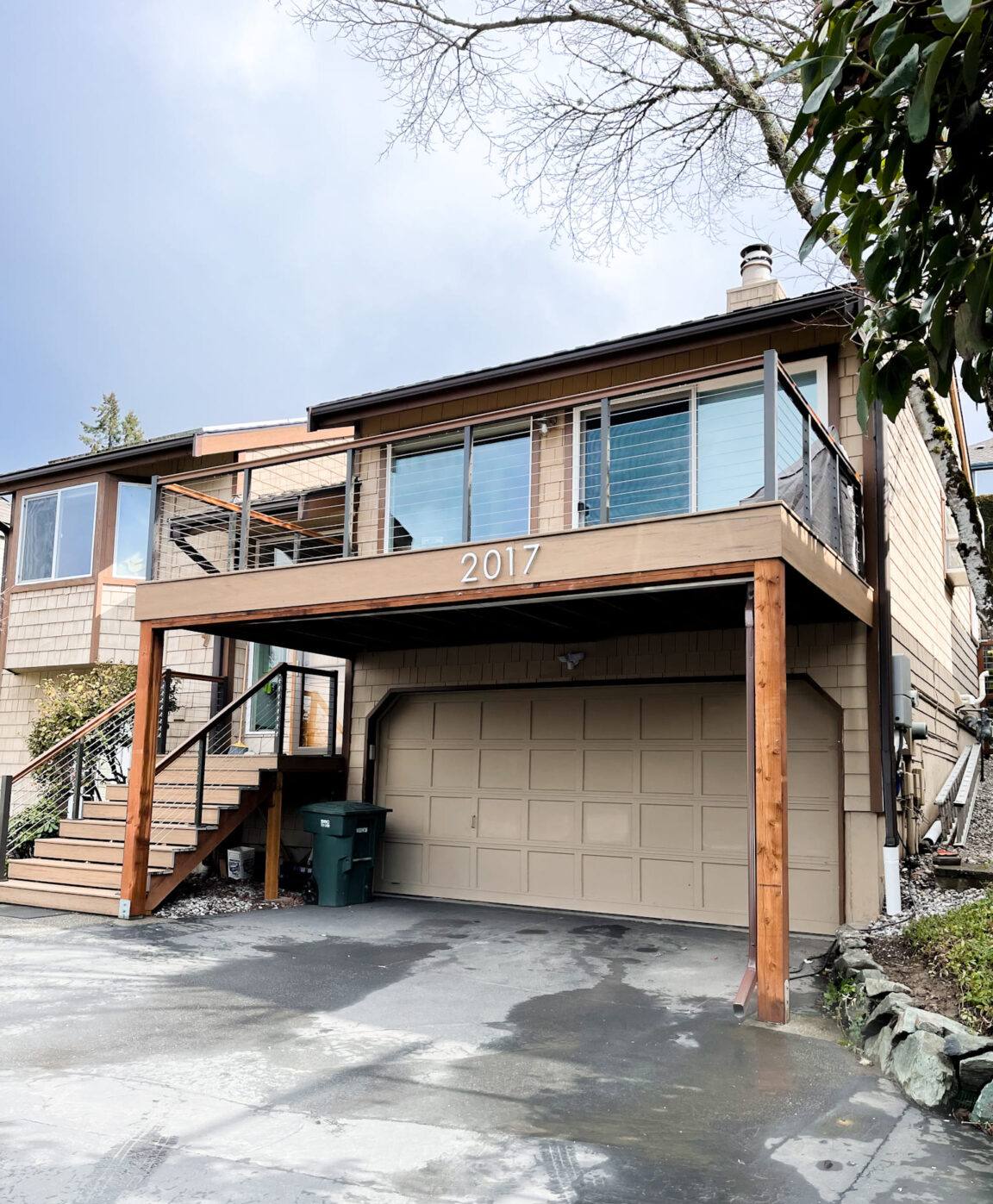
What Orcas Island Conditions Demand From a Deck
Salt Air and Corrosion
Even homes set back from the shoreline get salt-bearing air moving through on a regular basis. Over years, that air accelerates corrosion in anything less than marine-grade or properly coated hardware. Standard interior-rated screws, joist hangers, and post bases will rust, weaken, and eventually stain the decking around them. We spec stainless steel or hot-dip galvanized hardware rated for coastal exposure on every Orcas project, not just the ones directly on the water.
Driving Rain and Water Management
Rain here doesn't always fall straight down — wind-driven rain pushes water sideways into ledger connections, under railing posts, and along any horizontal surface that isn't properly sloped or flashed. A deck built without dedicated ledger flashing, proper deck board spacing, and a slight drainage slope will trap water against the house band joist, which is exactly where rot starts and exactly where it's hardest to catch early.
Moss and Surface Growth
San Juan County's long wet season, combined with the tree cover common on many Orcas properties, means moss and algae growth on deck surfaces is a matter of when, not if — especially on the north or shaded side of a house. Moss holds moisture against the decking surface, feeds mildew, and makes boards dangerously slick. The fix isn't one product; it's a combination of surface choice, airflow underneath the deck, and a realistic maintenance plan we walk through with every client.
Decking Material Options for This Climate
There's no single "best" decking material for every Orcas project — the right call depends on your budget, how much upkeep you want to do, and how exposed the site is. Here's how the common options actually compare under local conditions.
| Material | Moisture & Moss Behavior | Maintenance | Typical Lifespan Here |
|---|---|---|---|
| Pressure-treated wood | Absorbs moisture readily; needs sealing to resist moss and staining | Annual cleaning and re-sealing recommended | 15-20 years with upkeep |
| Cedar | Naturally rot-resistant but still needs sealing in wet, shaded spots | Periodic sealing and cleaning | 20-25 years with upkeep |
| Composite decking | Won't rot, but surface grip and mildew resistance vary a lot by product line | Occasional washing; no sealing needed | 25-30+ years, manufacturer-dependent |
| PVC / capped polymer | Best moisture resistance of the group; still needs washing to clear moss buildup | Lowest — washing only | 25-30+ years |
We don't push one brand or material on every job. We'll walk your site with you, point out where sun and shade actually fall through the seasons, and give you an honest read on which material fits your budget and your tolerance for maintenance.
What a Correctly Built Deck Involves
The visible decking boards are the smallest part of what makes a deck last on Orcas Island. The parts that matter most are the ones you don't see once the project is finished:
- Ledger board properly flashed and sealed against the house — the single most common failure point on older decks we're called out to repair
- Footings sized and set to the frost depth and soil conditions of the specific site, not a generic minimum
- Joist hangers, post bases, and fasteners in stainless or hot-dip galvanized rated for coastal exposure
- Adequate airflow underneath the deck to let framing dry out between rain events
- Deck board spacing and slope set to shed water rather than pool it
- Railing posts anchored with corrosion-resistant hardware and blocking sized for real-world lateral loads
- A material and finish choice matched honestly to the site's sun, shade, and moss exposure
Skip any one of these and the deck may still look fine for a few years. On Orcas, the gaps show up as soft spots near the ledger, rust streaks around fasteners, or a surface that's green and slick by November — usually right around the time a shortcut-built deck is out of any workmanship warranty.
Design Considerations Specific to Orcas Properties
Beyond structure and materials, a few design choices make a real difference on island properties:
Orientation and Shade
Where the deck sits relative to tree cover and the path of the sun affects how fast moss takes hold. When the layout allows it, we'll talk through options that reduce permanent shade on the deck surface, or at minimum plan for the extra airflow and drainage a shaded deck needs.
Wind Exposure
Elevated decks and those on more exposed sites take more wind load than a ground-level patio deck. Railing and post spacing get sized accordingly, and we account for wind-driven rain reaching surfaces that a fully sheltered deck wouldn't have to handle.
Access for Island Logistics
Material delivery and equipment access work differently on Orcas than on the mainland. We plan material orders and site logistics around ferry schedules and site access up front, so your project isn't waiting on a delayed load once crews are already on-site.
Our Process, Start to Finish
- Site visit and consultation — we walk the property, discuss how you'll use the space, and assess sun, shade, drainage, and access
- Design and material selection — we lay out size, layout, and railing options and give you a clear, honest comparison of material choices for your budget
- Written estimate — a detailed scope and price, no vague allowances or surprise add-ons
- Permitting — we handle the permit process required for the project, so nothing gets built out of compliance
- Construction — framing, flashing, and hardware installed to the coastal-exposure standard described above
- Final walkthrough — we go over the finished deck with you, including a realistic maintenance schedule for your specific material and site conditions
Why It Matters to Hire a Crew That Already Works on Orcas
A contractor who mostly builds decks in drier, inland conditions can still build a structurally sound deck — but they may not default to marine-grade hardware, may not think through moss-prone shaded corners, or may not plan around ferry-dependent material logistics unless they've done it before. None of that shows up as an obvious problem on day one. It shows up two or three winters later, as the fasteners a generic build used start to fail, or as green, slick boards that never had the airflow to dry out.
We build decks on Orcas Island regularly, which means the coastal-grade hardware, proper flashing details, and moss-aware material choices described above aren't upgrades we offer — they're our standard starting point for every project here in San Juan County.
Maintenance That Keeps a Deck Performing
Even a well-built deck needs some seasonal attention in this climate. A simple, realistic routine goes a long way:
- Clear leaves and debris from between boards and along the edges before fall rains set in
- Wash the surface once or twice a year to clear early moss and algae growth before it takes hold
- Check and re-seal wood decking on the schedule appropriate to that product — composite and PVC don't need this step
- Inspect railing connections and ledger flashing annually for any sign of movement or water staining
We'll give you a maintenance schedule specific to the material you choose when the project wraps up, so there's no guesswork later.
Get an Honest Estimate for Your Orcas Deck Project
If you're planning a new deck or replacing one that's showing its age, we're happy to come take a look, talk through material options honestly, and give you a straightforward written estimate. There's no pressure and no obligation — just a clear picture of what a deck built for real Orcas Island conditions actually involves and costs.