 Orcas Island Siding
 Siding Installation on Orcas Island Isn't a One-Size Job
Orcas Island sits fully exposed to Puget Sound's marine weather — salt-laden air off the water, long stretches of driving rain through fall and winter, and a moss and algae season that can run most of the year in shaded, north-facing spots. A siding installation here has to account for all of that from the first day of planning, not just at the finish coat. Homes on Orcas take a different kind of weathering than a house forty miles inland, and the siding system, the water management behind it, and the installation details all need to match that reality.
This page covers what siding installation for an Orcas Island home should actually involve: what the climate does to a house over time, what correct installation looks like underneath the surface, and why we install exclusively with James Hardie fiber cement rather than the lighter-duty alternatives common on the mainland.
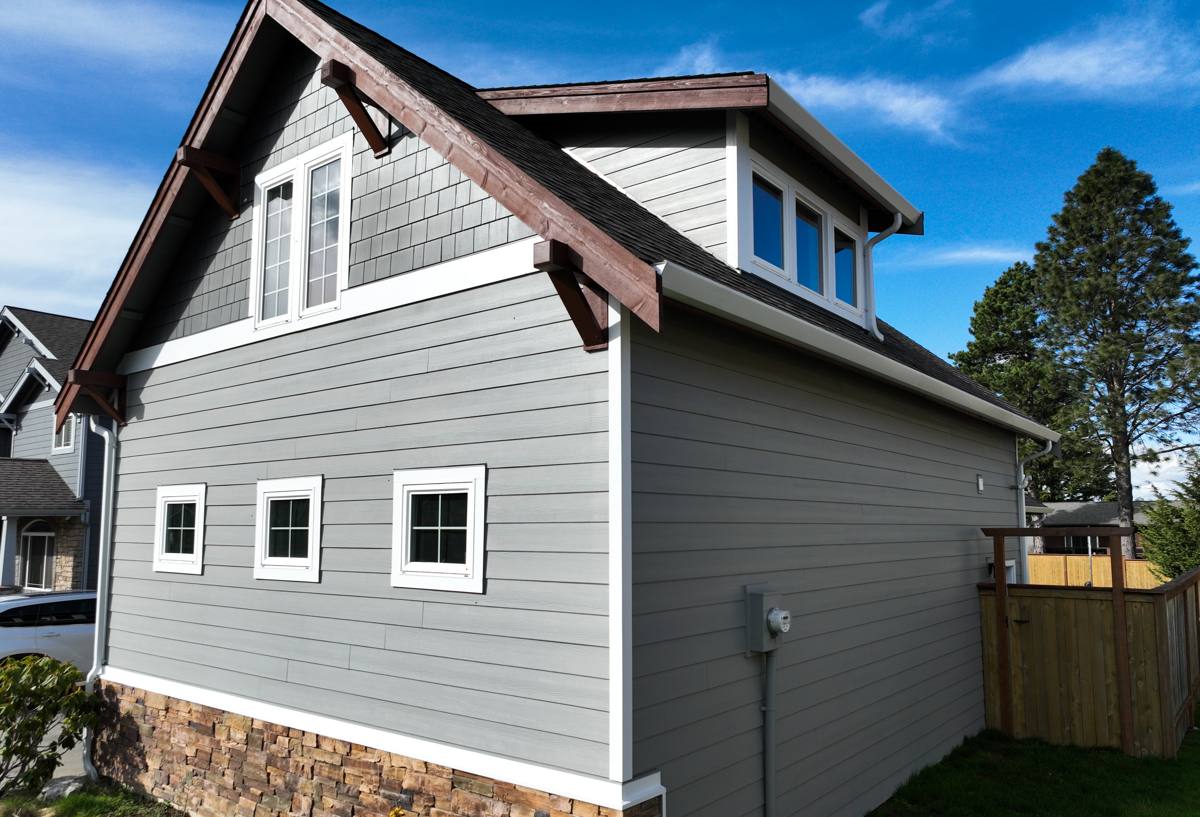
What San Juan County's Climate Does to a House Over Time
Three things drive most of the siding wear we see on Orcas homes:
Salt Air
Airborne salt from Puget Sound accelerates corrosion on fasteners, flashing, and any exposed metal trim, and it steadily degrades paint films and lower-grade composite sidings faster than it would on an inland home. Materials and hardware that hold up fine in Bellingham or Burlington don't always hold up the same way a quarter mile from tidewater.
Driving, Wind-Driven Rain
Storms coming off the water don't just fall straight down — wind pushes rain sideways into wall assemblies, seams, and any gap in flashing or caulking. A siding system that isn't detailed for wind-driven rain will eventually let moisture behind the cladding, even if the surface material itself never fails.
Moss and Algae Season
Shaded elevations, tree cover, and persistent damp air give moss and algae long windows to establish on siding, trim, and anywhere water sits instead of shedding. Left unaddressed, that growth holds moisture against the wall surface and shortens the life of paint, caulking, and the substrate underneath.
None of this makes Orcas Island unbuildable — it's a well-established island community with plenty of homes that have stood up to decades of this weather. It just means the siding installation has to be done with this climate in mind, not treated as a generic exterior job.
Why the Substrate Matters as Much as the Siding Itself
Most siding failures we're called to evaluate aren't failures of the visible siding material — they're failures of what's behind it. A correct installation on an exposed island wall depends on:
- A continuous, properly lapped water-resistive barrier (weather barrier) behind the siding, with every penetration sealed
- Correct flashing at windows, doors, roof-to-wall transitions, and any horizontal trim where water can collect
- Proper drainage plane and, where called for, a rainscreen gap so incidental moisture can drain and the wall can dry
- Fastener patterns and clearances that match the manufacturer's installation specification, not shortcuts to save time
Get these details wrong and even a premium siding product will trap moisture and fail early — often from the inside out, where it isn't visible until the damage is significant. Get them right, and the siding on top of that assembly has a real chance at its full service life in a demanding climate.
Why We Install James Hardie and Nothing Else
We standardized on James Hardie fiber cement for every siding installation we do, including here on Orcas, and we don't install vinyl, LP SmartSide, primed spruce, cedar, or other fiber cement brands. That's a deliberate call, not a sales preference:
- Non-combustible core. Fiber cement doesn't feed a fire the way wood-based or vinyl products can, which matters on a heavily treed island with limited fire department response relative to mainland cities.
- Engineered for wet climates. James Hardie's HZ5 product line is specifically formulated for the Pacific Northwest's moisture exposure, which lines up directly with what Orcas homes deal with.
- Factory-applied ColorPlus finish. The finish is baked on under controlled conditions rather than field-applied, which holds up better against UV and salt air than a job-site paint job, and it comes with its own finish warranty.
- Dimensionally stable. Fiber cement doesn't expand and contract with moisture and temperature the way wood products do, which means fewer open joints for wind-driven rain to exploit over time.
- Long, transferable warranty backing. When installed to spec, Hardie backs the product with warranty coverage that's meaningful for an island home expected to last generations.
Vinyl, engineered wood, and other fiber cement brands all have legitimate uses elsewhere. We simply don't think they're the right call for the exposure conditions on Orcas Island, and we'd rather install one product correctly and stand behind it than offer a menu of options with different risk profiles.
What a Correct James Hardie Installation Involves
A proper installation is a sequence, and skipping steps is exactly how moisture problems start years later:
- Remove existing siding and inspect sheathing for rot, delamination, or prior water damage
- Repair or replace any compromised sheathing before anything else goes on the wall
- Install a continuous water-resistive barrier, properly lapped shingle-style so water sheds outward
- Flash all windows, doors, and penetrations before siding installation begins
- Install rainscreen furring where the wall assembly calls for it, to give the wall a drainage and drying gap
- Install James Hardie panels or lap siding per manufacturer fastening and clearance specifications
- Detail all trim, corners, and butt joints with correct sealant and gapping
- Final inspection of fastener lines, caulking, and clearances before the job is called complete
Every one of these steps is easy to shortcut and hard to inspect once the wall is closed up. We build our process around not skipping any of them, because on an island where a re-side means barging or ferrying materials back out a second time, doing it right the first time isn't optional — it's the only economical option.
Product Lines Suited to Orcas Conditions
James Hardie makes several siding profiles, and the right choice depends on the home's exposure, style, and existing trim details:
| Product | Best Fit |
|---|---|
| HardiePlank lap siding (HZ5) | Traditional horizontal lap look; the most common choice for island homes wanting a classic Northwest exterior |
| HardiePanel vertical siding | Board-and-batten or modern vertical looks, often paired with lap siding as an accent |
| HardieShingle | Shingle-style detailing for homes wanting a coastal or craftsman look without wood's maintenance burden |
| HardieTrim | Corner boards, fascia, and window trim finished to match the field siding |
ColorPlus finishes are available across these product lines in a range of factory colors engineered to resist fading from sun and salt exposure, which matters on a wall that will face decades of coastal weather with limited easy repainting access.
Cost Factors for a Siding Installation on Orcas
Every home is different, but these are the main variables that move the price on an island siding job:
| Factor | Why It Matters |
|---|---|
| Tear-off vs. install over existing wall prep | Removal and sheathing repair add labor but are often necessary once a wall is opened up |
| Extent of sheathing or rot damage found | Hidden moisture damage from wind-driven rain isn't visible until old siding comes off |
| Home size, wall complexity, and story height | More corners, dormers, and elevation change more labor and staging time |
| Siding profile and trim detail selected | Shingle-style and vertical accents take more install time than straight lap runs |
| Material logistics to the island | Barge and ferry scheduling affect delivery timing more than material cost itself |
| Access and staging conditions | Tree cover, driveway grade, and waterfront exposure affect scaffolding and equipment needs |
Why It Matters to Hire a Crew That Already Works on Orcas
Island contracting has logistics that mainland jobs simply don't. Material orders have to account for ferry schedules and lead time — showing up short a bundle of trim or a box of fasteners isn't a quick run to the supply house, it's a lost day or more. Weather windows for tear-off and dry-in need to be planned more conservatively, since a driving rain event can move in faster than a forecast update. And a crew that's worked other Orcas homes already understands the wind exposure patterns, the moss-prone shade pockets, and which elevations take the worst of the weather on this particular island, rather than applying assumptions from an inland job.
That local familiarity shows up in the details: where extra flashing attention pays off, which sides of a house need the most conservative water management, and how to sequence a job around what San Juan County weather is actually likely to do that week — not just what a generic install schedule assumes.
Maintaining Your Siding After Installation
James Hardie siding is low-maintenance compared to wood, but "low-maintenance" isn't "no-maintenance," especially in this climate. A simple annual routine goes a long way:
- Rinse siding gently once or twice a year to remove salt residue and surface grime, especially on water-facing walls
- Check shaded, north-facing sections for early moss or algae growth and address it before it spreads
- Inspect caulking at trim joints and penetrations annually and re-caulk any cracked or separated seams
- Keep gutters clear so overflow doesn't run down siding and hold moisture against the surface
- Trim back vegetation and tree cover that keeps siding shaded and slow to dry after rain
- Watch for any soft spots, staining, or bubbling that could signal moisture getting behind the siding, and have it checked early rather than waiting
Caught early, these are five-minute fixes. Ignored for years in a climate like this, they can turn into a wall repair.
Get a Free Estimate for Your Orcas Home
If you're planning a siding installation on Orcas Island, we're happy to walk your home, talk through what your walls are dealing with, and give you a straightforward, no-pressure estimate for a James Hardie installation built for San Juan County's weather. Use the form below to get started.