 Orcas Island Siding
 Why West Beach Roofs Wear Differently Than Roofs Inland
West Beach sits exposed to weather that most Puget Sound roofers never have to think about. Homes here take wind-driven rain off the water, salt-laden air that works its way into every fastener and flashing seam, and long stretches of shaded, damp ground that keep moss and moisture active on the roof deck far longer than a season inland. A shingle roof that would last two decades in a dry, sheltered part of San Juan County can show granule loss, curling, and moss intrusion years earlier out here if it wasn't built for the exposure to begin with.
None of that means asphalt shingles are the wrong choice for a West Beach home — they're still one of the most cost-effective, repairable, and widely available roofing systems around, and a correctly installed shingle roof holds up fine in this climate. It just means the installation details matter more here than they do in a lot of other places, and cutting corners on underlayment, flashing, or ventilation shows up faster on this stretch of Orcas Island than it would somewhere calmer.
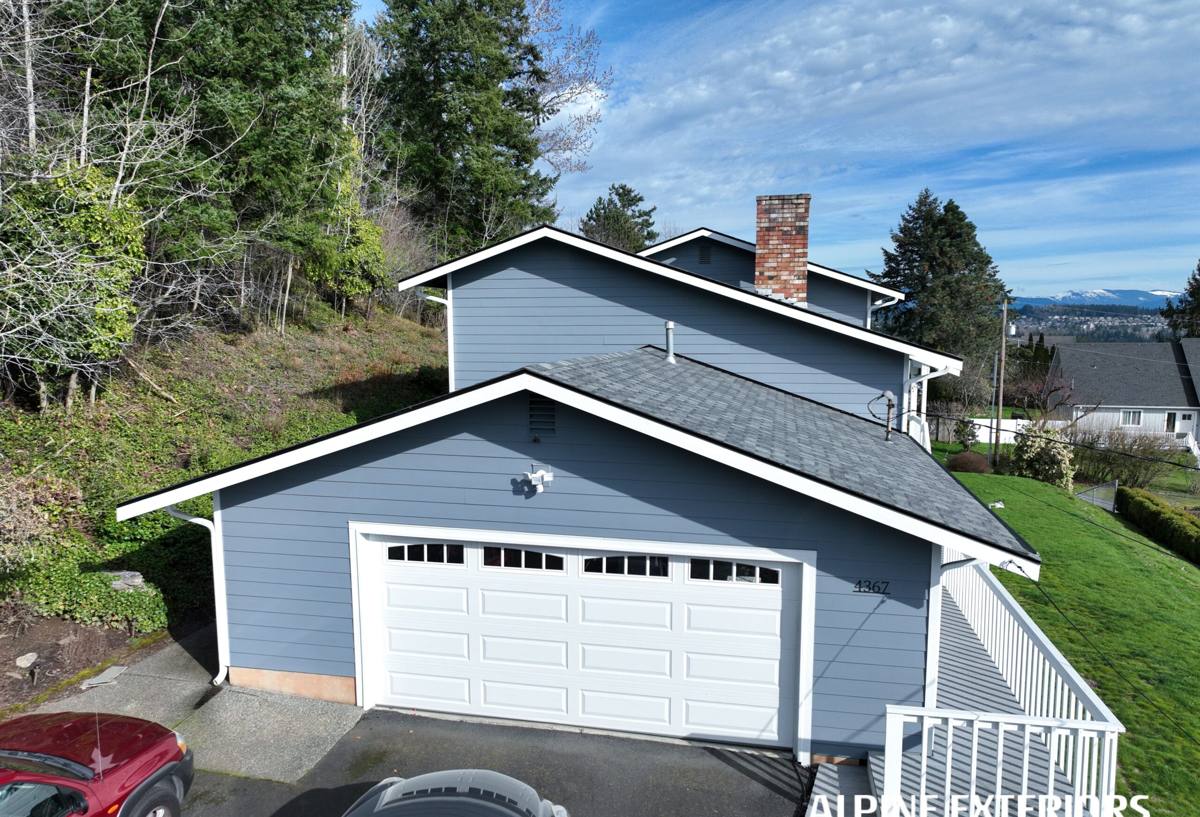
What a Correct Installation Looks Like on This Coast
Starting From the Deck Up
Every roof is only as good as what's underneath the shingles. On a West Beach re-roof, we check the sheathing for soft spots, rot, and delamination before anything new goes down — plywood or planking that's been absorbing moisture for years under an aging roof often needs partial replacement, and that's not something you want discovered after the shingles are already on. We use a synthetic underlayment rated for high-wind, high-moisture climates rather than basic felt, and we run self-adhered ice-and-water membrane along eaves, valleys, and any roof-to-wall transitions — the spots where wind-driven rain actually gets pushed uphill under standard shingle coverage during a real Pacific storm.
Flashing Details That Actually Matter
Most shingle roof failures we see on Orcas Island aren't shingle failures at all — they're flashing failures. Step flashing at dormers and chimneys, counter-flashing, valley metal, and pipe boots all take direct salt-air exposure out here, and cheap or improperly lapped flashing corrodes or lets water in long before the shingle field itself wears out. We use corrosion-resistant flashing materials and install them shingle-over-flashing in the correct lap sequence, not caulked-on as an afterthought. Proper attic and roof ventilation also matters more in a marine climate — trapped moisture under the deck accelerates rot and encourages the moss and algae growth this area is known for.
Choosing a Shingle Built for Salt Air and Moss
Not every asphalt shingle product is built the same way, and in a marine climate the difference shows up within a few years, not decades. We favor algae-resistant shingles with copper- or zinc-infused granules, which meaningfully slow the dark streaking and moss colonization that shaded, damp roofs get on this side of the island. Wind rating matters too — a shingle rated for standard exposure isn't the same product, structurally, as one rated for higher sustained wind and gusts, and West Beach gets both off the water.
| Shingle Class | Typical Wind Rating | Algae Resistance | Best Fit for West Beach |
|---|---|---|---|
| Standard 3-tab | 60–70 mph | Minimal or none | Lowest cost, but shows moss/streaking fastest here |
| Standard architectural | 110–130 mph | Varies by product line | Good baseline if algae-resistant granules are specified |
| Algae-resistant architectural | 110–130 mph | Built-in copper/zinc granules | Our standard recommendation for this exposure |
| Premium/designer laminate | 130+ mph | Built-in, often longer warranty | Best long-term value for full west-facing exposure |
We'll walk through the honest trade-offs for your specific roof — pitch, sun exposure, tree cover, and budget all factor into which class makes sense. We're not going to push the most expensive line on a roof that doesn't need it, and we're not going to recommend a bare-minimum product for a west-facing slope that's going to take the brunt of every storm off the strait.
Moss Season and the Maintenance Reality Nobody Mentions Up Front
San Juan County's moss season runs long — the combination of shade, moisture, and mild temperatures that makes this part of Washington beautiful is exactly the recipe moss needs to take hold on a roof. Moss isn't just cosmetic. It holds moisture against the shingle surface, works its way under tabs, and over time lifts and degrades the shingle mat itself. Roofs under conifer cover or in shaded pockets near the water need periodic moss treatment and gentle removal — not pressure washing, which strips granules and shortens shingle life on its own.
Gutters and valleys on West Beach properties also tend to collect more debris than a typical suburban roof, thanks to the fir and cedar cover common on this part of the island. A valley that's clear on installation day can be holding standing needles and moss within a year if it's never checked. Part of doing this job right is being honest with homeowners about that ongoing reality rather than pretending a new roof is maintenance-free once it's installed.
Our Process for a West Beach Roof
- On-site inspection — we walk the roof (or drone-inspect steep or unsafe sections) and check the attic from inside, looking at deck condition, ventilation, and existing flashing.
- Written scope and estimate — what tear-off involves, what shingle and underlayment we recommend and why, and what it costs, in plain terms.
- Tear-off and deck inspection — old roofing removed down to the sheathing, with any soft or rotted decking replaced before underlayment goes down.
- Underlayment, ice-and-water membrane, and flashing — installed to the standard described above, not skipped at the edges to save time.
- Shingle installation — correct nailing pattern and exposure per manufacturer spec, which is also what keeps the wind-rating and warranty valid.
- Cleanup and magnetic sweep — job site and yard cleared of debris and stray fasteners.
- Final walkthrough — we go over the finished roof and warranty paperwork with you before we consider the job done.
What Drives the Cost of a West Beach Re-Roof
| Factor | Why It Matters Here |
|---|---|
| Roof pitch and complexity | Steeper pitches and multiple valleys/dormers take longer and need more flashing detail |
| Existing layers to remove | Tear-off of multiple old layers adds labor and disposal cost |
| Deck condition | Rot or soft sheathing found during tear-off means added repair before shingles can go on |
| Shingle class chosen | Algae-resistant and premium laminate shingles cost more up front, less in re-treatment and early replacement |
| Site access and logistics | Island scheduling and material staging affect timeline more than mainland jobs |
| Roof size and square footage | The most direct driver of material and labor cost on any re-roof |
We won't quote a number without seeing the roof — anyone who does hasn't actually accounted for what tear-off reveals. But we'll give you a clear, itemized estimate before any work starts, and we'll flag any likely deck repair as a possibility up front rather than as a surprise mid-job.
Repair or Replace? A Practical Checklist
Not every West Beach roof needs a full tear-off. Here's what we actually look at when deciding whether a repair makes sense or whether it's time to replace:
- Age of the current roof relative to its shingle class's expected service life
- Whether granule loss and curling are isolated or spread across most of the roof
- Whether moss or algae staining is surface-level or has worked under the tabs
- Condition of the flashing at valleys, chimneys, and roof-to-wall transitions
- Any signs of active leaking, staining, or moisture in the attic
- Whether the deck itself has soft spots you can feel underfoot
- How many repairs the roof has already had, and whether they're multiplying
If most of these come back fine, a targeted repair is often the honest answer, and we'll tell you that rather than push a replacement the roof doesn't need yet.
Why Hiring a Crew That Already Works This Area Matters
Roofing on Orcas Island isn't the same logistical job as roofing on the mainland. Material deliveries, crew scheduling, and weather windows all have to work around ferry timing, and a contractor unfamiliar with island scheduling can turn a straightforward re-roof into a drawn-out one. A crew that already works West Beach and the surrounding San Juan County communities knows how to stage materials efficiently, plan around ferry-dependent delivery days, and read the specific weather patterns that come off the water here — which matters when you're trying to get a tear-off closed in before a driving rain moves through.
Local experience also means we've already seen how different shingle products and details hold up on this specific stretch of coastline over time, not just in a manufacturer's general climate rating. That's the kind of knowledge that only comes from doing the work here repeatedly, not from a one-off job passing through.
If you're dealing with an aging shingle roof, active leaks, or just want an honest read on where your roof stands, we're happy to take a look. Reach out for a free, no-pressure estimate using the form below — we'll tell you straight what we find and what it would take to fix it right.