 Orcas Island Siding
 Why Siding Repair Looks Different in Friday Harbor
Homes in and around Friday Harbor take a different kind of beating than siding fifty miles inland. Salt-laden air off the water accelerates corrosion on fasteners and trim, wind-driven rain finds every gap and seam, and the long gray stretch of the year keeps north-facing walls damp enough for moss and algae to take hold and stay. San Juan County's marine climate doesn't destroy siding overnight — it works slowly, at the joints, the corners, and the places where water is allowed to sit instead of shed.
That means siding repair here isn't just about patching whatever looks bad. It's about understanding why that spot failed in the first place, so the repair doesn't just recur in two years. A contractor who only sees a house once treats the symptom. A contractor who works this island regularly starts asking about the cause.
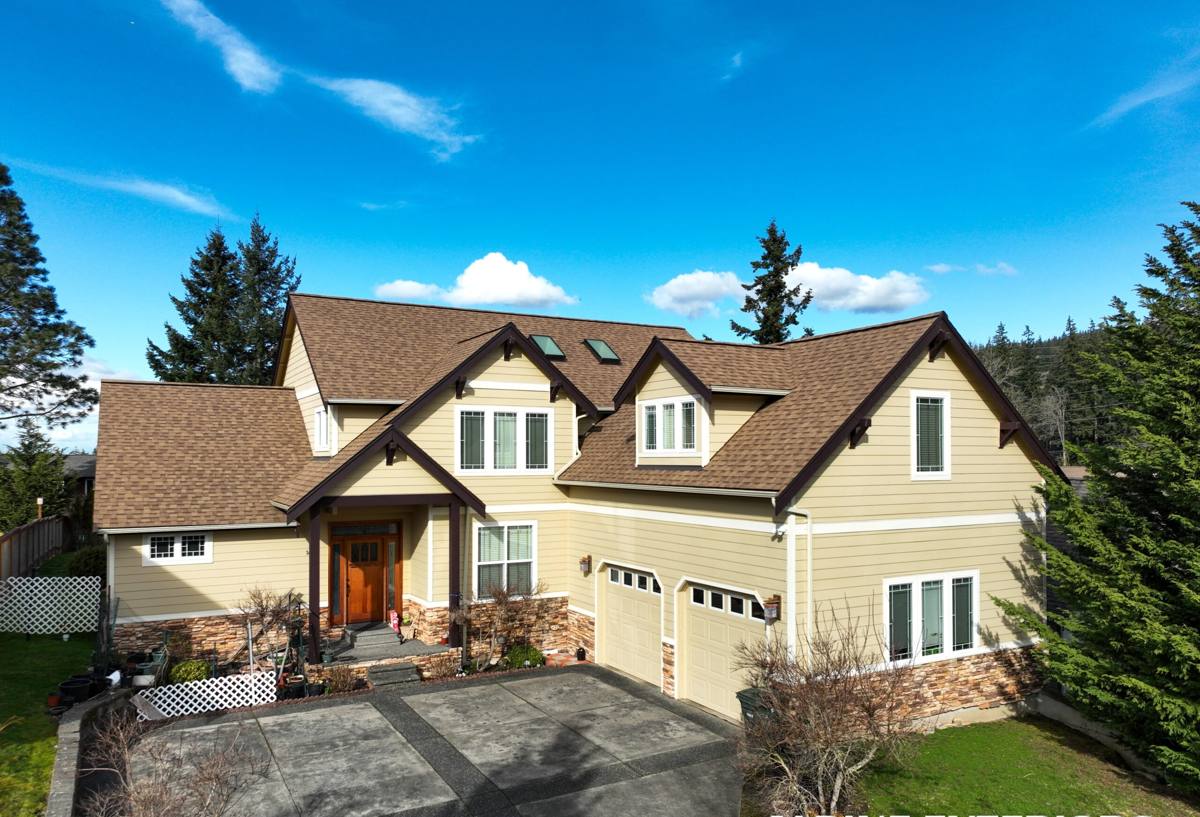
Common Signs Your Siding Needs Repair
Most siding problems on Friday Harbor homes show up in predictable places — anywhere water lingers or wind pressure concentrates. Catching them early is almost always cheaper than waiting.
- Soft or spongy spots when you press on siding near the bottom courses or around window sills
- Visible gaps, cracks, or separated seams at butt joints and corners
- Persistent black or green streaking that keeps returning after cleaning, especially on shaded or north-facing walls
- Peeling or bubbling paint, which usually signals moisture trapped behind the siding rather than a paint failure on its own
- Rusted or backed-out fasteners, common where salt air has been working on exposed nail heads for years
- Warping, bowing, or visible bulging in panels, particularly on materials that were never rated for constant coastal moisture exposure
- Soft trim boards or fascia near where siding meets roofline or window and door casings
Why Small Problems Don't Stay Small Here
A gap that would sit dry for months in a drier climate stays wet for days at a time in San Juan County's wet season. Once water gets behind a siding panel, it has nowhere to go but into the sheathing, framing, and insulation underneath — and that's where a $200 repair turns into a $4,000 one if it sits through a winter.
What a Proper Repair Actually Involves
A correct siding repair is more than swapping a damaged board and matching the paint. It has to address what let the damage happen and make sure the repair performs as well as — or better than — the siding around it.
Diagnosis Before Demolition
Before pulling a single board, a competent repair starts by figuring out the water path. Is the damage from a failed caulk joint, a flashing detail that was never installed correctly, a clogged gutter dumping water down a wall, or simple age and salt exposure on original material? Repairing the siding without fixing the cause just buys time.
Checking What's Behind the Siding
Once damaged panels come off, the house wrap or building paper, sheathing, and framing underneath need to be inspected. Soft or discolored sheathing has to be replaced, not covered over. Skipping this step is the single most common shortcut that leads to repeat repairs.
Correct Flashing and Water Management
Every seam, corner, and penetration point (hose bibs, light fixtures, vents) needs proper flashing and sealant detailing — not just caulk smeared over the gap. This is where a lot of budget repairs fail: they look finished but weren't built to actually shed water.
Matching Material and Finish
Whenever possible, repairs should match the existing siding's profile, exposure, and color so the patch doesn't stand out as a visibly different repair job for the next twenty years.
Repair vs. Replacement: How We Decide
Not every damaged section needs full replacement, but repairing the wrong situation just delays an inevitable — and larger — job. Here's how we think through it with homeowners.
| Factor | Leans Toward Repair | Leans Toward Replacement |
|---|---|---|
| Extent of damage | Isolated to one wall or a few panels | Recurring issues across multiple elevations |
| Underlying sheathing | Dry, sound wood found on inspection | Soft, discolored, or rotted sheathing found |
| Age of siding | Under 10-15 years, otherwise in good condition | Original siding is decades old or already failing broadly |
| Material type | James Hardie fiber cement in good standing | Materials prone to moisture failure (untreated wood, older composite) |
| Water intrusion history | First occurrence, clear single cause | Repeated leaks or unexplained moisture over multiple seasons |
We'll always tell you honestly which side of that table your house falls on. A repair that's likely to fail again within a couple of years isn't a good use of your money, and we'd rather say so upfront than collect a repair fee twice.
Our Repair Process
- On-site assessment — we walk the exterior, identify every affected area, and check for damage that isn't obvious from the ground
- Cause diagnosis — we trace water paths and flashing details before quoting any work
- Written scope and estimate — a clear breakdown of what's being repaired and why, with no vague line items
- Removal and inspection — damaged siding comes off and we inspect the sheathing and water-resistive barrier underneath
- Structural and moisture correction — any compromised sheathing or framing gets replaced before new siding goes back on
- Repair and refinish — matched material installed with correct flashing, fastening, and sealant detail
- Final walkthrough — we review the completed work with you on-site before calling the job done
Why We Repair with James Hardie Fiber Cement
We install and repair with James Hardie fiber cement siding exclusively — we don't install vinyl, LP SmartSide, cedar, primed spruce, or other fiber cement brands, and we're straightforward about why. In a climate that cycles between salt air, driving rain, and long damp moss seasons, the materials that struggle most are the ones sensitive to moisture: wood products that need consistent paint maintenance to stay sealed, and composites with edge and moisture vulnerabilities that show up years after installation.
James Hardie's fiber cement is non-combustible and dimensionally stable, meaning it doesn't swell, warp, or rot the way wood-based products can when they take on moisture repeatedly. Its ColorPlus factory finish is baked on rather than field-applied, which matters directly for repairs — a properly matched Hardie patch holds its color far longer than a field-painted repair on wood or composite siding, which tends to weather and shift tone differently than the surrounding wall within a season or two. Hardie's HZ5 product line is engineered specifically for climates with heavy moisture exposure, which describes San Juan County's weather almost exactly.
None of this means other materials are junk — plenty of homes here were built with cedar or older composite siding and have held up reasonably well with regular maintenance. But when we're the ones doing the repair, we want confidence that the patch will perform as long as the surrounding wall, and that's the standard fiber cement meets more consistently than the alternatives in this climate.
Why a Crew That Already Works Friday Harbor Matters
Island logistics change how siding repair work actually gets done. Material orders have to account for ferry schedules, which means a contractor unfamiliar with the run can turn a two-day repair into a two-week wait if they didn't plan the material delivery around the boat. A crew that regularly works Friday Harbor and the surrounding San Juan Islands builds that lead time into the schedule from the start, instead of discovering it mid-job.
There's also a familiarity factor with the housing stock itself. Homes here span everything from older cedar-sided cottages to newer builds already finished in fiber cement, and a crew that's worked across that range knows what to expect once the siding comes off — where moisture tends to collect on a shoreline-adjacent wall, which flashing details tend to have been skipped on older construction, and how to match an existing Hardie profile without a visible seam between old and new.
After the Repair: Keeping Your Siding Ahead of the Climate
A good repair buys you years, but a little regular attention keeps the rest of your siding from needing the same fix.
- Rinse siding annually, focusing on shaded and north-facing walls where moss and algae take hold fastest
- Keep gutters clear so overflow doesn't run directly down exterior walls
- Trim back vegetation and tree cover that keeps a wall section shaded and damp longer than the rest of the house
- Re-caulk visibly cracked joints promptly rather than waiting for a full season
- Walk the exterior once or twice a year and press on suspect areas near grade and window sills, where moisture problems usually start
- Address minor damage as soon as it's noticed — in this climate, small gaps don't stay small for long
If you're noticing soft spots, staining, or gaps in your siding, it's worth having someone take an honest look before the next wet season sets in. We're happy to walk your property, tell you plainly whether you're looking at a repair or something bigger, and provide a free, no-pressure estimate — with no obligation either way.