 Orcas Island Siding
 West Sound's Climate Is Harder on Siding Than Most Homeowners Realize
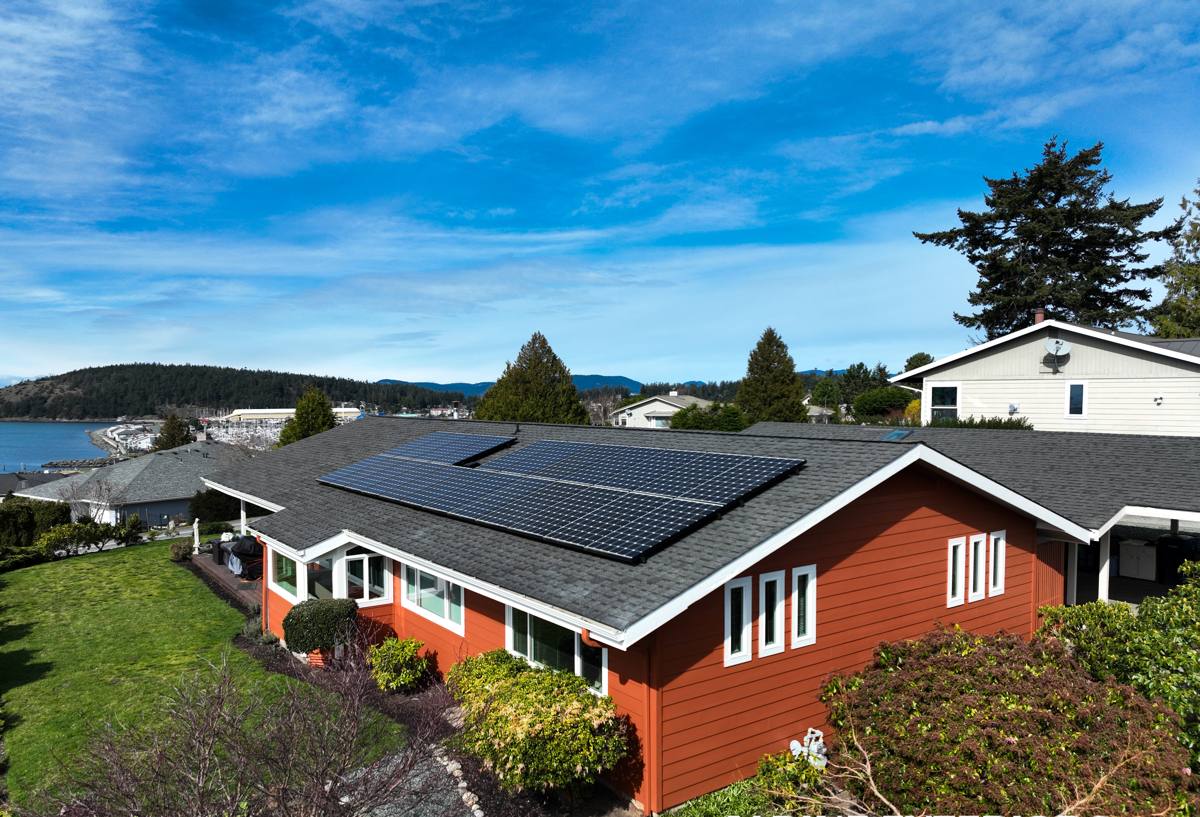
West Sound sits on Orcas Island in San Juan County, and like the rest of the island, homes here take a steady beating from marine air, seasonal rain, and shade from mature evergreens. Salt-laden air moves inland off the water and settles on exterior surfaces year-round, slowly breaking down paint film and, over time, the wood fibers underneath it. Add in long stretches of driving rain each fall and winter, plus a moss season that can run from October through May in shaded, tree-covered lots, and you have a climate that punishes ordinary siding faster than a mainland suburb ever would.
None of this means West Sound homes are doomed to constant repair. It means the siding system, the water management behind it, and the installation details all have to be matched to this specific environment. A siding replacement done to a generic standard — the kind that might hold up fine in a dry inland climate — is exactly what leads to soft trim, peeling paint, and hidden rot behind the cladding a few years down the road.
What Actually Fails First on Orcas Island Siding
Moisture Behind the Cladding, Not Just On It
The siding itself is only half the story. Most premature siding failures we see start behind the panels — at a missing or torn weather-resistive barrier, a poorly lapped seam, or flashing that was never installed correctly around windows and trim. Once water gets behind the cladding in a wet climate like this one, it doesn't dry out quickly, and rot can spread through sheathing long before it's visible from the outside.
Moss, Algae, and Shade
Homes tucked under tree cover — common throughout West Sound — hold moisture longer after every rain. That constant dampness is exactly what moss and algae need to take hold on siding, trim, and roof lines. On absorbent or poorly finished materials, this isn't just cosmetic; sustained moisture retention accelerates paint failure and, on wood-based products, softens the substrate itself.
Salt Air and Coatings
Salt air is corrosive to fasteners and hard on paint film. Field-applied paint, especially on wood or engineered wood siding, tends to chalk and fail faster near the water than it would inland. Whatever product goes on a West Sound home needs a finish system built to hold up to airborne salt, not just standard weather exposure.
Why We Install James Hardie Fiber Cement — and Nothing Else
We standardized on James Hardie fiber cement siding for every home we side, including here in West Sound, and we don't install vinyl, LP SmartSide, Cemplank, Allura, primed spruce, or raw cedar. That's not a marketing position — it's a decision based on how each of those materials actually performs in a wet, salt-exposed, moss-prone climate over the long haul.
Vinyl siding is inexpensive and low-maintenance in mild climates, but it expands and contracts significantly with temperature swings, can warp or crack in wind-driven weather, and its seams and J-channels give moisture more places to work behind the panel. Engineered wood products like LP SmartSide perform well when kept dry, but they're wood-based at their core — any point where moisture gets past the coating and stays there, which happens more often in a shaded, high-moisture environment, puts the substrate at risk. Primed spruce and raw cedar require the homeowner to maintain the paint or finish on a strict schedule; miss a cycle or two in this climate and you're often looking at repainting or repair sooner than expected.
James Hardie fiber cement is non-combustible, dimensionally stable, and doesn't absorb water the way wood-based products do, which matters directly for moss and algae resistance. Its ColorPlus factory-applied finish is baked on under controlled conditions and backed by its own finish warranty — a meaningfully different proposition than field-applied paint that has to cure and perform outdoors in island humidity. Hardie also engineers specific product lines, including HZ5 and HZ10 formulations, for different climate zones; we specify the version appropriate for the Pacific Northwest's moisture exposure rather than a one-size-fits-all product.
What a Correct Siding Replacement Involves
Replacing siding is not just removing old boards and nailing up new ones. Done right, it's a full rebuild of the wall's water management system. Our process on every West Sound project includes:
- Full tear-off of the existing siding and trim, not overlay installation
- Inspection of sheathing for rot, soft spots, or prior water damage before anything new goes on
- Repair or replacement of any damaged sheathing and framing found underneath
- Installation of a new weather-resistive barrier, properly lapped and sealed at every seam
- Correct flashing at all windows, doors, and penetrations — installed to shed water down and out, not trap it
- Hardie panel or lap siding installed to manufacturer fastening and clearance specifications
- Proper gapping and sealing at trim, corners, and butt joints
- Final cleanup and haul-away of all old material
Skipping the inspection step, or reusing an old barrier instead of replacing it, is one of the most common shortcuts in this trade — and it's the one that causes the most expensive problems later, because it hides rather than fixes existing moisture damage.
Our Process, Start to Finish
1. On-Site Assessment
We walk the home with you, look at the current siding's condition, check for soft spots or visible moisture damage, and talk through what the exterior is actually dealing with — sun exposure, tree cover, prevailing weather.
2. Tear-Off and Inspection
Old siding and trim come off down to the sheathing. This is where hidden problems, if there are any, get found and documented before we cover anything back up.
3. Repairs and Water Management
Any damaged sheathing gets replaced. New weather-resistive barrier and flashing go in at every window, door, and penetration point.
4. Hardie Installation
Panels or lap siding go up to spec — correct fastener type and spacing, correct clearances from grade and rooflines, correct gapping at joints.
5. Trim, Caulking, and Final Details
Trim is installed and sealed at the points that matter most for keeping water out, and every seam is checked before we consider the job finished.
6. Walkthrough and Cleanup
We walk the finished exterior with you, answer questions about care, and clear all debris and old material from the site.
What Drives Cost on a West Sound Siding Replacement
| Factor | Why It Matters Here |
|---|---|
| Home size and wall complexity | More square footage and more corners, gables, and trim details mean more material and labor |
| Condition of existing sheathing | Rot or moisture damage found during tear-off adds repair scope before new siding can go on |
| Siding profile chosen | Lap siding, panel systems, and trim styles vary in material and installation time |
| Site access and logistics | Waterfront and wooded lots common in West Sound can affect staging, scaffolding, and material delivery |
| Tear-off vs. overlay | We only tear off and rebuild the water management layer, which is more thorough — and more accurate cost-wise — than covering over existing siding |
We give straightforward, itemized estimates so you can see exactly what's driving the number, rather than a flat quote with no explanation behind it.
Signs Your West Sound Home May Need Siding Replacement Soon
- Paint that's peeling, bubbling, or chalking heavily, especially on sides facing prevailing weather
- Persistent moss or algae growth that returns quickly after cleaning
- Soft or spongy siding when pressed, particularly near the bottom of walls or below windows
- Visible gaps, cracks, or warping in siding panels or trim
- Stains or discoloration on interior walls near exterior corners, which can indicate moisture getting through
- Siding that's simply reached the end of its expected service life and is original to an older home
Why a Crew That Already Works Orcas Island Matters
Siding work on an island isn't logistically the same as siding work on the mainland. Material deliveries have to be planned around ferry schedules, not just a supply house's normal delivery window. Disposal and haul-away take more coordination. And a crew that already does this work regularly in San Juan County understands how local building patterns, common lot conditions, and county permitting expectations apply to a real project — not just in theory.
That familiarity also shows up in the details that matter most for a wet, salt-exposed climate: which sides of a home take the worst weather, where moss tends to establish itself fastest, and how flashing and water management need to be handled given the amount of tree cover and moisture common across the island. A contractor who's done this work here before isn't guessing at any of it.
After Installation: What to Expect
James Hardie siding installed correctly, with proper water management behind it, is built to need far less attention than wood-based alternatives. It won't need repainting on the same cycle raw wood or primed spruce would require, and its factory finish is engineered to resist the fading and chalking that salt air accelerates on field-applied paint. Periodic rinsing to keep moss and organic buildup from establishing, along with routine visual checks after major storms, is generally all a well-installed system needs going forward.
If your West Sound home has siding that's showing its age, or you're planning ahead before small problems become expensive ones, we're happy to take a look and walk you through what we see — no pressure, no obligation. Reach out using the form below to schedule a free estimate.