 Orcas Island Siding
 Why Olga Decks Wear Faster Than You'd Expect
Olga sits in a pocket of Orcas Island where tall fir and cedar cover much of the shoreline and hillside, and that shade is a mixed blessing for an outdoor deck. It keeps the house cooler in summer, but it also means decks here rarely get a full day of sun to dry out between rains. Add in the salt-laden air coming off the water and the long, gray moss season that runs from fall through spring, and you have a combination that ages a deck faster than the same structure would age in a drier inland town. Metal fasteners corrode sooner. Wood grain that stays damp for weeks at a time starts to soften and check. Algae and moss get a foothold on any board that doesn't drain and dry quickly.
None of that means a deck in Olga is doomed — it means the deck has to be built and repaired with those specific conditions in mind. A repair that would hold up fine in a dry climate can fail here within a couple of seasons if it ignores drainage, fastener choice, or airflow underneath the framing. That's the lens we bring to every deck repair call in this part of San Juan County.
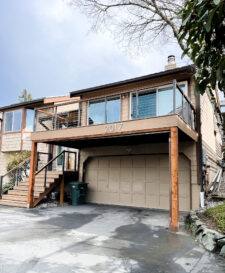
Signs Your Deck in Olga Needs Repair
Most deck problems don't show up overnight. They build slowly through repeated wet-dry cycles until something finally gives — a soft board, a wobbly post, a railing that shouldn't move but does. Catching the early signs saves money, because a board swap now is a lot cheaper than a full rebuild after the framing underneath has failed.
- Boards that feel spongy, springy, or slightly soft when you walk across them
- Rust streaks bleeding out from screw or nail heads
- A visible gap, crack, or dark staining where the deck meets the house (the ledger board area)
- Railings or posts that flex or wobble under hand pressure
- Water that pools and stays instead of draining off within an hour or two of a storm
- Green or black moss and algae film building up on boards that stay in shade most of the day
- Boards that have cupped (edges higher than the center) or split lengthwise
- Popped or backed-out fasteners sitting proud of the deck surface
If you're seeing two or three of these at once, it's worth having someone look underneath the deck, not just at the walking surface. The visible boards are often the last thing to show damage — the framing and ledger connection usually tell the real story.
What a Correct Deck Repair Actually Involves
Structural Framing First
Before any decking board gets replaced, the joists, beams, and posts underneath need to be checked for rot, soft spots, and proper spacing. A deck that looks fine on top can be sitting on framing that's lost real strength to moisture. We probe suspect areas with an awl or screwdriver — sound wood resists the point; rotted wood gives way easily. Any framing member that's compromised gets sistered with a new piece of lumber or replaced outright before we touch the surface boards.
Ledger Board and Flashing
The ledger board — the piece that bolts the deck to the house — is the single most common point of hidden failure on older decks, and it's the one homeowners almost never see. If it was installed without proper flashing, or if the flashing has failed over the years, water gets channeled directly into the rim joist and the wall framing behind it. Repairing a deck without addressing a bad ledger connection is a patch job that buys a season or two, not a real fix.
Decking Boards and Fasteners
Individual board replacement is straightforward once the framing underneath is sound. The details that matter are consistent board spacing for drainage, proper fastener type for the material, and pre-drilling near board ends so wet-season swelling doesn't split the wood. We match new boards to the existing deck as closely as the product line allows, though on older decks with discontinued styles, some visible difference in a repaired section is honest and expected — we won't pretend otherwise.
Railings and Guards
Railing repairs get the same structural attention as the deck surface. Loose posts usually mean the blocking or attachment hardware underneath has failed, not just the visible post. Current building code sets minimum height and baluster spacing requirements for guardrails, and any repair we do brings that section up to code rather than just re-securing what was there.
Repair or Replace? Weighing the Real Factors
Not every deck problem calls for a full rebuild, and not every deck is worth patching indefinitely. The honest answer depends on a handful of factors we walk through with every homeowner before recommending either path.
| Factor | Leans Toward Repair | Leans Toward Replacement |
|---|---|---|
| Framing condition | Joists and beams probe solid, isolated soft spots | Widespread rot in joists, beams, or posts |
| Ledger connection | Flashing intact, bolted connection sound | Ledger showing rot or was never properly flashed |
| Age of structure | Under 15-20 years, built to a reasonable standard | Original construction is decades old or undersized by today's code |
| Extent of damage | Damage limited to a few boards or one section | Damage spread across most of the deck surface |
| Budget and timeline | Want to extend usable life at lower cost now | Want to stop recurring repair costs long-term |
In many cases the right move is a hybrid: repair the framing and ledger now to stop active damage, replace the surface boards while you're at it, and plan a full rebuild a few years down the road when it makes more financial sense. We'll always tell you which category your deck falls into rather than pushing the more expensive option by default.
Our Deck Repair Process
1. Inspection and Moisture Check
We start underneath the deck, not on top of it. That means checking joists, the ledger connection, post bases, and any area where water has historically pooled. We probe wood by hand and check for consistent moisture retention, since a board that's damp weeks after the last rain is telling you something about drainage or shade exposure, not just about that one board.
2. A Written, Itemized Scope
Before any work starts, you get a clear written scope: what's being replaced, what's being sistered or reinforced, what fastener and flashing materials we're using, and a firm price. No verbal estimates that turn into surprise add-ons once the boards come up.
3. The Repair Work
We remove only what needs to come out, protect the surrounding landscaping and siding, and rebuild from the framing up. Any rot we uncover that wasn't visible during the initial inspection gets photographed and discussed with you before we proceed — no unauthorized change orders.
4. Final Walkthrough
We walk the finished repair with you, point out what was done and why, and cover any maintenance steps that will extend the life of the work — particularly around moss and drainage, which are ongoing issues in this climate rather than one-time fixes.
Materials We Choose for This Climate
Every material choice on a deck repair in Olga gets weighed against salt exposure and prolonged dampness, not just upfront cost.
Wood Versus Composite
Pressure-treated lumber and cedar both have a place in deck repair, and both require the homeowner to keep up with sealing or staining every couple of years to perform well in a wet, shaded environment — that maintenance commitment is the honest trade-off for their lower material cost and natural look. Composite decking costs more upfront and doesn't need staining, but it's not maintenance-free either; it still needs regular cleaning to keep moss and mildew from taking hold on shaded sections, and installation has to account for its different expansion and contraction behavior compared to wood. We'll talk through both options against your specific deck's sun exposure and your appetite for upkeep rather than defaulting to one product.
Fasteners That Actually Hold Up
Standard zinc-coated screws corrode faster than they should in a marine air environment. For repair work in Olga, we use stainless steel or hot-dip galvanized fasteners rated for coastal exposure, along with corrosion-resistant structural hardware for anything load-bearing like joist hangers and post connectors. It costs a bit more than hardware-store-grade fasteners, but rust streaks and early fastener failure are one of the most common reasons a "repaired" deck ends up needing repair again within a few years.
Moss, Drainage, and the Shade Problem
Because so much of Olga sits under tree cover, moss and algae aren't a cosmetic afterthought here — they're a structural consideration. A deck surface that stays damp under a moss film dries out slower after every rain, which extends the amount of time wood fibers spend saturated and accelerates rot. Composite boards aren't immune either; moss can still take hold in the grain texture on permanently shaded sections.
Proper board spacing, consistent gapping, and keeping gutters and downspouts clear near the deck all matter more here than they would in a sunnier location. On repairs where drainage has clearly been a contributing problem, we'll sometimes recommend adding joist tape over exposed framing tops or improving under-deck ventilation so the structure gets a chance to dry between the region's frequent rain events.
Why Hire a Crew That Already Works Olga
Getting materials, equipment, and a crew to Orcas Island takes planning that a mainland contractor simply doesn't have to think about — ferry schedules affect delivery timing, and a crew unfamiliar with island logistics can turn a two-day repair into a week of delays. We already work this island regularly, so material orders and scheduling account for that reality from the start rather than becoming a surprise mid-project.
There's also a practical knowledge gap that shows up in the work itself. A crew that's repaired decks across San Juan County has already seen how salt air treats different fastener grades, how shaded Olga lots hold moisture longer than open, sun-exposed sites elsewhere on the island, and what permit requirements apply to structural deck repairs in the county. That's the kind of local experience that shows up in fewer callbacks, not in anything flashy.
Keeping Your Repaired Deck Sound Year After Year
A good repair buys you years of life, but this climate keeps working on a deck every season, so a little upkeep goes a long way toward protecting the investment.
- Sweep leaves and needles off the deck regularly, especially in fall — trapped debris holds moisture against the boards
- Rinse or gently brush off moss and algae buildup before it gets a deep foothold, particularly on shaded sections
- Reseal or restain wood decking on the manufacturer's recommended schedule, typically every 1-3 years depending on sun and rain exposure
- Check railings and stair connections for looseness once a year, ideally before winter storm season
- Keep gutters and downspouts near the deck clear so runoff isn't draining directly onto or under the structure
- Watch for early rust bleed around fasteners and address it before it spreads into the surrounding wood
If you're noticing soft boards, wobbly railings, or a deck that just doesn't dry out the way it used to, we're happy to take a look and give you a straight assessment of what's actually needed. Reach out for a free, no-pressure estimate using the form below.