 Orcas Island Siding
 Why Lopez Island Siding Wears Differently Than the Mainland
Lopez Island sits in the same weather system as the rest of San Juan County, but the details matter. Homes here take a steady dose of salt-laden air off the water, long stretches of driving rain that hits from shifting directions depending on the season, and a moss season that can stretch from late fall well into spring. None of that is dramatic on its own. The damage shows up slowly, in the form of soft spots, lifted seams, and paint that fails years before it should. By the time a homeowner notices a problem, the siding underneath has often been dealing with moisture for a while.
Repairing siding on Lopez Island isn't just a smaller version of repairing siding anywhere else in Washington. The combination of salt exposure and sustained damp conditions changes what "correct repair" actually means, and it changes how a contractor should plan a job before a single board comes off the wall.
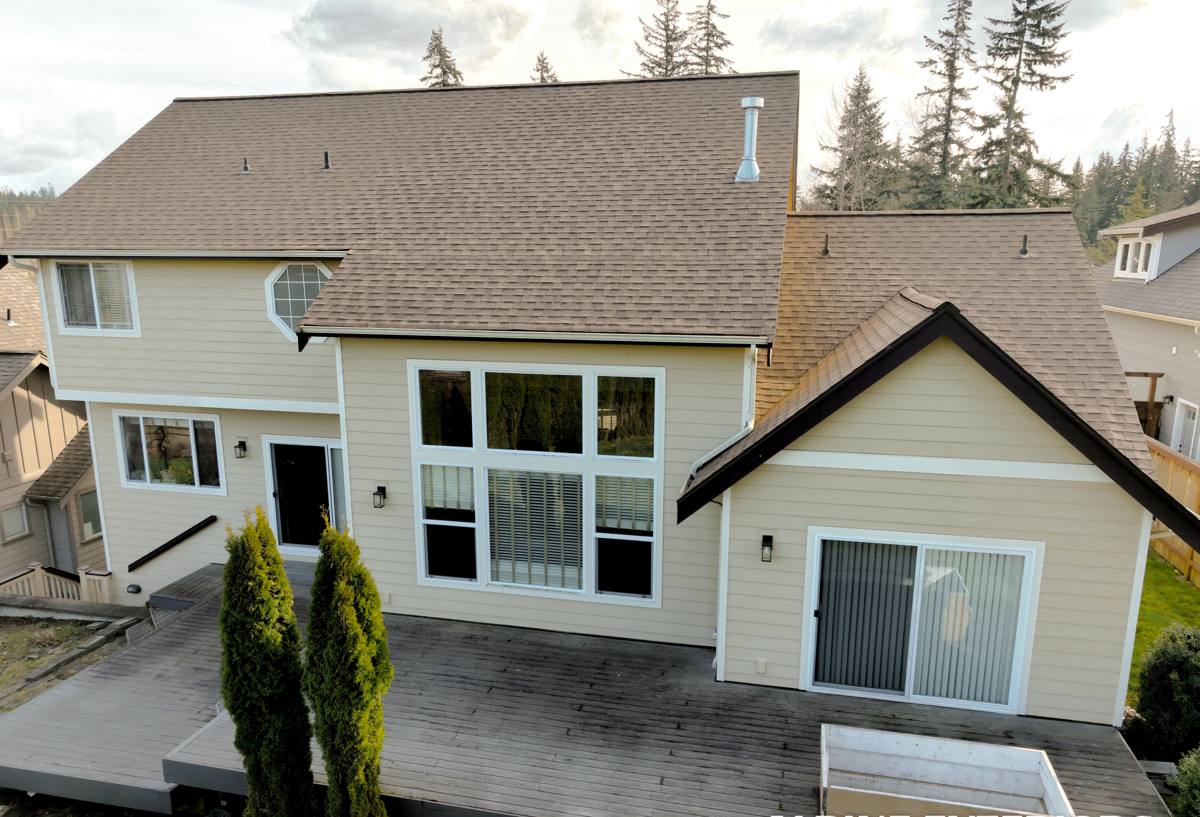
What Salt Air, Driving Rain, and Moss Actually Do to Siding
Salt Air
Airborne salt settles on exterior surfaces and accelerates the breakdown of fasteners, trim, and paint film. On wood-based or composite sidings without a factory-applied protective finish, that means faster fading, chalking, and coating failure — which lets moisture in around every nail hole, seam, and cut edge.
Driving Rain
Wind-driven rain doesn't fall straight down — it gets pushed sideways into seams, under trim, and around window and door openings. Siding systems rely on proper lap, flashing, and caulking to shed this kind of water. When any of those details are even slightly off, water finds its way behind the cladding instead of running off of it.
Moss and Sustained Dampness
A long moss season means siding, trim, and the ground-level areas of a home stay damp for extended stretches. Moss and algae hold moisture against the surface longer than open air would, which is hard on any material that isn't dimensionally stable or that absorbs water readily.
Put those three together and you get the pattern we see repeatedly on Lopez Island homes: localized rot near grade and around openings, failed caulk joints, and siding that looks fine from the street but is compromised where it counts.
How to Tell If Your Siding Needs Repair, Not Just Paint
- Soft or spongy spots when you press on the siding, especially near the bottom courses or below windows
- Visible gaps, cracking, or separation at seams and corner trim
- Peeling or bubbling paint that keeps returning in the same spots after repainting
- Dark staining or streaking that doesn't wash off, often a sign of moisture tracking behind the surface
- Moss or algae buildup concentrated in shaded or north-facing sections
- Visible warping, buckling, or boards that no longer sit flat against the wall
- Interior signs — musty smell, discoloration on interior walls near exterior corners
Any one of these on its own might be minor. Several together, especially clustered in one area, usually mean water has been getting behind the siding for a while and the repair needs to address the cause, not just the symptom.
What a Correct Siding Repair Actually Involves
A repair that only replaces the visible damaged piece and stops there is a temporary fix. On a property exposed to the kind of weather Lopez Island gets, that approach tends to fail again within a season or two. A repair done right includes:
- Removing enough material to see the full extent of the damage — not just the piece that looks bad, but the boards and sheathing around it.
- Checking the water-resistive barrier and flashing underneath. If the house wrap is torn, the flashing is missing, or the wrong flashing was used at a window or door, replacing the siding alone won't solve the problem.
- Assessing the sheathing for rot. Any soft or delaminated sheathing needs to be cut out and replaced before new siding goes back on — covering rotten wood with new siding just hides the problem for a while longer.
- Correcting the original installation error if one caused the failure — improper nailing, missing kick-out flashing, tight caulk joints that don't allow for movement, or siding installed too close to grade or a roofline.
- Matching the replacement material and finish so the repair blends in rather than becoming an obvious patch.
- Re-sealing and re-flashing correctly so the repaired section sheds water at least as well as, ideally better than, the surrounding original siding.
Skipping any of these steps is how homeowners end up paying for the same repair twice.
Why We Repair With James Hardie Fiber Cement
When a repair calls for replacement material — whether it's a few boards or a full section of wall — we use James Hardie fiber cement, and we don't install anything else. That's a deliberate standard, not a default. Fiber cement is non-combustible, dimensionally stable in wet-dry cycles, and comes with a factory-applied ColorPlus finish that's baked on rather than field-painted, which matters enormously in a salt-air, high-moisture environment where field-applied paint is the first thing to fail.
James Hardie also engineers specific product lines (their HZ5 line, for example) for harsher climate zones, which is relevant for island and coastal properties that see more sustained moisture and wind exposure than inland homes. That climate-specific engineering, combined with a strong transferable warranty, is a big part of why we standardized on this one product system rather than mixing materials based on what's cheapest for a given job.
We won't tell you every other siding product is junk — that's not honest, and it's not our call to make about a product installed on thousands of homes. What we will say is that after years of doing repair and replacement work in this region, fiber cement holds up to salt air, driving rain, and moss-season dampness better than the alternatives we used to install, and it repairs cleanly — new sections match old sections without the color and texture mismatch you sometimes get patching older or lower-grade materials.
Repair vs. Replacement: How We Help You Decide
Not every siding problem on Lopez Island needs a full re-side, and not every problem should be patched. The right call depends on how widespread the damage is and what's causing it.
| Situation | Usually Repair | Usually Full Replacement |
|---|---|---|
| Damage limited to one wall or a few sections | Yes | No |
| Rot traced to a single flashing or caulk failure | Yes | No |
| Widespread soft spots across multiple elevations | No | Yes |
| Siding is near the end of its expected service life | No | Yes |
| Repeated failures in the same areas after past repairs | No | Yes |
| Original material is inconsistent or discontinued, making patch-matching difficult | Depends | Often |
We'll give you a straight answer during the estimate — if a targeted repair will genuinely hold up, we'll say so. If the damage points to a bigger underlying issue, we'll explain why and what your options look like, including cost factors, before you commit to anything.
Why Working With a Crew That Already Serves Lopez Island Matters
Lopez Island is part of San Juan County, which means access and logistics are part of every job, not just an inconvenience to plan around. A contractor who already schedules work in the islands understands ferry timing, materials logistics, and how to batch a job efficiently so a homeowner isn't paying for wasted crew time waiting on a boat. That planning also affects how quickly a repair can happen once damage is found — the sooner a compromised section is addressed, the less chance moisture has to spread to sheathing, framing, or interior finishes.
Familiarity with the island's specific conditions also means fewer surprises on the job. A crew that has repaired siding across San Juan County has already seen how salt air, wind exposure, and shaded, damp corners behave on this kind of property, and plans the repair accordingly instead of treating it like a generic mainland job.
Our Repair Process
- On-site assessment — we inspect the damaged area and check surrounding sections, trim, and flashing for related issues, not just the obvious spot.
- Honest scope and estimate — you get a clear explanation of what's causing the damage, what repair involves, and a written estimate before any work starts.
- Scheduling built around island logistics — materials and crew time are planned around ferry schedules so the job runs efficiently.
- Removal and inspection — damaged siding comes off, and we check the water barrier, flashing, and sheathing underneath before closing anything back up.
- Correct rebuild — any compromised sheathing or flashing is replaced, then new James Hardie fiber cement is installed to match the existing siding.
- Final walk-through — we review the completed repair with you so you know exactly what was done and why.
Maintenance That Extends the Life of Your Siding
A good repair lasts longer when it's maintained. For Lopez Island homes specifically, that means:
- Rinsing off salt residue and organic buildup periodically, especially on walls that face prevailing wind and spray
- Keeping gutters and downspouts clear so water doesn't overflow onto siding below
- Trimming back vegetation and clearing debris that traps moisture against shaded wall sections where moss tends to establish
- Having caulk joints and trim checked every couple of years, since sealant is usually the first line of defense to fail
- Addressing small issues — a lifted piece of trim, a hairline crack — before the next wet season, not after
None of this is complicated, but it's the kind of upkeep that's easy to skip on a property you're not visiting every week, which is common for part-time or seasonal Lopez Island residents.
Get a Straight Answer About Your Siding
If you're seeing soft spots, failed paint, moss buildup, or staining on your Lopez Island home, it's worth having someone look at it before it turns into a bigger repair. We offer free, no-pressure estimates — we'll tell you honestly whether you're looking at a targeted repair or something more, and what it would take to fix it right. Fill out the form below to get started.