 Orcas Island Siding
 Rosario's Roofs Work Harder Than Most
Rosario sits on the exposed east side of Orcas Island, close enough to the water that salt-laden air and wind-driven rain are part of daily life for anyone who owns a roof there. That combination is harder on roofing materials than most homeowners realize. Salt air accelerates corrosion on fasteners, flashing, and metal roofing panels. Driving rain off the water finds any weak seam, lifted shingle edge, or aging pipe boot and pushes water sideways and upward, not just straight down. And San Juan County's long, damp shoulder seasons mean moss and moisture have months at a time to work into a roof system that never fully dries out.
A storm doesn't have to be dramatic to cause real damage here. A stretch of sideways rain during a fall or winter blow can do more harm to an already-weakened roof than a single big windstorm does to a healthy one. That's the pattern we see most often in Rosario: damage that started small, went unnoticed because it wasn't leaking yet, and then got exposed all at once during a storm.
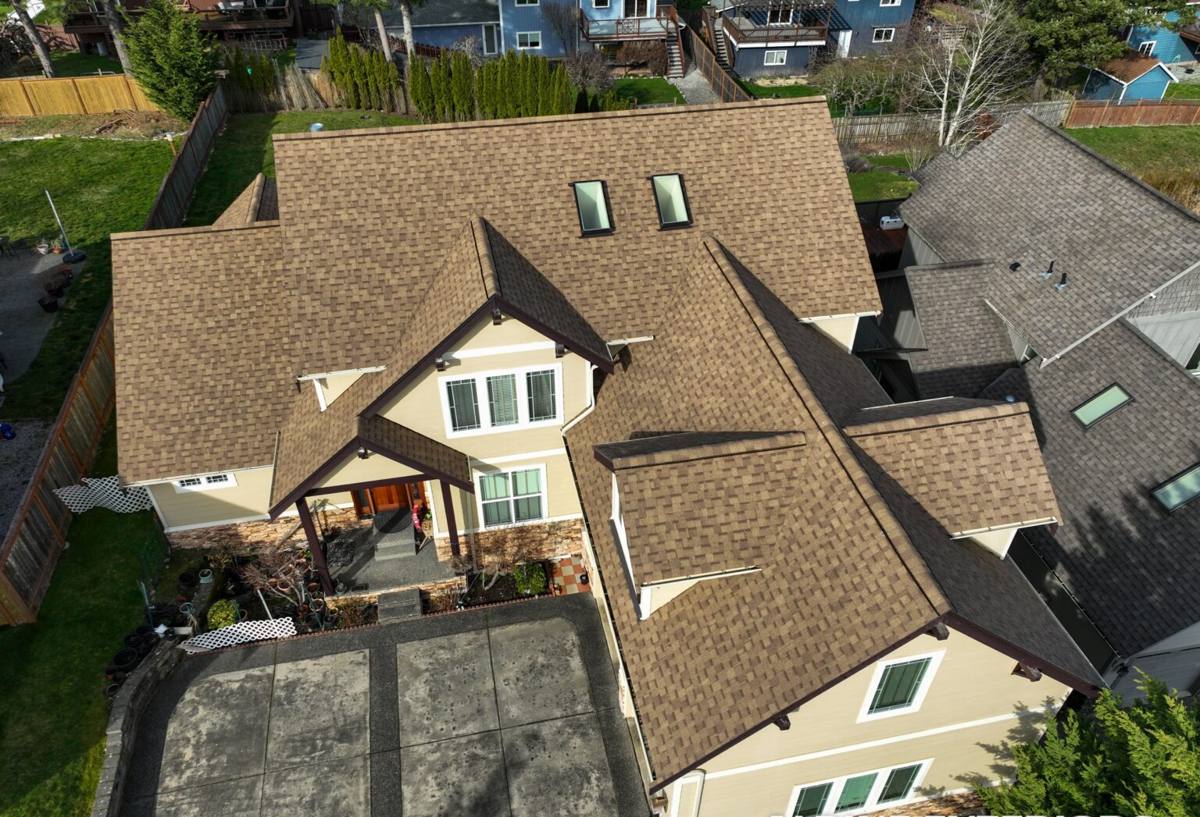
What Storm Damage Actually Looks Like on an Orcas Island Roof
Storm damage isn't always a hole in the roof. On Orcas Island, and especially in exposed spots like Rosario, it usually shows up as one or more of the following:
- Shingles or shakes lifted, cracked, or torn loose at ridges and edges where wind uplift is strongest
- Flashing pulled away or corroded around chimneys, skylights, and roof-to-wall transitions
- Granule loss or bruising on asphalt shingles from wind-blown debris and branches
- Moss mats holding water against the roof deck, softening shingles and encouraging rot underneath
- Gutters and downspouts overwhelmed or torn loose, sending water back under the roof edge instead of away from the house
- Soft or discolored ceiling spots inside the home that only show up days or weeks after the storm, once water has worked its way through
Because a lot of this damage is high, hidden, or subtle, homeowners often don't know they have a problem until a stain appears on a ceiling or a section of siding starts staying damp longer than the rest of the house.
Why Moss Makes Storm Damage Worse
Moss doesn't cause storm damage by itself, but it sets the stage for it. A roof with an established moss mat holds moisture against the surface long after a storm has passed. That constant dampness weakens shingles, corrodes fasteners, and softens the roof deck underneath — all of which make the next windstorm's damage worse than it would have been on a clean, dry roof. On Orcas Island's long moss season, a roof that hasn't been treated or cleaned in a few years is simply more vulnerable when a storm rolls through.
What a Correct Storm Damage Repair Actually Involves
A rushed patch job is one of the most common ways storm damage repairs fail. Slapping new shingles over damaged decking, or caulking a flashing joint instead of properly reflashing it, might stop a leak for a season — but it doesn't address what let the water in to begin with. A correct repair includes:
- A full inspection, not just a spot check. Wind and rain damage rarely stays where it started. We check the whole roof plane, not just the area a homeowner points to.
- Decking evaluation. Any water that got past the roofing material may have reached the plywood or plank decking underneath. Soft or delaminated decking has to be replaced, not covered up.
- Proper flashing repair or replacement. Flashing around chimneys, skylights, valleys, and wall intersections is where most storm-driven leaks actually originate. It needs to be correctly lapped and sealed, not just re-caulked.
- Underlayment integrity. If the underlayment beneath the roofing material was compromised, patching the surface layer alone won't stop water intrusion.
- Matching materials where possible. We match existing shingle, shake, or metal roofing as closely as available products allow, so a repair doesn't stand out or create a new weak seam at the transition.
Our Storm Damage Repair Process
When we get a call about storm damage in Rosario, the process is straightforward:
- Initial assessment. We look at the roof from the ground and, where safe, up close — checking for the damage patterns storms typically cause in this area.
- Documentation. We photograph and note the damage clearly, which is useful whether you're filing an insurance claim or just want a record of what was found and fixed.
- Honest scope of work. We tell you plainly whether this is a targeted repair, a larger section replacement, or something that's better addressed as part of a future full re-roof. We don't pad the scope, and we don't downplay it either.
- Repair. Damaged materials come off, the deck and underlayment are checked and corrected as needed, and new materials go on matched to your existing roof as closely as possible.
- Final check of surrounding areas. Because roof damage and siding, fascia, or soffit damage often happen together in the same storm, we check those adjoining areas before we call the job done.
Roof Damage Rarely Stops at the Roofline
As a contractor that works on the whole exterior envelope, not just roofing, we pay close attention to where the roof meets everything else. Wind-driven rain that gets past a roof edge often shows up next in the fascia board, the soffit venting, or the top course of siding just below the roofline. A storm damage repair that only looks at shingles and ignores a soaked fascia board or a compromised J-channel at the roof-to-wall line is an incomplete repair. We check those transition points as a matter of course, because on an exposed property like a Rosario home, that's usually where the real leak path is.
What Affects the Cost of a Storm Damage Roof Repair
Every roof and every storm is different, so we won't quote a number without seeing the damage. But these are the factors that most often move a repair from a small job to a larger one:
| Factor | Why it matters |
|---|---|
| Extent of decking damage | Soft or rotted decking has to be cut out and replaced before new roofing goes on — this is the single biggest cost driver on older or moss-affected roofs |
| Roofing material | Asphalt shingle repairs are generally more straightforward and less costly than cedar shake or metal repairs, which require more specialized matching and labor |
| Roof pitch and access | Steep roofs and roofs surrounded by mature trees take longer to work safely, which affects labor time |
| Number of penetrations affected | Chimneys, skylights, and multiple roof valleys each add flashing work beyond a simple shingle swap |
| How long the damage went unnoticed | A leak caught within days is a repair; a leak that ran for a season can mean rot, mold, and interior repairs on top of roofing costs |
Insurance and Documentation Notes
Many storm damage repairs on Orcas Island are at least partially covered by homeowners insurance, particularly when the damage is clearly tied to a specific wind or rain event. We're glad to document what we find with photos and a written description of the damage and repair, which you can provide to your insurer. We're not a public adjuster and we won't promise a claim outcome — that's between you and your insurance company — but we'll give you an honest, unembellished account of what happened to your roof and what it took to fix it.
Signs You Should Have a Roof Checked After a Storm
- Visible shingles, shakes, or roofing debris in the yard or gutters after a windstorm
- New water stains, discoloration, or soft spots on interior ceilings
- A musty smell in an attic or upper-floor room that wasn't there before
- Gutters pulling away from the fascia or overflowing during rain
- Visible moss mats or dark streaking that seem to have grown noticeably since the last storm
- Daylight visible through the roof deck from inside an attic space
Why It Matters to Hire a Crew That Already Works Rosario
Storm damage roof repair on Orcas Island isn't quite the same job as it is on the mainland. Material and crew scheduling has to account for ferry timing, and a contractor unfamiliar with the island can end up adding days to a repair simply from logistics they didn't plan for. Beyond scheduling, a crew that regularly works Rosario and the surrounding parts of the island already understands how salt exposure, wind direction off the water, and the local moss season interact on a real roof — not in theory, but from having repaired dozens of them. That familiarity shows up in faster, more accurate assessments and repairs that hold up through the next storm season rather than needing a repeat visit.
We're a San Juan County contractor. We're not commuting in from off-island for a single job and then disappearing if a follow-up question comes up. If you need warranty work, a follow-up inspection, or just want a second opinion on a roof issue two years from now, we're still going to be here.
Get a Straight Answer on Your Roof
If a recent storm has left you with missing shingles, a new leak, or just a nagging feeling that something's not right up there, we're happy to take a look. We'll give you a clear, honest assessment of what's actually going on and what it will take to fix it correctly — no pressure, no inflated scope. Reach out using the form below to request a free estimate for storm damage roof repair in Rosario.