 Orcas Island Siding
 Why Mountain Lake Roofs Wear Differently Than Roofs Inland
Homes around Mountain Lake sit in one of the shadier, more forested pockets of Orcas Island, tucked closer to Moran State Park's tree cover than the open shoreline properties elsewhere on the island. That setting brings its own roofing problems. Less direct sun means roof surfaces stay damp longer after every rain. Add in the salt-laden air that moves across San Juan County off the Salish Sea, and you have a combination that speeds up the two things that kill roofs early: corrosion of metal components and moss colonization on shaded slopes.
Driving rain off winter storms doesn't just test how waterproof a roof is — it tests how well every flashing detail, seam, and penetration was installed years ago. A roof that looks fine on a dry day can still be feeding water into the attic every time wind pushes rain sideways under a lifted shingle tab or around an old vent boot. On Orcas Island, where a lot of homes are used seasonally or checked on only periodically, small leaks often go unnoticed until they've caused real damage to sheathing, insulation, or interior finishes.
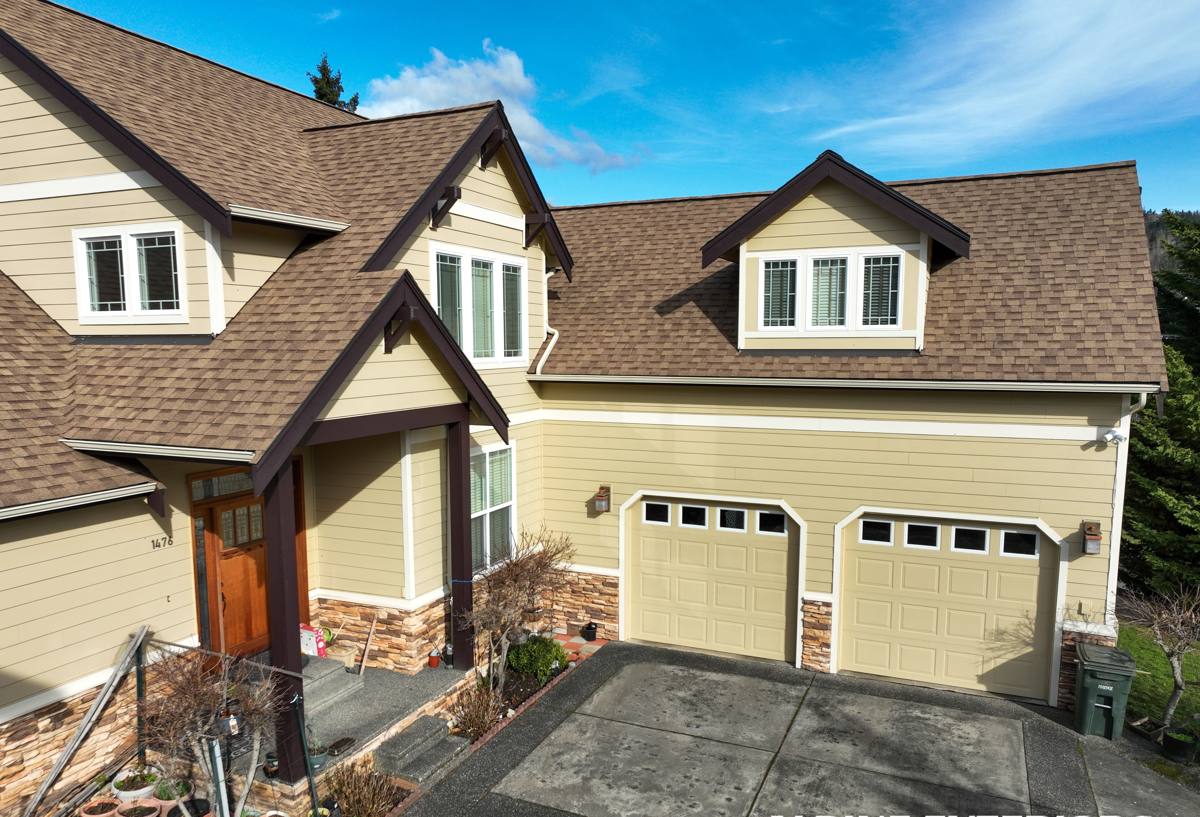
Signs a Mountain Lake Roof Needs Repair Now
Most roof failures we see in this area don't start as dramatic leaks — they start small and get ignored because they're easy to miss from the ground. Walk your property periodically and watch for these:
- Dark green or black streaking, or visible moss cushions, on north-facing or shaded slopes
- Granules collecting in gutters or at downspout outlets (a sign of shingle wear)
- Lifted, curling, or missing shingle tabs after a windstorm
- Rust staining or gaps at metal flashing around chimneys, skylights, and roof-to-wall transitions
- Soft or discolored ceiling patches, especially near exterior walls or chimneys
- Daylight visible through the roof deck when viewed from inside the attic
- Gutters overflowing or pulling away from the fascia during heavy rain
Any one of these on its own may just need a targeted repair. Several at once, or moss buildup that's been left for more than a season or two, usually means the underlying materials have started to break down and the repair needs to go deeper than patching the surface.
What a Correct Roof Repair Actually Involves
A repair that just covers the visible symptom rarely holds up through a full Orcas Island winter. Doing it right means understanding why the failure happened in the first place, not just where water is currently showing up inside the house.
Tracing the Leak to Its Real Source
Water doesn't always enter where it appears on a ceiling — it can travel along rafters or sheathing for several feet before dripping. A proper repair starts with inspecting the roof surface, the attic underside, and the flashing details together, so the fix addresses the actual entry point instead of the symptom.
Flashing and Penetration Repair
Chimneys, skylights, plumbing vents, and any place where two roof planes meet are the most common failure points on older roofs. Flashing metal that has rusted through, sealant that has dried and cracked, or step flashing that was never properly layered under the siding all need to be corrected with new material, not just re-caulked over.
Moss and Organic Growth Removal
On shaded slopes, moss doesn't just sit on top of shingles — its root structure lifts the shingle mat and holds moisture against it, accelerating decay underneath. A correct repair includes careful moss removal (not aggressive pressure washing, which can strip granules and shorten shingle life), treatment to slow regrowth, and inspection of the shingles underneath for damage the moss was hiding.
Underlayment and Deck Condition
If water has been getting past the shingle layer for a while, the underlayment and roof deck underneath may be saturated or soft. Patching over compromised decking doesn't fix anything — that section needs to be dried out, and in some cases the plywood or boards replaced, before new shingles or repair material go back down.
Ventilation Checks
A poorly ventilated attic traps moisture, which condenses on the underside of the roof deck and can look exactly like a leak from outside. Part of a thorough repair visit is checking that soffit and ridge ventilation are actually working, since fixing a "leak" that's really condensation from blocked ventilation won't solve the problem.
Common Roofing Materials Around Orcas Island and How They Repair
| Material | How It Typically Fails Here | Repair Considerations |
|---|---|---|
| Asphalt/composition shingles | Granule loss, curling edges, moss lift on shaded slopes | Individual shingle replacement is straightforward if matching material is available; widespread wear usually signals it's nearing full replacement age |
| Cedar shake/shingle | Moss and moisture retention, splitting, gradual thinning | Requires selective shingle replacement and attention to ventilation; heavy moss coverage often means the roof needs a full assessment, not just spot repair |
| Standing seam metal | Fastener loosening, sealant failure at penetrations, occasional panel damage from falling branches | Repairs are usually localized to seams and penetrations; metal roofs generally hold up well against moss but still need flashing maintenance |
| Torch-down/membrane (low-slope sections) | Seam separation, blistering, ponding water on flat areas | Seam repair must be done with compatible material and proper heat-welding or adhesive technique — patch jobs with the wrong product often fail again quickly |
We work on all of these regularly across Orcas Island and San Juan County, and we'll tell you honestly if your roof's material and age make a targeted repair the right call, or if repair spending is better redirected toward planning a replacement.
Our Repair Process
- Inspection. We walk the roof and the attic where accessible, checking flashing, penetrations, moss coverage, and deck condition — not just the spot where a leak was reported.
- Straight explanation. We tell you what we found, what's causing it, and what it will take to fix — including if a repair isn't the best long-term answer.
- Written scope and price. No vague "we'll see once we're up there" — you know what's being done before work starts.
- Repair work. Flashing, shingles, underlayment, or deck sections are corrected using materials suited to how this roof is built and where the sun and shade fall on it.
- Cleanup and check. Debris, old material, and moss removed from the roof and gutters; work area cleaned up before we leave.
- Follow-up guidance. We'll tell you what to watch for and, if moss is a recurring issue on your property, what a reasonable maintenance interval looks like.
What Affects the Cost of a Roof Repair
| Factor | Why It Matters |
|---|---|
| Roof pitch and access | Steep slopes or roofs with limited safe access take longer and require more setup |
| Extent of moss/organic damage | Removal and treatment of heavy growth adds time beyond the actual repair |
| Deck condition underneath | Soft or rotted decking found during the repair means additional material and labor |
| Material match | Matching existing shingle color/style or sourcing specific metal profiles can affect timeline and cost |
| Number and condition of penetrations | Each chimney, skylight, or vent needing flashing work adds scope |
| Ferry and travel logistics | Island scheduling and material transport are part of any Orcas Island project and are factored into planning, not hidden in the price |
We give straightforward, written pricing after inspection — no per-square-foot guessing without seeing the actual roof first. Small flashing or shingle repairs are usually a modest job; repairs involving deck replacement or extensive moss remediation cost more because the labor and material involved genuinely increase.
Moss Management Is an Ongoing Job, Not a One-Time Fix
Because of how much shade and moisture the Mountain Lake area gets relative to more open parts of the island, moss isn't something you treat once and forget. Zinc or copper strips near the ridge can help slow regrowth over time, but they work gradually and don't replace periodic inspection. We recommend homeowners in shaded, forested settings have their roof looked at every year or two, even without an obvious leak, so small moss patches and minor flashing wear get addressed before they turn into a deck-level repair.
Keeping gutters clear is part of this too. Needles and debris from surrounding trees collect fast in this area, and clogged gutters send water back up under the shingle edge instead of off the roof — a completely avoidable cause of edge rot and interior damage.
Why Hire a Crew That Already Works Mountain Lake and Orcas Island
Roofing on a rural island isn't the same job as roofing on the mainland. Material and equipment have to be planned around ferry schedules. Weather windows for repair work are narrower in the wetter months, and a contractor who doesn't already work San Juan County regularly may not price or schedule around that reality — leading to delays or corners cut to make a mainland-based estimate work.
We work on Orcas Island regularly, which means we already understand the logistics of getting the right material and crew here without wasted trips, and we know how moss, salt air, and driving rain actually behave on roofs in this specific setting — not just in general terms. That local familiarity shows up in fewer callbacks, because the repair addresses the real cause the first time.
Get a Straightforward Roof Assessment
If you're seeing moss buildup, a stain on a ceiling, or storm damage after a recent windstorm, it's worth getting a second set of eyes on it before the next round of rain finds its way further into the structure. Reach out for a free, no-pressure estimate — we'll take a look, tell you honestly what we see, and lay out what a proper repair involves before any work begins.