 Orcas Island Siding
 Deer Harbor's Climate Is Rough on the Wrong Siding
Deer Harbor sits close to the water, which means homes there take a harder hit from the elements than a house tucked inland on Orcas Island. Salt-laden air moves in off the water almost constantly, Pacific storms push rain sideways into walls rather than straight down, and the tree cover that gives the area so much of its character also keeps siding shaded and damp for long stretches of the year. Any siding product will eventually show wear in this environment. The question is how much of that wear you're willing to pay for in maintenance, and how well the material was actually engineered to take it.
Salt Air and Coastal Corrosion
Airborne salt accelerates corrosion on anything metal — fasteners, flashing, trim screws — and it breaks down lesser siding finishes faster than an inland home would ever experience. This is one of the first things we account for on a Deer Harbor job: not just what the siding panel is made of, but what's holding it to the wall and sealing its edges.
Driving Rain and Wind-Driven Moisture
San Juan County storms don't always drop rain straight down. Wind off the water drives it sideways and upward into laps, seams, and trim joints. A siding product can be rated for moisture resistance and still fail on a house like this if the installation details — flashing, lap exposure, sealant — aren't handled correctly. On this coastline, the install matters as much as the material.
A Long Moss Season
Between the tree canopy common around Deer Harbor and the region's extended wet season, north-facing and shaded walls can stay damp for months at a time. That's exactly the condition moss and algae need to take hold. It's not unique to any one siding brand — moss will grow on almost any exterior surface given enough shade and moisture — but some materials feed that growth more than others, and some hold onto it more stubbornly once it starts.
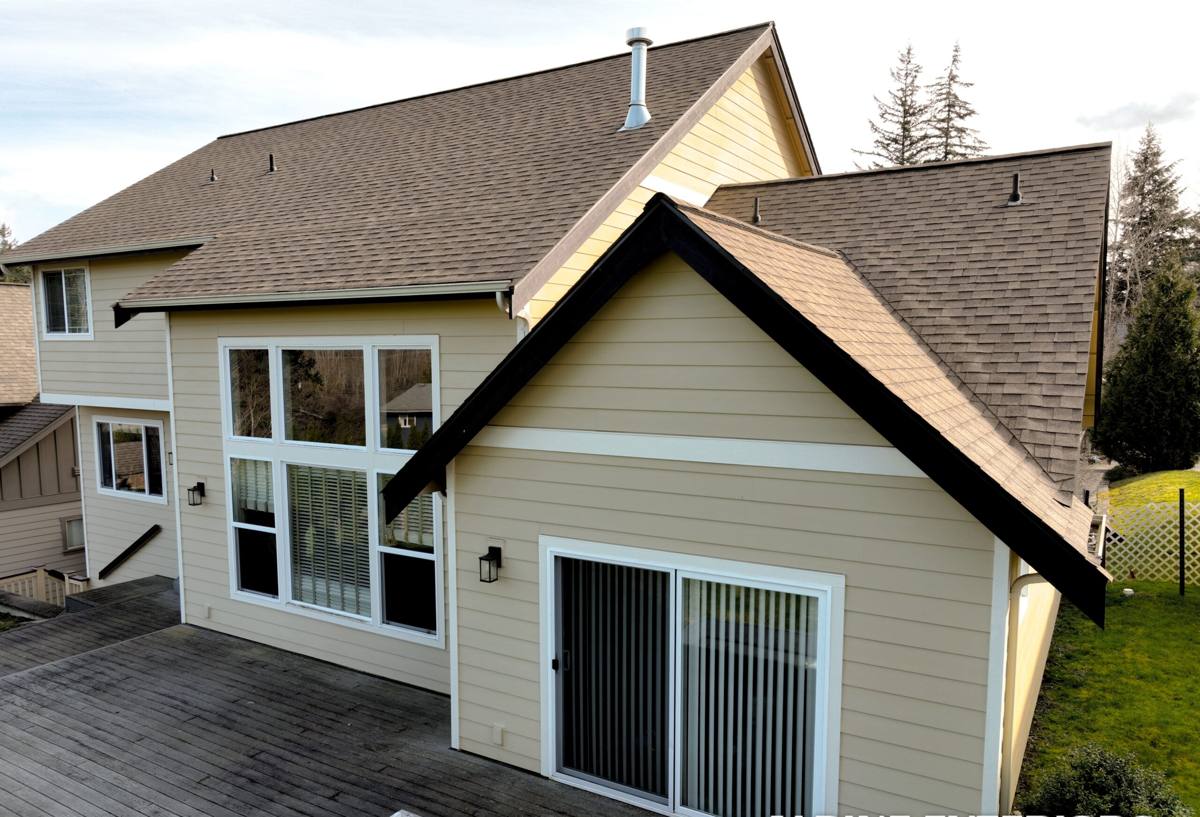
Why We Only Install James Hardie Fiber Cement
We standardized on James Hardie fiber cement siding and don't install vinyl, LP SmartSide, Cemplank, Allura, primed spruce, or cedar. That's not a marketing position — it's the product we're willing to put our name behind for a climate like this one. Hardie fiber cement is non-combustible, it's manufactured in HZ climate-engineered formulations built for regions with heavy moisture exposure, it comes with a factory-applied ColorPlus finish instead of a field-painted one, and it carries a strong transferable warranty. Vinyl can warp and fade under UV and temperature swings, wood-based products like cedar and primed spruce need consistent repainting and are more vulnerable to moisture and rot, and other fiber cement brands don't carry Hardie's specific climate engineering or finish warranty. For a waterfront community like Deer Harbor, those trade-offs aren't worth the risk.
The Right Hardie Product Line for a Marine Environment
Climate-Engineered HZ Formulation
James Hardie manufactures its siding in different HZ formulations depending on regional climate demands — moisture exposure, freeze-thaw cycling, and humidity all factor into which version is right for a given area. Homes in the Pacific Northwest, including Orcas Island, call for the formulation engineered for wetter, harsher coastal conditions rather than a generic all-climate product. Getting this right at the ordering stage matters more here than in a drier inland region.
ColorPlus Factory Finish
ColorPlus is baked on at the factory under controlled conditions, rather than painted on site after installation. That finish holds up better against salt air and UV exposure than field-applied paint, and it means you're not scheduling a repaint every few years — a real consideration when every truckload of materials or crew for touch-up work has to come over on the ferry.
Plank vs. Panel
HardiePlank lap siding is the traditional horizontal look and works well on most Deer Harbor homes. HardiePanel, installed vertically, gives a board-and-batten appearance that's common on island and coastal-style homes and pairs well with heavier trim details. Which one makes sense depends on your home's existing architecture and how much trim and window work is involved — we'll walk through both options during the estimate.
What Correct Installation Looks Like on a Deer Harbor Home
The siding product is only half the job. On a house exposed to driving rain and salt air, the installation details determine whether that siding performs for its full service life or starts failing early at the seams.
- A rainscreen gap behind the siding so any moisture that gets past the surface can drain and dry instead of sitting against the wall
- Correctly lapped and flashed windows, doors, and trim joints so wind-driven rain can't work its way behind the siding
- Stainless steel or hot-dip galvanized fasteners rated for coastal/marine exposure, not standard fasteners that corrode faster in salt air
- Manufacturer-specified nailing pattern and lap exposure, not a shortcut pattern that voids the warranty
- Sealants and caulks rated for exterior marine exposure at joints and penetrations
- Proper clearance between the siding and grade, decks, and roof lines to reduce splashback and moisture retention
Skip any one of these and you can end up with a house wearing the right siding but still failing early — which is often the actual cause when fiber cement siding disappoints a homeowner.
Moss, Shade, and Long-Term Maintenance
No siding material is moss-proof. Given enough shade and standing moisture, moss and algae can take hold on almost any exterior surface, including fiber cement. What differs between products is how much they feed that growth and how easily it comes back off.
| Material | How It Handles Salt Air and Moss |
|---|---|
| Cedar / primed spruce | Organic surface gives moss and algae something to feed on directly; needs regular repainting and treatment to slow growth |
| Vinyl | Won't feed growth directly, but seams and laps trap moisture and debris where moss can establish, and panels can warp in temperature swings |
| James Hardie fiber cement | Non-organic surface with a factory-sealed finish; doesn't feed growth the way wood does, and can be gently cleaned without stripping paint |
Even with Hardie siding, a shaded Deer Harbor wall will still need occasional attention — a soft wash to clear moss and debris before it builds up, and a check of caulking and trim joints every year or two. It's a fraction of the maintenance a wood or repainted product would demand in the same spot.
Our Process, Start to Finish
The steps are the same fundamentals as any Hardie project, adjusted for what an island job actually requires.
- Assessment: we look at existing siding, moisture damage, trim condition, and how exposed each wall is to wind, rain, and shade before recommending a scope of work
- Product and color selection: plank vs. panel, the right HZ formulation, and a ColorPlus color that suits the home and holds up to salt air
- Tear-off and moisture barrier: old siding comes off, the wall is inspected for hidden damage, and a proper weather-resistive barrier and rainscreen gap go in before new siding does
- Installation: siding, trim, and flashing installed to manufacturer spec with corrosion-resistant fasteners throughout
- Final walkthrough: we check seams, caulking, and clearances before calling the job done
On Orcas Island, logistics matter as much as the technical steps. Materials have to be staged and scheduled around ferry sailings, and weather windows for tear-off and moisture barrier work need to be planned tighter than on the mainland, where a delayed truck is a minor inconvenience rather than a missed sailing.
What Influences the Cost of a Deer Harbor Hardie Project
| Factor | Why It Matters |
|---|---|
| Home size and wall area | More square footage means more material and labor hours |
| Existing siding removal | Multiple layers or damaged sheathing underneath add tear-off and repair time |
| Site access | Waterfront lots, bluffs, and limited driveway access can slow staging and require extra planning |
| Trim and window count | More openings mean more flashing and detail work, which adds labor |
| Plank vs. panel choice | Vertical panel with board-and-batten trim generally involves more trim labor than lap siding |
| Rainscreen and barrier scope | Full moisture barrier and rainscreen installation adds material and labor but is not optional on an exposed coastal wall |
We'll walk through actual numbers for your home during the estimate — broad ranges without seeing the house and its exposure aren't useful to you.
Why Hiring a Crew That Already Works Deer Harbor Matters
Orcas Island's remote location means fewer contractors service it regularly, and the ones that don't can turn a straightforward siding job into a scheduling headache. A crew that's used to working here plans material deliveries around ferry sailings instead of discovering the problem mid-project, understands how differently a sheltered cove and an open-water-facing wall on the same street can weather, and doesn't need to relearn island logistics on your dime. If your property falls under a homeowners association or county shoreline guidelines, it's also worth confirming what's required before work starts — a local crew is used to asking that question early rather than after the tear-off has begun.
If you're weighing a siding replacement for a Deer Harbor home, we're happy to take a look and talk through what your specific walls need. Reach out below for a free, no-pressure estimate.