 Orcas Island Siding
 Why Siding Fails Faster in Deer Harbor
Deer Harbor sits right on the water on the west side of Orcas Island, and that location is exactly what makes siding replacement here different from a typical mainland job. Homes in this part of San Juan County take on three things at once, day after day, month after month: salt-laden air off the water, driving rain that comes in sideways during winter storms, and long stretches of shade and dampness that keep moss and algae growing for most of the year. Any one of these will shorten the life of a siding system. Together, they're why so many homes on this part of the island end up needing a full replacement years before their siding was ever supposed to fail.
Salt Air and Fasteners
Marine air carries fine salt that settles on exterior surfaces and works its way into seams, fastener heads, and any spot where paint or finish has thinned. Over time it accelerates corrosion in fasteners and trim hardware and breaks down paint film faster than it would a few miles inland. Siding that isn't engineered or finished to handle that exposure tends to chalk, fade, and lose its seal well ahead of schedule.
Driving Rain and Water Intrusion
Wind off the water doesn't just bring moisture — it drives it. Walls facing the water and prevailing weather take rain at an angle, which pushes water into any gap at trim, corners, and butt joints that isn't properly flashed and lapped. This is where most siding failures actually start: not on the face of the panel, but behind it, at details that were rushed or installed out of sequence.
Moss, Shade, and Trapped Moisture
Orcas Island's tree cover and marine humidity mean a lot of exterior walls, especially north- and east-facing ones, stay damp and shaded for long stretches of the year. That's ideal for moss and algae, which hold moisture directly against the siding surface. Wood-based products are especially vulnerable here, since trapped dampness against a wood substrate is what leads to soft spots, delamination, and rot at cut edges.
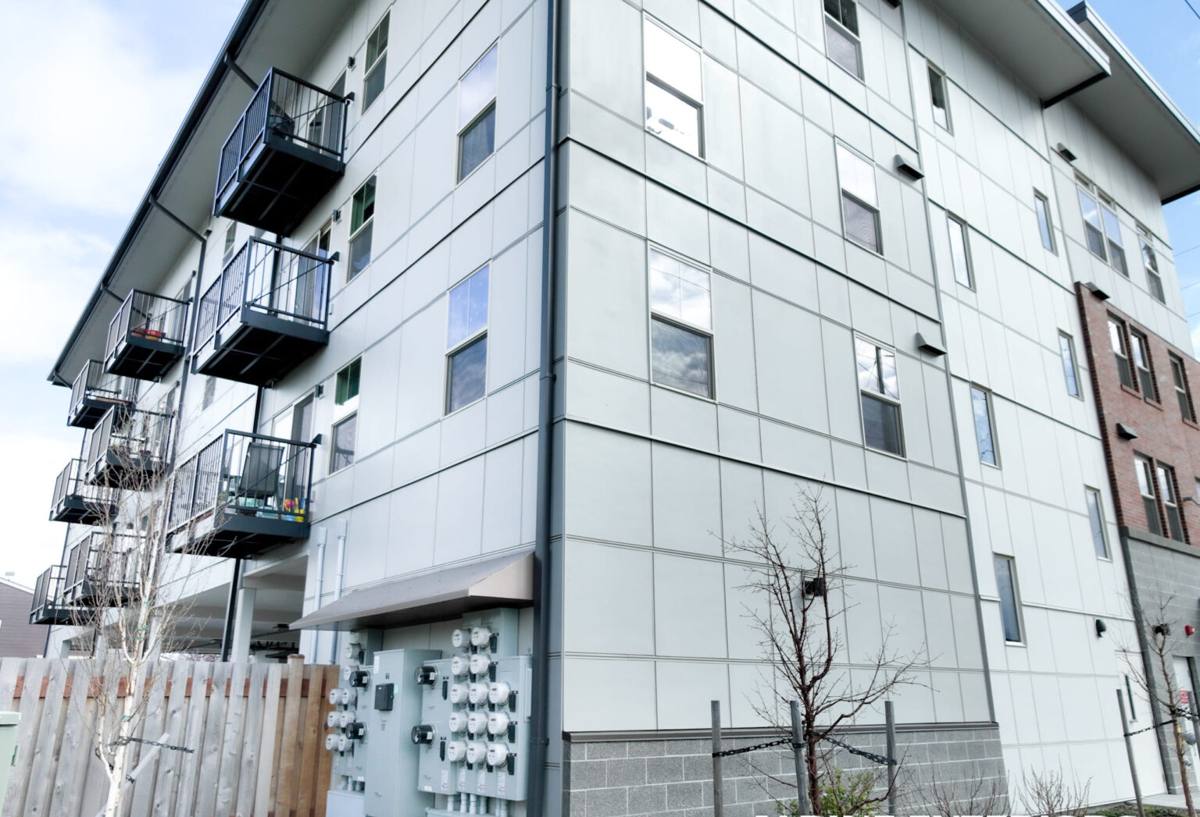
Signs Your Deer Harbor Home Needs Siding Replacement
Not every siding problem means a full tear-off — sometimes it's a repair, sometimes it's a re-caulk and repaint. But certain signs point to a system that's past the point of patching. If you're seeing more than one of these, it's worth having it looked at before another wet season makes the damage worse.
- Soft spots or give when you press on the siding, especially near the bottom courses or under windows
- Paint or finish that keeps failing in the same spots no matter how often it's repainted
- Moss or dark staining that returns quickly after cleaning
- Cracked, warped, or delaminating boards, particularly on older wood, hardboard, or engineered wood siding
- Visible gaps opening up at trim, corners, or butt joints
- Musty smell or visible mold at interior walls that back up to exterior siding
- Noticeably higher heating bills as gaps and failed siding let conditioned air escape
What a Correct Siding Replacement Involves
Siding replacement is more than swapping old panels for new ones. Done right, it's a full envelope job, and the parts nobody sees matter more than the parts everyone does.
Tear-Off and Inspection
Removing the old siding is also the only real chance to inspect the sheathing underneath. In a climate like Deer Harbor's, it's common to find soft or rotted sheathing behind areas where water has been getting in unnoticed, particularly around old window and door flashing. Any damaged sheathing gets replaced before anything new goes back up — covering rot with new siding just hides the problem for a few more years.
Weather-Resistive Barrier and Flashing
A correctly lapped weather-resistive barrier, paired with proper flashing at every window, door, and penetration, is what actually keeps water out of the wall assembly. In a high-rain, wind-driven-rain environment, these details carry more of the load than the siding material itself.
Fastening and Installation to Spec
Fiber cement siding has manufacturer-specified fastening patterns, clearances, and gapping requirements that change depending on exposure. Installing it correctly for a waterfront, wind-exposed home is not the same job as installing it on a sheltered inland lot, and it shouldn't be treated that way.
Why We Install Only James Hardie Fiber Cement
We install James Hardie fiber cement siding exclusively. That's not a marketing preference — it's a standard we hold because of what we've seen hold up, and not hold up, in this exact climate.
Vinyl siding is affordable and low-maintenance in mild conditions, but it's a lapped panel system with no real drainage plane behind it, and it can distort or crack in wide temperature swings and impact. In a wind-driven-rain environment, panel seams and butt joints are exactly the weak points that let water behind the wall.
LP SmartSide and similar engineered wood products perform reasonably well when installation and maintenance are kept up perfectly, but they're still wood-based at the core. Cut edges and any point where the factory seal is broken are vulnerable to moisture absorption, and in a shaded, moss-prone environment like Deer Harbor, that's a real long-term risk.
Cedar siding has genuine appeal and a long track record, but it's a natural wood product that needs consistent refinishing to keep water out, and it's more susceptible to moss and rot than a manufactured product when maintenance slips even for a season or two.
Primed spruce and similar primed wood products arrive with only a base coat, which means the finish coat and every future repaint is a field condition, done on a ladder, in whatever weather cooperates — another point of failure in a place where good painting weather is limited.
James Hardie fiber cement is non-combustible, dimensionally stable in wet-dry cycling, and comes with a factory-applied ColorPlus finish that's baked on under controlled conditions rather than brushed on outdoors. Hardie also engineers specific product lines for different climate demands, which matters in a marine environment like the San Juans where moisture exposure is constant. It carries a strong, transferable manufacturer warranty — but only when installed to spec, which is why installation quality matters as much as the product choice itself.
Material Comparison for a Marine, Moss-Prone Climate
| Material | Salt Air & Moisture Behavior | Moss Season Maintenance |
|---|---|---|
| Vinyl | Panel seams and butt joints are common water entry points; can distort with heat/impact | Moss/algae sit on the surface; cleans off but returns without airflow changes |
| LP SmartSide (engineered wood) | Performs well if the factory seal stays intact; cut edges are vulnerable | Trapped moisture against wood substrate is a real long-term risk in shaded areas |
| Cedar | Natural material; needs consistent refinishing to keep water resistance up | More susceptible to rot and moss growth without diligent, ongoing upkeep |
| Primed spruce | Field-applied finish coat is a recurring maintenance point | Repainting on a ladder in limited good-weather windows is a recurring task |
| James Hardie fiber cement | Non-combustible, dimensionally stable, factory ColorPlus finish resists salt-air fading | Occasional gentle wash; no repainting cycle tied to the finish itself |
Our Process for a Deer Harbor Siding Replacement
We start with an on-site assessment — measuring the home, checking sheathing and trim condition (especially around windows, doors, and any wall that takes direct wind and rain), and identifying areas where past water intrusion may already be an issue. From there we walk through Hardie profile and color options, then schedule the job with island logistics in mind, since material delivery and crew scheduling on Orcas Island take more planning than a mainland job. Once work begins, the sequence is tear-off, sheathing repair where needed, correct weather-resistive barrier and flashing installation, Hardie siding installed to manufacturer fastening specs for the home's actual wind and rain exposure, trim and caulking, full cleanup, and a walkthrough where we register the manufacturer warranty on your behalf.
Cost Factors for Siding Replacement
Every home is different, and we won't quote a number without seeing the property, but these are the factors that most often move the price up or down on a Deer Harbor job.
| Factor | Typical Impact |
|---|---|
| Extent of sheathing or structural repair needed | High — hidden rot behind old siding is common near failed flashing |
| Home size and number of stories | High — more area and more difficult access both add labor |
| Trim, corner, and profile complexity | Medium — detailed trim work and multiple siding profiles add time |
| Site access and material staging | Medium — waterfront and wooded lots can limit staging space |
| Removal and disposal of old siding | Low to Medium — varies with the material being removed |
Most full home siding replacements land in the five-figure range, with the specifics driven almost entirely by the factors above. We'll walk you through exactly what's driving your number before any work starts.
Caring for New Siding Through Moss Season
Fiber cement siding is low-maintenance, not no-maintenance. A few habits will keep it looking and performing well through Orcas Island's wetter months:
- Keep gutters and downspouts clear so runoff doesn't wash directly down the siding face
- Trim back overhanging branches and brush near walls to improve airflow and sun exposure
- Rinse siding gently with a garden hose once or twice a year rather than pressure washing, which can force water behind trim and joints
- Check caulking at trim, corners, and penetrations annually and touch up as needed
- Address any new moss growth early, before it has a chance to hold moisture against the surface
Why a Crew That Already Works Deer Harbor Matters
Siding replacement on Orcas Island isn't just a technical job — it's a logistics job. A crew that regularly works Deer Harbor and the surrounding San Juan County communities already understands ferry scheduling, material delivery lead times, and how to plan a job so weather delays don't leave a home's sheathing exposed longer than it should be. Just as important, we know which walls in this area take the worst of the wind-driven rain and which lots stay shaded long enough to grow moss fast, so the flashing, fastening, and product choice are matched to the actual conditions the home faces — not a generic mainland spec. And because this is where we already work, follow-up service isn't a special trip.
If your Deer Harbor home is showing signs of siding wear, we're happy to take a look and give you a straightforward, no-pressure estimate — no obligation, just an honest read on what your home actually needs. Use the form below to get started.