 Orcas Island Siding
 Deck Repair Built for Doe Bay's Marine Climate
Doe Bay sits close enough to the water that every deck out here is working against the weather nearly year-round. Salt-laden air moves in off the water and settles into wood grain and metal fasteners alike. Add the long stretch of wet months San Juan County sees every fall through spring, plus the shade thrown by the fir and cedar that surround so many Orcas Island properties, and you get the three things that wreck a deck faster than anything else: moisture, corrosion, and moss. A deck repair here isn't just about swapping a few boards — it's about understanding why those boards failed in the first place and fixing that root cause so the repair actually holds.
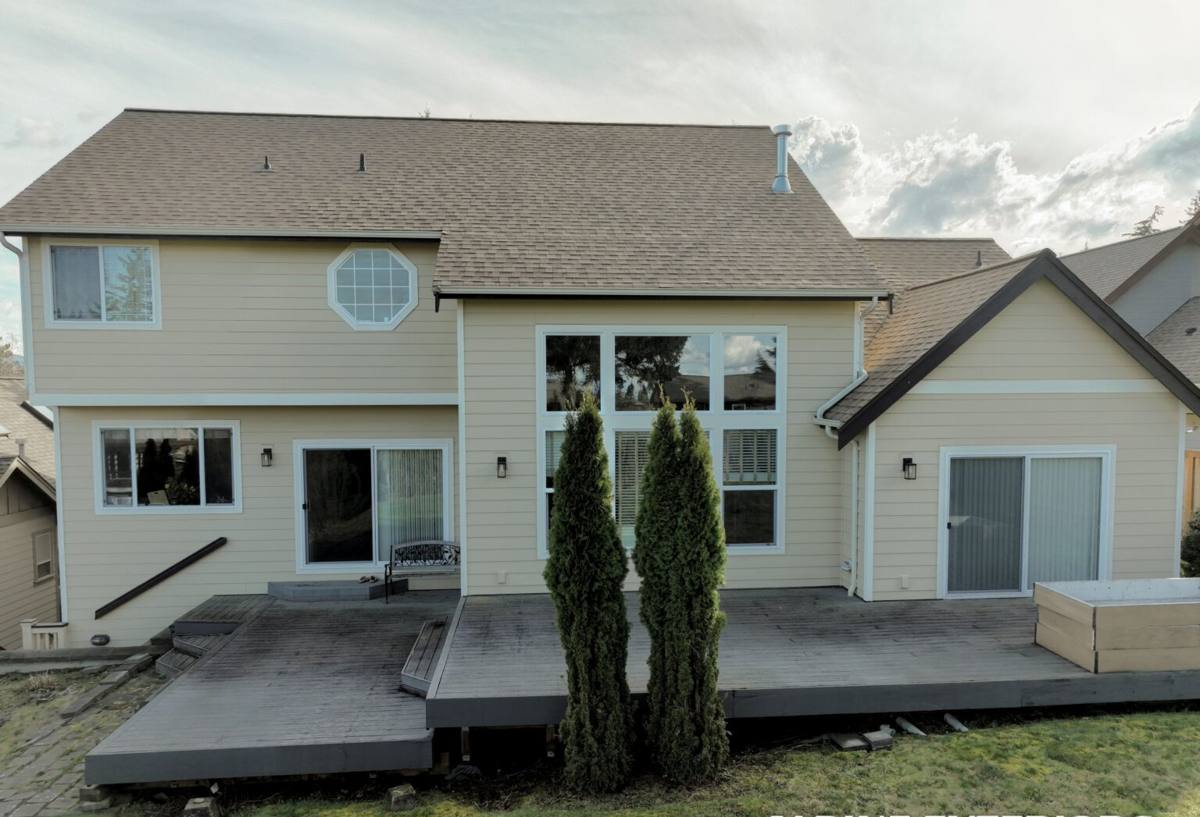
We work on decks all over Orcas Island, and the ones in Doe Bay tend to show a specific pattern of wear tied to this shoreline setting: ledger boards that trap moisture against the house, fasteners that rust and stain the decking around them, and a slow buildup of moss and organic debris in low-light spots that never fully dry out between rains.
Why Doe Bay Decks Wear the Way They Do
Salt Air and Corrosion
Airborne salt accelerates corrosion on anything metal — nails, screws, joist hangers, railing brackets. Once a fastener starts to rust, it swells slightly and works itself loose, which opens a path for water to get into the wood around it. That's often the real story behind a deck board that looks fine on top but feels spongy underfoot.
Driving Rain and Wind-Driven Moisture
Rain here doesn't always fall straight down. Wind off the water pushes it sideways, driving moisture up under railings, behind fascia boards, and into any gap where flashing has failed or was never installed correctly. Water that would run off a flat surface in a calmer climate gets forced into joints and end grain instead.
Moss, Shade, and Slow Drying
Tree cover keeps a lot of Orcas Island properties cooler in summer, but it also means parts of a deck can stay damp for days after a storm. Moss and algae take hold in those shaded, slow-drying areas, and once established they hold moisture directly against the wood surface, which speeds up rot underneath even when the boards look mostly clean.
Signs Your Deck Needs Repair — Not a Full Rebuild
Most decks we look at in this area don't need to be torn out and replaced. They need the failed components identified and corrected before the damage spreads. Here's what we check for on every inspection:
- Soft, spongy, or spring-back decking boards, especially near the house or in shaded corners
- Rust streaks running down from screw heads or metal connectors
- Gaps or separation where the deck ledger meets the house wall
- Loose, wobbly, or leaning railing posts
- Visible moss, algae, or green staining on horizontal surfaces
- Discoloration or swelling around joist ends and beam connections
- Stair stringers that flex or show cracking at the notches
- Fasteners backing out or "popping" above the board surface
If most of the framing underneath is sound and the damage is isolated to boards, fasteners, flashing, or railings, a targeted repair is almost always the right call — it's faster, less disruptive, and a fraction of the cost of a rebuild.
What a Correct Deck Repair Actually Involves
A repair that only replaces what's visibly broken tends to fail again within a season or two, because it ignores whatever let the damage happen in the first place. Our approach treats each repair as a small diagnostic project:
1. Find the Water Path
Before we touch a board, we trace how water is reaching the damaged area. A rotten joist end usually means water is getting past flashing or running along a fastener that's no longer sealed. Replacing the joist without fixing that path just buys a little time.
2. Correct the Fastener and Hardware Choice
Standard construction screws and galvanized nails corrode faster in a marine environment than they would further inland. Where we're replacing fasteners or structural hardware, we match the choice to the exposure — using corrosion-resistant fasteners and connectors rated for coastal use, not whatever happens to be cheapest at the yard.
3. Rebuild the Flashing and Drainage Detail
Ledger flashing, kickout flashing at wall intersections, and proper slope on the decking surface all matter more here than in a drier climate. If the original installation skipped or shortcut these details, we address them as part of the repair rather than reinstalling the same weak point.
4. Match and Seal the New Material
New boards or framing get treated or sealed to match the exposure of the surrounding deck, so the repair doesn't become the next weak spot in a year or two.
Repair vs. Replacement: What Actually Drives the Decision
| Factor | Favors Repair | Favors Full Replacement |
|---|---|---|
| Framing condition | Joists and beams are solid, dry, and structurally sound | Rot has spread through multiple joists or the ledger connection |
| Age of deck | Under 15–20 years, quality lumber or composite | Original construction is old, undersized, or built to outdated standards |
| Damage pattern | Isolated to a few boards, fasteners, or a railing section | Widespread moss, rot, or corrosion across the whole surface |
| Underlying issue | Fixable with better flashing, fasteners, or drainage detail | Structural layout itself traps water with no reasonable fix |
| Budget goal | Extend service life at lower upfront cost | Reset the clock and update materials for the long term |
Broadly, isolated repairs on a structurally sound deck run in the low thousands of dollars depending on scope, while a full tear-out and rebuild costs several times that. We'll always tell you honestly which category your deck falls into rather than pushing toward the bigger job.
Decking Material Considerations for This Climate
When we're replacing boards during a repair, the material choice matters as much as the workmanship. Pressure-treated lumber is affordable and repairable in sections, but it needs regular sealing to hold up against the wet season, and it's more prone to surface moss if it sits in shade. Cedar has natural rot resistance and looks good weathered, but it's softer and shows wear from foot traffic and moisture faster without upkeep. Composite decking resists moss and rot better with less maintenance, but it costs more upfront, and a damaged board typically gets replaced as a full board rather than patched — there's no sanding or spot-sealing a composite surface the way you can with real wood. None of these is a "wrong" choice; the right one depends on how much maintenance you want to do and what the rest of the deck is built from.
A Note on Our Product Standards
We don't install every fastener or flashing product on the market, and that's a deliberate call. In a marine climate, the cheapest galvanized fasteners and generic flashing tape are the first things to fail — not because they're "bad" products in a general sense, but because they're not built for sustained salt exposure and constant moisture cycling. We standardize on corrosion-rated hardware and proper self-adhered flashing membranes because that's what holds up here, even though it costs a bit more than the minimum.
Our Repair Process, Step by Step
- On-site inspection — we walk the full deck, check the framing from underneath where accessible, and identify every failure point, not just the one you called about.
- Written scope and estimate — you get a clear breakdown of what needs repair, what we recommend replacing versus keeping, and why.
- Repair work — framing, flashing, and fastener corrections come first, then decking, railings, and finish work.
- Sealing and finishing — new and existing wood gets sealed or finished to match, so the whole deck weathers evenly going forward.
- Maintenance guidance — we tell you what to watch for and how often to reseal or clean, specific to your deck's exposure and shade pattern.
Keeping a Doe Bay Deck Ahead of the Weather
Repair work goes a lot further when it's paired with basic seasonal upkeep. A few habits make a real difference in this climate:
- Sweep debris and needles out of corners before fall rains set in — trapped organic matter holds moisture against the boards
- Rinse off moss and algae in spring before it gets a foothold, rather than waiting until it's established
- Check railing posts and stair connections annually for movement — loosening often shows up here before it's visible in the decking
- Reseal wood decking on the schedule appropriate to the product, not just when it looks faded
- Keep gutters and downspouts clear so roof runoff isn't dumping extra water onto or near the deck
Why Hiring a Crew That Already Works Doe Bay Matters
Island work has its own logistics. Materials and specialty fasteners often need to be ordered ahead and brought over by ferry, so a contractor who's already sourcing for Orcas Island jobs can plan around that instead of leaving you waiting mid-repair. More importantly, a crew that's repaired decks throughout this part of San Juan County has already seen how the salt air, shade patterns, and rain exposure specific to this shoreline play out over time — which means less guessing about where a deck is likely to fail next and a repair plan that accounts for it up front.
If you've got a deck in Doe Bay showing soft spots, rust stains, moss buildup, or a railing that's started to feel loose, we're happy to come take a look. We'll give you a straight, no-pressure assessment of what's actually going on and a written estimate for the repair — just fill out the form below to get started.