 Orcas Island Siding
 Building a Deck That Can Actually Handle West Beach
West Beach sits on the exposed western side of Orcas Island, which means decks here take a beating that decks in more sheltered parts of San Juan County simply don't. Open water exposure brings salt-laden air, wind-driven rain that hits at an angle instead of falling straight down, and a damp shoulder season that runs long on both ends. A deck built to a generic spec sheet will show its age fast in this environment — loose fasteners, soft spots at the ledger board, black-green moss film by the second winter. A deck built for these specific conditions holds up for decades instead of years.
This page covers what we've learned building and repairing decks in this part of Orcas Island: what the climate actually does to a structure, what a correctly built deck requires, and how we run the project from first look to final walkthrough.
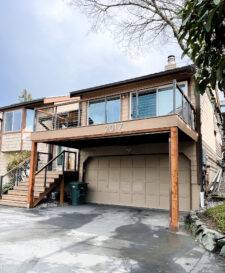
What West Beach Weather Does to a Deck
Salt Air and Metal Fasteners
Airborne salt from open water exposure is corrosive to standard fasteners and hardware. Regular galvanized screws and joist hangers that would be fine a few miles inland can start rusting within a couple of seasons out here. Rust doesn't just look bad — it weakens the connection between decking and framing, and a corroded joist hanger is a structural problem, not a cosmetic one.
Driving Rain and Wind Exposure
Because West Beach faces open water, rain frequently arrives sideways rather than straight down. That matters for a deck because water gets pushed into places it wouldn't reach in a sheltered yard — up under railings, behind ledger boards, into end-grain cuts on decking. Flashing details and gap spacing that are optional elsewhere are not optional here.
Moss, Algae and a Long Damp Season
San Juan County's wet season stretches long, and shaded or north-facing sections of a deck can stay damp for weeks at a stretch. That's exactly the environment moss and algae need. Beyond looking unkempt, a mossy deck surface gets slick and holds moisture against the wood or composite surface longer than it should, which accelerates whatever decay process the material is prone to.
What a Correctly Built Deck Requires Here
Framing and Footings
Footings need to be sized and set below frost depth and bear on solid, undisturbed soil — West Beach lots often have variable soil conditions close to shore, so we don't assume a standard footing depth without checking. Framing lumber should be rated for ground contact where it's within a few inches of grade, and any beam or joist near ground level needs a clear path for water to drain away rather than pool.
Ledger Flashing and Waterproofing
The ledger board — where the deck attaches to the house — is the single most common failure point on decks anywhere, and it's worse in a driving-rain climate. Correct flashing means a metal drip cap, self-adhering waterproof membrane behind it, and a gap or flashing detail that keeps water from ever sitting against the house's siding or sheathing. This is not a place to save time.
Fasteners and Hardware
Given the salt air, we spec stainless steel or heavy hot-dip galvanized fasteners and connectors rather than standard-grade hardware, particularly for structural connections like joist hangers, ledger bolts, and post bases. It costs more up front. It also means you're not fighting rust streaks and loosening hardware five years in.
Decking Material and Fastening Pattern
Whatever surface material you choose, gapping and airflow underneath matter more here than in a dry inland climate. Tight-fitting boards with no ventilation trap moisture and grow moss faster. We set consistent gapping and, where the design allows it, keep the underside of the deck ventilated so air can actually move and dry things out between storms.
Comparing Decking Materials for This Climate
There's no single "best" decking material — it depends on how much upfront cost versus ongoing maintenance you want to take on. Here's how the common options actually perform in a salt air, high-rain, moss-prone setting like West Beach.
| Material | Upfront Cost | Maintenance | Salt Air / Moisture Behavior | Moss Resistance | Typical Lifespan |
|---|---|---|---|---|---|
| Pressure-treated wood | Lowest | Annual cleaning and re-sealing recommended | Prone to warping and fastener corrosion if hardware isn't upgraded | Low without regular cleaning | 10–15 years |
| Cedar | Moderate | Periodic oiling or sealing to hold color and resist checking | Naturally rot-resistant but still needs sealed end cuts and good drainage | Moderate | 15–20 years |
| Composite decking | Higher | Occasional washing, no sealing or staining | Handles moisture and salt exposure well; doesn't rot or splinter | Moderate to good, varies by brand/surface texture | 25–30+ years |
| Tropical hardwood (e.g. ipe) | Highest | Periodic oiling to maintain color; low structural upkeep | Very strong moisture and rot resistance | Good | 30+ years |
Composite has become a common choice for exposed western-facing lots for a simple reason: it removes the recurring maintenance burden that a marine climate imposes on wood, without the higher price tag of tropical hardwood. That said, cedar remains a reasonable choice for homeowners who want a natural look and are willing to stay on top of sealing — we'll walk through the honest trade-offs for your specific site rather than push one product across the board.
Permits and San Juan County Requirements
Decks close to the shoreline in San Juan County can fall under shoreline management setback rules in addition to standard building permit requirements, and the specifics depend on your parcel's distance from the water and its zoning. Rather than guess, we check the actual requirements for your address before design work goes final, so the deck we build is the deck you're allowed to keep. If a permit is required, we handle the application and inspection scheduling as part of the project rather than leaving that step to you.
Our Process
- Site visit and assessment. We look at sun and wind exposure, existing structure (if it's a rebuild), soil and drainage conditions, and how the deck will actually be used.
- Design and material selection. We walk through decking material, railing style, and layout, with the climate trade-offs explained plainly — no upselling a product you don't need.
- Permitting. If your site requires a building or shoreline permit, we prepare and submit what's needed and coordinate inspections.
- Framing and structural work. Footings, posts, beams, joists, ledger flashing — all built to hold up to wind-driven rain and salt air, not just pass a minimum code check.
- Decking, railing, and finish work. Surface material installed with correct gapping and fastening, railings set, all hardware rated for this exposure.
- Final walkthrough. We go over the finished deck with you, including what maintenance (if any) the material you chose actually needs.
Maintenance That Actually Matters Out Here
Every deck needs some upkeep, but in this climate a few things matter more than the usual generic advice. Before you sign off on a new deck or take over an older one, make sure these are covered:
- Gutters and downspouts near the deck are directing water away from framing and footings, not onto them
- Shaded or north-facing boards get checked for moss buildup at least once a year, not just the sunny side
- Fastener heads and metal hardware are inspected annually for early rust, especially near the ledger and stair stringers
- Gaps between boards stay clear of debris so water and air can actually move through
- Any sealant or finish (on wood decking) gets reapplied on the schedule the manufacturer recommends, not "whenever it looks dry"
- Railing post connections are checked for looseness, since wind load on an exposed deck works hardware harder than on a sheltered one
Why Hire a Crew That Already Works West Beach
Building on Orcas Island isn't the same as building on the mainland. Material deliveries have to work around ferry schedules, which affects lead times and how a project gets sequenced. A crew that's already familiar with West Beach's exposure knows which corners of a lot take the worst of the wind-driven rain, where moss shows up first, and which fastener and flashing details are worth the extra cost versus which are overkill for a given site. That local knowledge shows up in fewer surprises during the build and in a deck that's actually specified for the conditions it will sit in, not a generic set of plans.
If you're planning a new deck or need an honest look at an existing one, we're happy to come take a look. Fill out the form below for a free, no-pressure estimate.