 Orcas Island Siding
 Building a Deck That Actually Holds Up in Olga
Olga sits on the water side of Orcas Island, and that changes what a deck needs to survive. A deck design that works fine in a dry inland town will start showing problems here within a few seasons — soft spots at the ledger, corroded fastener heads, decking boards that stay slick with moss from October through April. Building a custom deck for a home in this part of San Juan County means starting from the climate, not from a catalog photo.
Salt-laden air off the water accelerates corrosion on anything metal. Driving rain, often pushed sideways by wind off the Sound, finds every gap in flashing and fastening. And the long, damp, low-light stretch of fall and winter turns any shaded or north-facing deck surface into a moss farm if the wrong material or drainage detail was used. None of this makes deck-building in Olga harder in a dramatic way — it just means the details have to be right the first time, because a deck that's wrong is expensive and disruptive to redo on an island where every material trip depends on the ferry schedule.
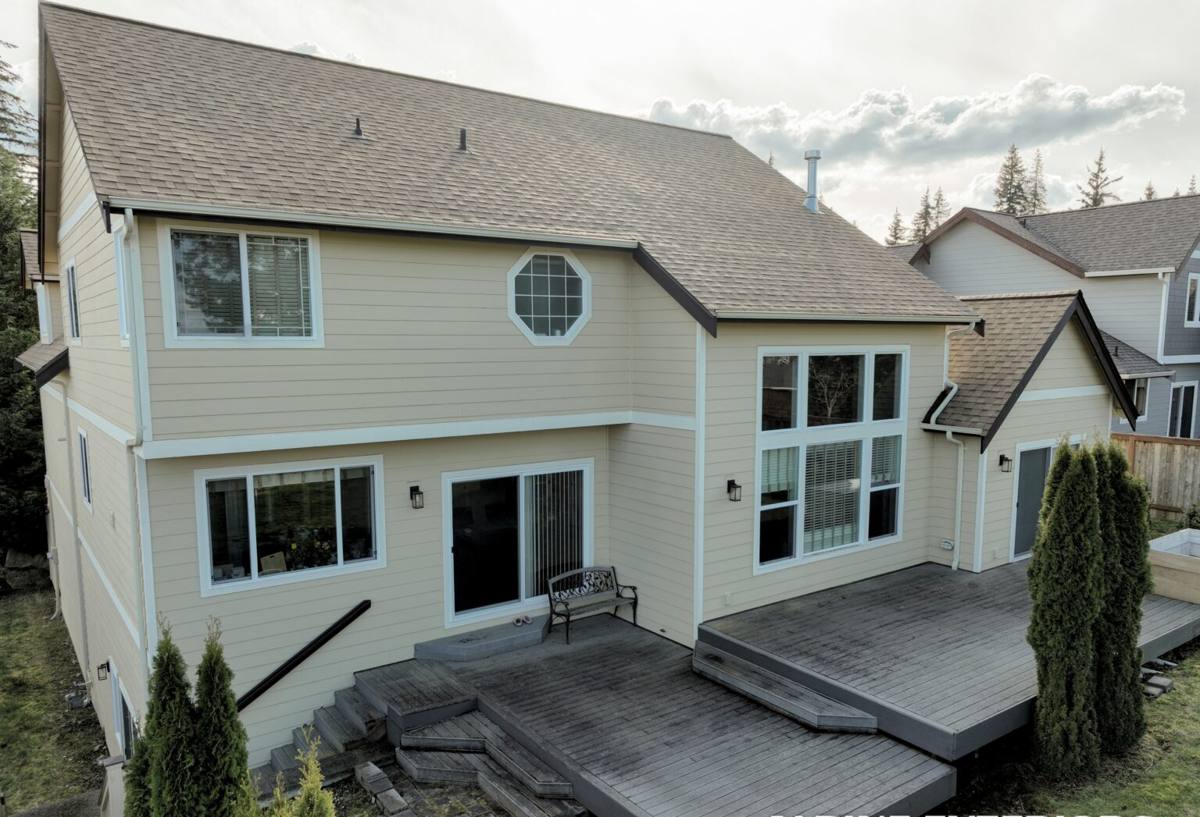
What Salt Air, Rain, and Moss Actually Do to a Deck
Fasteners and Hardware
Standard electro-galvanized screws and joist hangers corrode fast within a mile or two of saltwater. You'll see rust streaks bleeding down decking boards, then eventually the fastener heads snap off or strip out when you try to remove them. This is one of the most common repair calls we get on older Olga decks — the wood is often still fine, but the hardware failed years before it should have.
Ledger Boards and Framing
The ledger board — where the deck attaches to the house — is the single most important waterproofing detail on any deck, and it's the detail that fails most often in wet coastal climates. Without proper flashing, water works behind the ledger, soaks the rim joist, and rots the framing from the inside where you can't see it until the deck starts to feel spongy underfoot.
Decking Surface
Shaded decks, decks under tree cover, and decks on the north or east side of a house hold moisture longest. That moisture plus organic debris (needles, leaf litter, pollen) is exactly what moss and algae need. Once a surface goes green and slick, it's not just cosmetic — it's a slip hazard, especially on stairs and landings.
Posts and Footings
Ground contact posts and footings deal with constant wet-dry cycling. Undersized footings or posts without proper standoff from the ground are a common shortcut on older decks that leads to early rot at the base, even when the rest of the structure looks sound.
Choosing the Right Decking Material for a Home Near the Water
There's no single "best" decking material for every Olga property — it depends on sun exposure, tree cover, budget, and how much upkeep you want to do. Here's an honest comparison of the main options we install or discuss with homeowners in this area.
| Material | Upfront Cost | Salt-Air / Moisture Behavior | Moss & Maintenance | Typical Lifespan |
|---|---|---|---|---|
| Cedar | Moderate | Naturally rot-resistant, but needs sealing to stay that way | Prone to moss in shaded spots without regular cleaning and re-sealing | 15-20 years with upkeep |
| Pressure-Treated Fir/Pine | Lower | Treated for rot but framing-grade only; not ideal as a finish surface near salt spray | Needs sealing and periodic cleaning to resist moss | 10-15 years as decking |
| Capped Composite | Higher | Doesn't absorb moisture the way wood does; handles salt air well | Low maintenance, but still needs occasional washing to clear moss/algae film | 25-30+ years |
| PVC Decking | Highest | Fully synthetic, unaffected by moisture absorption | Lowest maintenance of the group; smooth surface can still get slick, needs cleaning | 25-30+ years |
We're straightforward with clients about trade-offs: wood costs less up front and looks great, but it asks for real maintenance in this climate — cleaning, re-sealing, and watching for the early signs of rot. Composite and PVC cost more initially but ask much less of you year to year, which matters if the property isn't your full-time residence and you can't get out to maintain it every season.
Framing, Fasteners, and Flashing Done Right
The parts of a deck you don't see are what determine whether it lasts 10 years or 30. For any custom deck we build in Olga, the non-negotiables are:
- Self-adhering flashing tape behind and over the ledger board, integrated with the house's existing water-resistive barrier — not just caulk
- Stainless steel or heavy-duty coated fasteners and structural hardware rated for coastal/marine exposure, not standard interior-grade galvanized
- Joist tape on top of all framing members to keep standing water out of fastener holes and end grain
- Proper post-to-footing standoff so wood never sits directly against wet soil or concrete
- Deck board spacing and airflow underneath sized to let the structure actually dry out between rain events, not just after it stops
None of this is unusual or exotic — it's standard best practice. The difference in a place like Olga is that skipping any one of these steps shows up as a problem in years, not decades.
Permits, Shoreline Setbacks, and Site Access
Many properties in and around Olga sit close to the water, which means shoreline setback and permitting rules through San Juan County can come into play depending on how close the deck is to the marine shoreline and how large or elevated it is. We check this during the site visit rather than assuming — it's better to know upfront what applies to your specific lot than to run into it mid-project.
Site access is its own consideration here. Some Orcas Island driveways are narrow, steep, or wooded, and material deliveries depend on ferry schedules rather than a same-day truck run like you'd get on the mainland. Planning material orders around the ferry, and knowing which lots need smaller equipment or hand-carrying material the last stretch, is part of what makes a project run smoothly instead of stalling out waiting on a load that missed a sailing.
Our Process for a Custom Deck Build
- Site visit and assessment — we look at sun exposure, tree cover, drainage, existing structure (if replacing a deck), and proximity to the shoreline
- Design and material selection — sized and laid out for how you actually use the space, with an honest conversation about wood versus composite for your specific exposure
- Permitting — we identify what San Juan County requires for your lot before work starts, not after
- Framing and structural work — proper flashing, coastal-rated fasteners, footings sized for the load and soil conditions
- Decking, railing, and finish details — installed with the fastening and spacing details that matter for drainage and airflow
- Final walkthrough — we cover how to care for your specific decking material through the wet season before we consider the job done
Living With It: Maintenance in a Moss-Prone, Salt-Air Climate
A well-built deck in Olga still needs some seasonal attention — the goal of good construction is to reduce that burden, not eliminate it entirely. A simple yearly rhythm keeps most problems from ever starting:
- Clear leaves, needles, and debris from the deck surface and between boards before fall rains set in
- Rinse or gently scrub shaded areas and stairs where moss tends to establish first
- Check and re-seal wood decking on the schedule the finish product calls for — usually every 1-2 years in this climate
- Inspect fastener heads and hardware for early rust staining, especially on railings and stair stringers
- Confirm gutters and downspouts near the deck are directing water away rather than onto the structure
- Look underneath the deck once a year for standing water, soft framing, or blocked airflow
Why a Crew That Already Works Olga Makes a Difference
Building on Orcas Island isn't the same as building on the mainland, and it isn't the same everywhere on the island either — a shaded, water-facing lot in Olga behaves differently than a sunny lot elsewhere. A crew that already works this area knows how to plan material deliveries around the ferry, has a feel for which lots need extra attention to drainage and shoreline rules, and isn't learning coastal construction details on your project. That local familiarity translates directly into fewer surprises, fewer callbacks, and a deck that's built right for where it actually sits — not for a generic climate assumption.
If you're planning a new deck or replacing one that's showing its age, we're happy to walk your property, talk through material options honestly, and put together a straightforward plan. Reach out for a free, no-pressure estimate using the form below.