 Orcas Island Siding
 West Sound's Marine Climate Puts Real Demands on Windows
West Sound sits on the water side of Orcas Island, and that location comes with a specific set of conditions that windows either handle well or fail against slowly. Salt air off the water works on metal hardware, fasteners, and unprotected wood over time. Driving rain, pushed sideways by wind funneling through San Juan County's channels and passes, tests every seam, joint, and sealant line on a window unit — not just the glass. And the long, damp shoulder seasons here mean moss and lichen get a foothold anywhere moisture sits and doesn't dry out, including on sills, frames, and trim around windows that aren't sealed or flashed correctly.
None of this means West Sound homes need exotic products. It means the installation has to account for wind-driven water intrusion, corrosion-resistant hardware, and materials that won't hold moisture against the wall assembly. A window that's a fine choice inland can underperform here if it's installed the same way it would be in a drier, calmer climate.
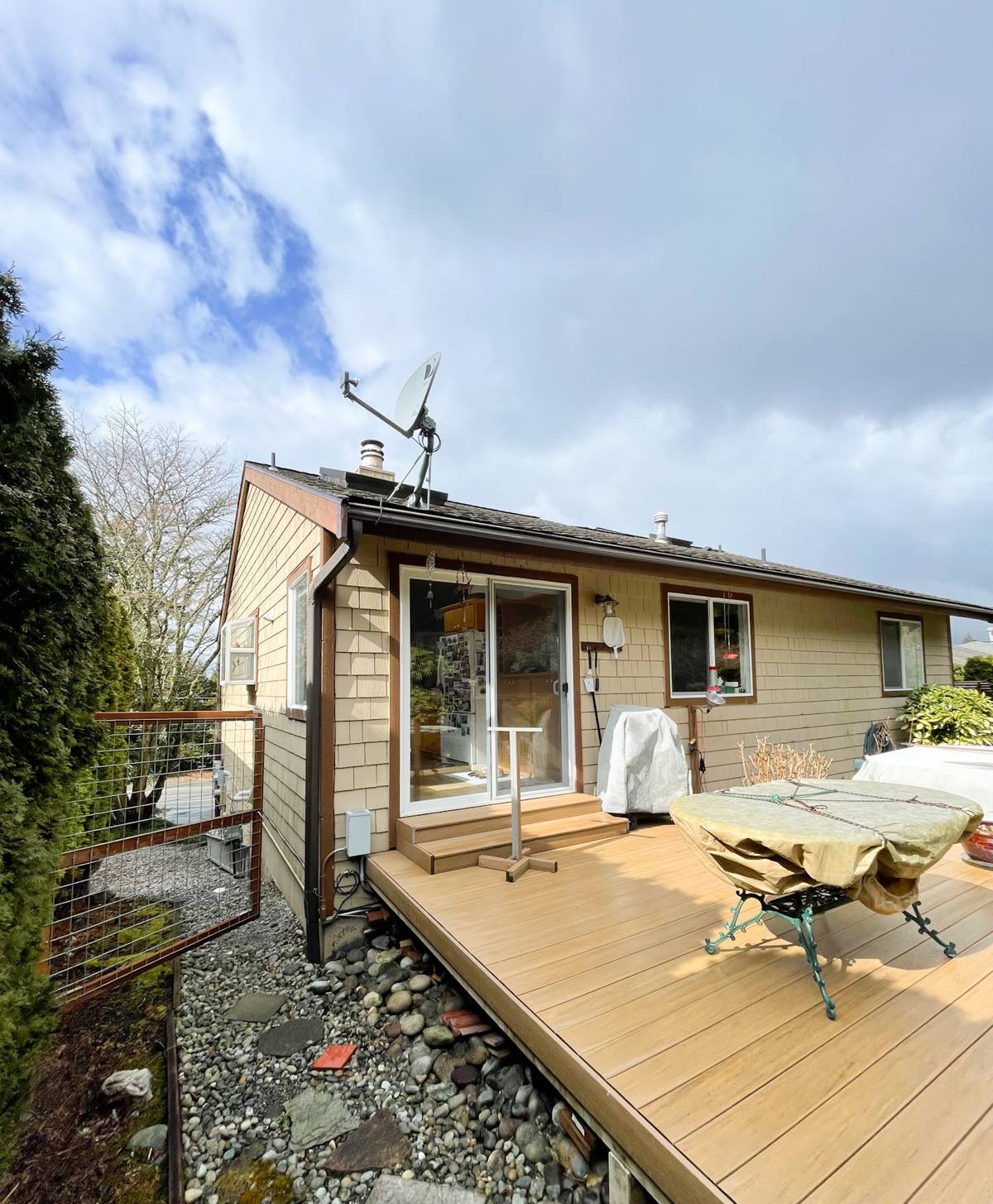
Signs Your West Sound Windows Have Reached the End of Their Service Life
Homeowners usually notice window problems well before they think about calling anyone, because the signs show up gradually. Worth paying attention to:
- Fogging or a hazy film between panes of double-glazed glass — this means the seal has failed and the insulating gas or dead-air space is gone
- Soft, discolored, or peeling wood at the sill or lower frame, often a sign water has been getting behind the trim
- Persistent drafts you can feel with a hand near the frame on a windy day
- Windows that stick, won't stay open, or are hard to lock — a sign the frame has shifted or swollen
- Visible corrosion or chalky residue on aluminum frames or hardware
- Moss, algae, or dark staining building up around the frame faster than on the rest of the siding, which usually points to trapped moisture rather than just normal exterior growth
Any one of these on its own isn't necessarily an emergency, but they're worth a look before the underlying framing or sheathing gets involved.
What a Correct Installation Actually Involves
Window installation is one of those jobs where the parts nobody sees matter more than the parts everyone sees. A window can look great from the curb and still be set up to fail if the water management behind the trim wasn't done right.
Flashing and Water Management
The window opening needs a sill pan or sloped sill flashing so any water that gets past the window itself drains back out, not into the wall. Head flashing has to be lapped over the housewrap above the window, and side flashing has to integrate with the wrap in the correct shingle-style order — each layer overlapping the one below it so water is always directed outward and down, never trapped behind a seam. On a site exposed to driving rain off the water, skipping or rushing this step is where leaks start, usually years later and often out of sight inside a wall cavity.
Sealants and Weatherproofing
Caulk is not a substitute for proper flashing — it's a backup, not the primary line of defense. A correct install uses backer rod and a quality exterior sealant at the right joints, sized and tooled properly, on top of flashing that's already doing the real work of shedding water.
Fastening and Structural Fit
The window has to be set plumb, level, and square in the opening, shimmed evenly so the frame isn't under stress, and fastened per the manufacturer's schedule — not just wherever is convenient. A window that's slightly racked in its opening will operate poorly and wear out its weatherstripping and hardware faster, which matters even more in a climate that's already hard on seals and moving parts.
Choosing a Window Built for Island Exposure
Material choice matters more here than in a lot of inland markets, mainly because of salt air and sustained moisture exposure. There's no single right answer for every home — it depends on the home's style, budget, and how exposed the specific elevation is to wind and water.
| Frame Material | Salt Air / Moisture Resistance | Maintenance | Typical Lifespan | Notes for West Sound |
|---|---|---|---|---|
| Vinyl | Good — won't rust or rot | Low; occasional cleaning | 20–30 years | Reliable, budget-friendly choice; quality varies a lot by manufacturer |
| Fiberglass | Very good — dimensionally stable, resists corrosion | Low | 30–40+ years | Handles temperature swings and moisture well; higher upfront cost |
| Wood-clad (exterior clad in vinyl/aluminum/fiberglass) | Good on the exterior face; interior wood needs protection from any interior moisture | Moderate | 25–35 years | Good look with better weather resistance than bare wood; cladding integrity at joints matters most |
| Bare wood | Poor to fair without diligent upkeep | High — regular painting/sealing | Varies widely with maintenance | We're upfront that bare wood is a harder sell this close to salt air unless someone is committed to the upkeep |
| Aluminum (uninsulated) | Fair — prone to corrosion and condensation without thermal breaks | Moderate | 20–30 years | Thermally inefficient and condensation-prone in a cool, damp climate; we generally steer clients toward thermally-broken options |
Beyond frame material, look for glass packages with a Low-E coating and argon fill for better thermal performance in our shoulder-season temperature swings, and corrosion-resistant (often stainless or coated) hardware rather than standard steel fasteners and hinges.
Our Window Installation Process
Estimate and Measurement
We start with an on-site look at each opening — checking for existing rot, out-of-square framing, or flashing problems that a straightforward window swap won't fix on its own. Measurements are taken for exact fit, and we talk through material and glass options based on the home's exposure and your budget.
Ordering and Lead Times
Custom-sized windows are built to order, and on an island, factoring in realistic lead times and ferry-dependent delivery windows up front avoids surprises later. We'd rather set an honest timeline than a fast one that slips.
Install Day
Old windows come out carefully, the opening gets inspected for hidden damage before anything new goes in, and any rot or compromised sheathing is addressed before flashing and the new window are installed. We flash, set, shim, fasten, insulate the gap, and seal per the sequence above — not shortcuts, in that order, every time.
Final Walkthrough
Every window gets operated, checked for square and smooth function, and the exterior finish work is reviewed with you before we consider the job done.
Why It Matters to Hire a Crew That Already Works West Sound
Island work has logistics that don't exist on the mainland. Materials, tools, and crew all have to move by ferry, which means scheduling has to account for sailing times and the occasional weather delay — not something a mainland-based crew unfamiliar with island logistics always plans for well. A crew that regularly works Orcas Island already has that dialed in, along with a working relationship with San Juan County's permitting process where it applies.
There's also the practical matter of follow-up. If a warranty issue or a question comes up six months after the job, you want a contractor who's still going to be working in the area and can get back out to your home without it being a special trip. Local experience also means we've seen firsthand which products and installation details actually hold up against West Sound's specific combination of salt air, wind-driven rain, and moss season — not just what looks good in a showroom.
Protecting Your Investment After Installation
A correctly installed window still benefits from a little seasonal attention, especially in this climate:
- Rinse frames and glass periodically to clear salt residue, particularly on elevations facing the water
- Clear moss, needles, and debris out of tracks, sills, and weep holes so water can drain instead of pooling
- Inspect exterior sealant joints yearly and re-caulk any spots where it's cracked or pulled away
- Check weatherstripping for wear and replace it before it fails completely
- Trim back vegetation that's shading a window and keeping it damp — better airflow means less moss and mildew buildup
- Treat new fogging between panes or fresh sticking/dragging as an early sign to have it looked at, not something to wait out
Timing Around Orcas Island's Weather
Window installation can happen in most seasons, but timing still matters here. We plan install days around forecasted driving rain where we can, since the opening is briefly exposed to the weather during the swap. Moss season's persistent dampness is also a factor in how quickly sealants cure and how soon after installation exterior finish work should be revisited. None of this usually forces a long delay — it just means scheduling with the local climate in mind rather than working around it after the fact.
If your West Sound home's windows are drafty, fogged, hard to operate, or just due for an honest look, we're happy to come take a look and put together a straightforward, no-pressure estimate. Use the form below to get in touch.