 Orcas Island Siding
 Siding Built for the Obstruction Pass Waterfront
Obstruction Pass sits right at the water, and that proximity shapes everything about how a home's exterior ages. Homes along and near the pass take on a steady mix of salt-laden air, wind-driven rain coming off the strait, and the deep shade and moisture that let moss and algae take hold for months at a time. It's a beautiful place to live and a demanding place to keep a house dry. Siding here isn't just cosmetic — it's the first line of defense against a marine climate that doesn't let up for long stretches of the year.
We install fiber cement siding on Orcas Island homes, and Obstruction Pass properties are some of the more climate-exposed jobs we take on in San Juan County. This page walks through what that exposure actually does to a home's exterior, what correct installation looks like in this environment, and why we've standardized on one product system rather than offering several.
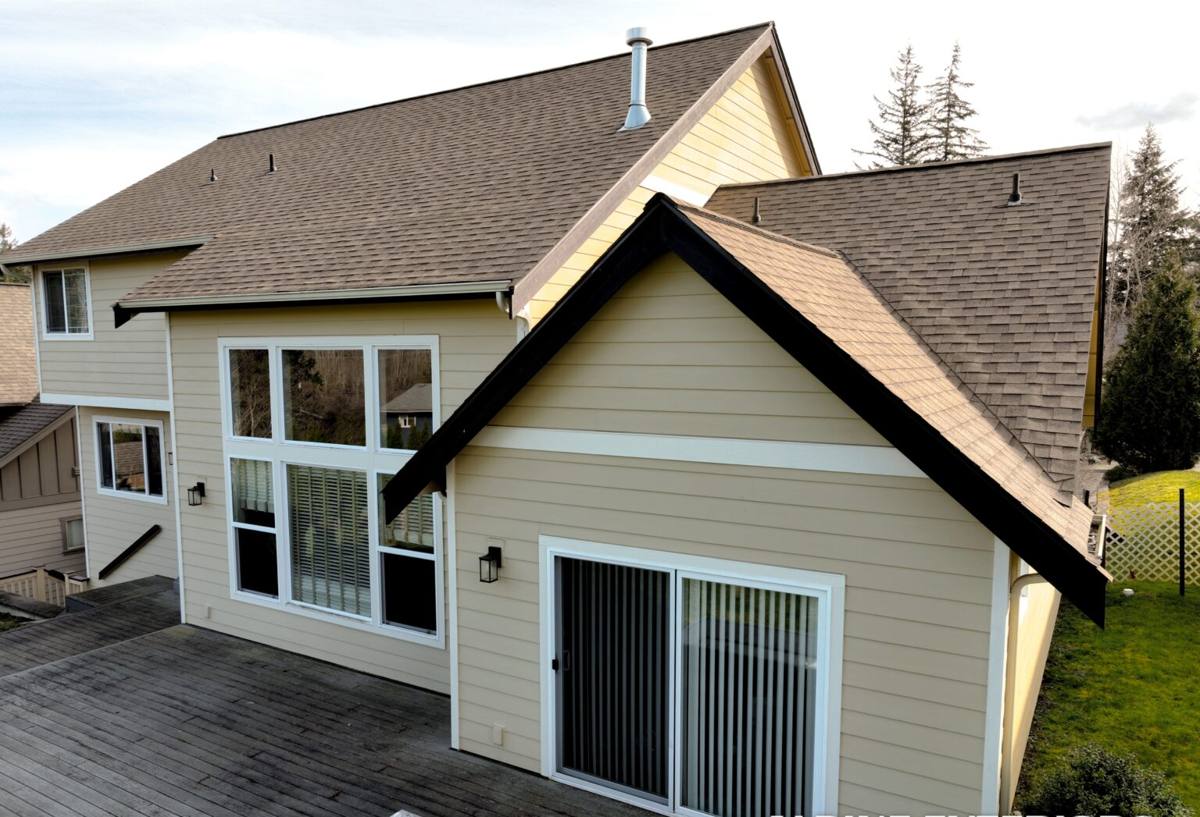
What Salt Air and Driving Rain Actually Do to Siding
Salt air is corrosive to metal fasteners and trim, and it accelerates the breakdown of finishes that aren't engineered to resist it. Combine that with wind-driven rain — the kind that hits siding sideways rather than falling straight down — and you get moisture pushed into laps, seams, and fastener penetrations that a calmer climate would never test. Add a moss season that can run from fall through spring, and you have three separate stresses working on a home's exterior at once: chemical (salt), mechanical (wind-driven water intrusion), and biological (moss and algae holding moisture against the surface).
Most siding failures we see in this kind of environment aren't dramatic. They're slow: a swollen edge here, a soft spot behind a downspout there, paint that's chalking and peeling years ahead of schedule, moss creeping up from grade and holding dampness against the wall. By the time it's visible, the damage underneath is usually further along than it looks.
Why This Matters More Near the Water
A home a mile inland and sheltered by trees deals with a fraction of the wind-driven rain and salt exposure that a home closer to Obstruction Pass will see. Orientation matters too — walls facing the water and prevailing weather take the brunt of it, while the lee side of the same house may show almost no wear. A correct siding job accounts for that difference wall by wall, not with a single blanket approach.
Why We Install Only James Hardie Fiber Cement
We install James Hardie fiber cement siding exclusively — not vinyl, not LP SmartSide, not cedar, not primed spruce, not other fiber cement brands. That's a deliberate standard, not a limitation of what we're capable of installing.
Fiber cement is cement, sand, and cellulose fiber. It doesn't rot, it doesn't feed insects, and it's non-combustible, which matters on a wooded island where wildfire risk is a real consideration. James Hardie specifically engineers regional product lines for climate conditions, and for the Pacific Northwest that means HZ5 formulations built around moisture and humidity resistance rather than a one-size-fits-all national product. The factory-applied ColorPlus finish is baked on and warranted against fading and flaking, which matters a great deal in a spot where UV, salt, and constant damp cycling all work against a field-applied paint job.
We're not going to tell you other products are junk — vinyl is inexpensive and easy to find installers for, cedar has real natural appeal, LP SmartSide has its advocates. But we've made a professional call: in a marine, moss-prone climate like Obstruction Pass, we don't want our name on an installation using a product we don't believe holds up to spec over the long run. Hardie is what we put on homes, full stop.
What Correct Installation Involves Here
Fiber cement siding is only as good as the installation behind it, and in a high-moisture environment the details matter more than usual. A correct job on Obstruction Pass includes:
- Proper clearances — siding held above grade, decks, roofs, and hardscaping per manufacturer spec, so water has somewhere to go instead of wicking up into the board.
- A drainable water-resistive barrier behind the siding, so any moisture that gets past the cladding has a path to drain and dry rather than sitting against the sheathing.
- Correct flashing at every penetration — windows, doors, vents, hose bibs, light fixtures — since these are the most common places wind-driven rain finds its way in.
- Manufacturer-spec fastening — corrosion-resistant fasteners driven at the right depth and spacing, since over- or under-driven nails are one of the most common causes of premature siding failure.
- Correctly caulked and sealed joints, using sealants rated for the exposure, not just whatever's on the truck.
- Factory-cut and factory-primed edges wherever possible, since field-cut edges need to be sealed to maintain the product's moisture resistance.
None of this is exotic. It's James Hardie's own published installation standard. The problem in the field is that it's easy to skip steps that don't show up as a problem for a few years — and by the time they do, the fix is a lot more expensive than doing it right the first time.
Comparing Siding Options in a Marine, Moss-Prone Climate
Every siding material behaves differently once salt air, driving rain, and moss season are part of the equation. Here's an honest comparison of how the common options hold up in conditions like Obstruction Pass sees.
| Material | Salt Air / Moisture Behavior | Moss & Algae Resistance | Maintenance Burden |
|---|---|---|---|
| Vinyl | Doesn't rot, but can warp or become brittle with UV and temperature cycling; seams are moisture entry points | Grows moss/algae readily on shaded, north-facing walls | Low, but limited repair options once damaged or faded |
| Cedar / natural wood | Attractive but absorbs moisture; prone to swelling, cupping, and rot without diligent upkeep | Highly susceptible; needs regular cleaning and re-treatment | High — refinishing, caulking, and moisture checks on a recurring schedule |
| Primed spruce / engineered wood (e.g., LP SmartSide) | Wood-based core is moisture-sensitive; edge sealing and paint maintenance are critical | Susceptible where paint film breaks down or edges swell | Moderate to high — paint upkeep is not optional in this climate |
| James Hardie fiber cement | Cement-based, engineered HZ5 formulation for PNW moisture and humidity conditions | Resistant to moisture-driven growth when installed with proper clearances | Low — factory finish reduces repainting frequency; occasional wash-down recommended |
Our Process for Obstruction Pass Projects
We walk every job through the same sequence, adjusted for what a given property's exposure actually is:
- On-site assessment — we look at wall orientation relative to prevailing wind and water, existing moisture damage, moss buildup, and trim/flashing condition before quoting anything.
- Substrate check — if there's evidence of trapped moisture behind the existing siding, we address that before anything new goes up. Covering a wet wall with new siding just hides the problem.
- Removal and prep — old siding and damaged sheathing or framing are removed and repaired, and the water-resistive barrier is installed or corrected.
- Hardie installation to manufacturer spec — clearances, flashing, fastening, and sealing as outlined above, wall by wall.
- Final walkthrough — we go over caulking, trim, and touch-up detailing before calling the job done, since these are the spots most likely to be shortcut on a rushed job.
Living With It: Maintenance in Moss Season
Even the right siding, correctly installed, benefits from a little seasonal attention in a climate like this. Before the wet season sets in each year, it's worth checking:
- Gutters and downspouts are clear, so water isn't overflowing onto siding below
- Moss or algae buildup on shaded or north-facing walls, especially near grade or under overhangs
- Caulking around windows, doors, and trim for cracking or separation
- Any staining, soft spots, or bubbling that could indicate trapped moisture
- Vegetation trimmed back so foliage isn't holding moisture against the wall
Fiber cement doesn't eliminate the need for this kind of check-up, but it removes the rot, warping, and insect risk that make the same checklist so much higher-stakes on wood-based products.
Why Local Experience Matters Here
Obstruction Pass isn't a generic siding job. A crew that hasn't worked San Juan County's marine climate before can install a product correctly on paper and still miss the details that matter here — wall-by-wall exposure differences, the amount of clearance moss-prone shaded areas really need, or how much wind-driven rain a given orientation actually sees over a winter. We work on Orcas Island regularly, which means we've seen how homes in this specific climate age, where problems tend to start, and what installation details actually hold up over time versus what looks fine on installation day and fails in year four.
That local track record is also why we can speak plainly about trade-offs instead of guessing. We're not applying a national playbook to an island climate — we're applying what we've learned installing and revisiting siding on homes that face the same wind, water, and moss pressure yours does.
Get a Straightforward Estimate
If you're dealing with aging, moss-covered, or moisture-damaged siding on a home in or near Obstruction Pass, we're glad to take a look. We'll give you an honest read on what's actually going on with your exterior and a straightforward estimate for James Hardie fiber cement siding built for this climate — no pressure, no upsell. The form below gets you started with a free estimate.