 Orcas Island Siding
 Storm Damage Roof Repair for Doe Bay Homes
Doe Bay sits on the exposed east side of Orcas Island, where Pacific storm systems roll in off the water with real force. Homes here take a different kind of beating than roofs on the more sheltered west side of the island — driving rain, salt-laden wind, and a tree canopy that drops limbs and needles onto roofs almost year-round. When a storm passes through, the damage isn't always obvious from the ground, and what looks like a few lost shingles can be hiding a compromised underlayment or a flashing failure that will leak for months before anyone notices.
This page covers what storm damage roof repair actually involves for a Doe Bay property, how San Juan County's climate shapes the job, and what to expect if you call us after a wind event, a fallen branch, or a leak that showed up during the last heavy rain.
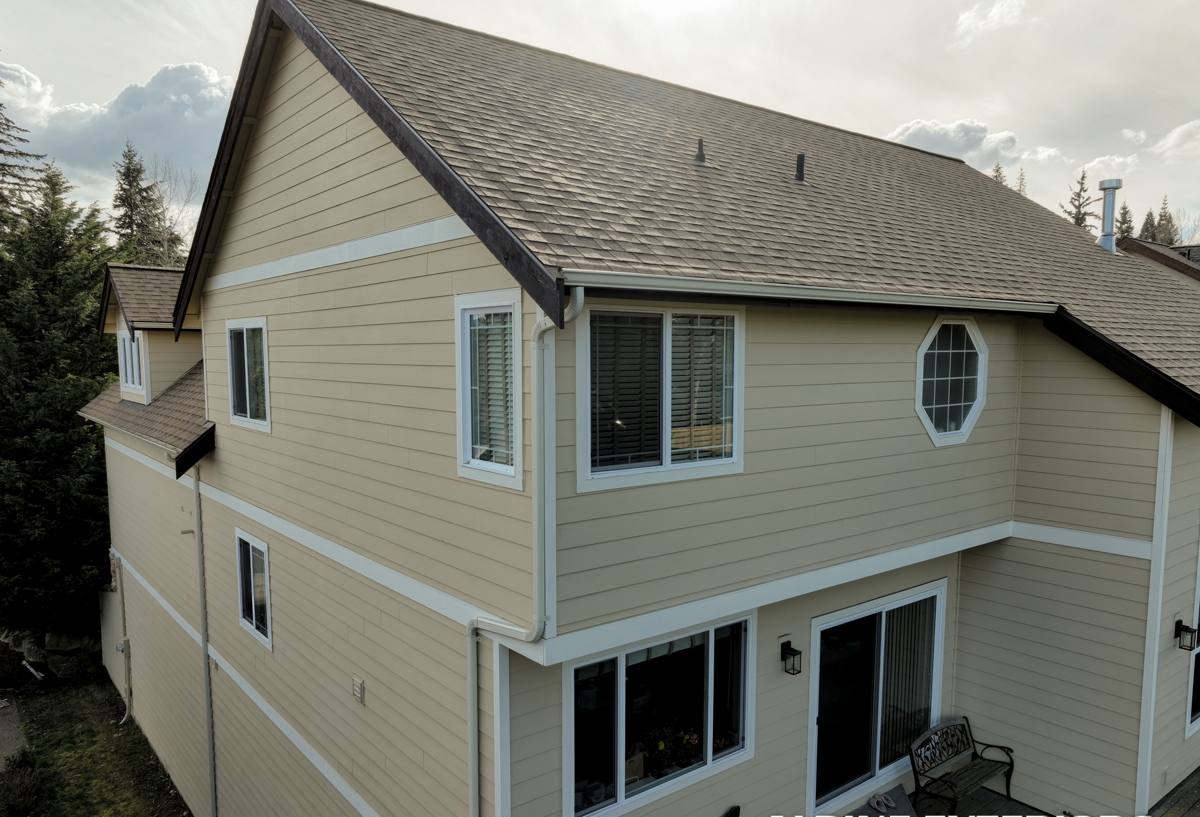
What Orcas Island Storms Actually Do to a Roof
Not all storm damage looks the same, and Doe Bay's mix of waterfront wind exposure and dense evergreen cover creates a few damage patterns we see over and over.
Wind Uplift and Lost Shingles
Strong gusts off the water get under the tab edge of asphalt shingles and pry them loose, especially on older roofs where the sealant strip has already weakened from age or sun exposure. Once a few shingles lift, the roof loses its water-shedding lap, and the next rain finds its way under the field.
Falling Limbs and Debris Punctures
Doe Bay's tree cover is a blessing for privacy and a liability during a windstorm. Falling limbs — even small ones — can crack shingles, dent metal roofing, or punch straight through decking on impact. Needle and cone debris also piles up in valleys and behind chimneys, holding moisture against the roof surface long after the storm has passed.
Salt Air and Corrosion
Being this close to the water means everything metal on a roof — flashing, fasteners, gutter hangers — is under slow chemical attack from salt air. A storm doesn't cause this corrosion, but it exploits it: a flashing seam that was already thinning from salt exposure is far more likely to tear loose or fail under sudden wind load than one on an inland roof.
Moss and the Long Wet Season
San Juan County's wet season runs long, and shaded, north-facing roof sections in Doe Bay can stay damp for weeks at a stretch. Moss gets a foothold in that dampness, and once established it lifts shingle edges as it grows, creating small gaps that a storm's wind and rain will happily widen. Storm damage and moss damage often show up together on the same slope because one makes the roof vulnerable to the other.
Our Storm Damage Repair Process
We handle storm repair as a sequence, not a single visit, because rushing the wrong step costs homeowners money later — either through a missed insurance claim or a repair that doesn't actually solve the leak.
1. Safety-First Inspection
We inspect the roof from the ground and from the attic or crawlspace first, looking for daylight, water staining, or soft decking before anyone gets on a wet, storm-damaged roof. Once it's safe, we walk the roof surface itself, checking shingles, flashing, valleys, and penetrations for the specific damage patterns above.
2. Emergency Mitigation
If the roof has an active leak or an open puncture, we tarp it the same visit whenever possible. On Orcas Island, waiting on materials or a second crew visit means more days of exposure to the next weather system, so stopping the water is the first priority — full repair comes after.
3. Documentation for Insurance
We photograph and note the damage clearly before any repair work covers it up. This matters for a storm claim: adjusters want to see the damage as the storm left it, not after it's already been patched.
4. Matching Repair, Not Just Patching
A correct storm repair replaces damaged shingles, decking, and underlayment in kind, ties new flashing into the existing system properly, and reseals every penetration the repair touched. We match materials as closely as possible to what's already on the roof so the repaired section weathers at the same rate as the rest.
Repair or Replace? How We Decide
Storm damage doesn't automatically mean a new roof, and it doesn't automatically mean a quick patch either. The honest answer depends on a few things:
- How much of the roof's total service life is already used up — storm damage on a roof near the end of its lifespan is a different conversation than the same damage on a five-year-old roof
- Whether the damage is isolated to one slope or scattered across the whole roof
- Whether the decking underneath is still sound or has taken on water damage from a leak that went unnoticed
- Whether matching materials are still available for a partial repair, or whether the existing product has been discontinued
We'll tell you plainly if a repair is the right call or if you're better off putting that money toward a full re-roof instead. Patching a roof that's already near end-of-life just delays a bigger job and adds cost.
What a Correct Storm Repair Involves
A storm repair that's done right addresses more than the visible damage. On a Doe Bay roof specifically, that usually means:
- Replacing damaged shingles or panels with matching product, not whatever is easiest to source
- Inspecting and, where needed, replacing underlayment beneath the damaged area — water that got under shingles during the storm doesn't always evaporate on its own
- Re-flashing valleys, chimneys, and other penetrations rather than just re-sealing them, since salt-air corrosion often means the flashing itself is compromised, not just the sealant
- Clearing debris from valleys and gutters as part of the job, since needle buildup was likely a contributing factor
- Checking fastener corrosion nearby, since one failed fastener in a salt-air environment is usually a sign others near it are close behind
Cost Factors for Storm Repair
| Factor | Why It Matters in Doe Bay |
|---|---|
| Extent of damage | Isolated shingle loss vs. deck or structural damage from a fallen limb |
| Roof pitch and access | Steeper island roofs and tree-obstructed access add time to any repair |
| Material match | Older or discontinued products may require a wider repair area to blend properly |
| Underlying moss or rot damage | Long wet seasons mean storm damage sometimes uncovers pre-existing moisture damage |
| Emergency vs. scheduled repair | Same-visit tarping and mitigation is priced differently than a planned repair visit |
We give straightforward, itemized pricing once we've actually seen the roof — we don't quote storm repairs sight unseen, because the visible damage rarely tells the whole story.
Working With Your Insurance Company
Most storm damage claims move faster and settle more fairly when the damage is documented properly before repairs begin. We provide the photos, notes, and a written description of the damage and the repair scope that adjusters typically ask for. We're not a public adjuster and we don't negotiate your claim for you, but we make sure the paperwork reflects what actually happened to your roof so you're not stuck arguing details later.
Why a Local Doe Bay Crew Matters
Storm repair on Orcas Island isn't the same job as storm repair on the mainland, and a crew that doesn't regularly work San Juan County will run into problems a local crew has already solved.
Ferry Logistics
Materials, equipment, and crew all move by ferry. A contractor who doesn't already plan around the ferry schedule can turn a same-day tarp job into a two-day wait, which matters a great deal when the next storm system is already forecast.
Rural Property Familiarity
Doe Bay properties often sit on private wells, septic systems, and long gravel driveways with limited turnaround room for a work truck. Knowing how to stage a job on a property like that without causing separate problems is something you learn from working the area, not from a general contracting background.
Faster Response When It Matters
Because we already work this part of the island, we're not starting from zero when a storm hits — we know the roads, the typical housing stock, and how to get a tarp up quickly before the next front rolls through.
Checklist: Signs Your Doe Bay Roof May Have Storm Damage
- Shingles or shingle pieces in the yard or gutters after a windstorm
- Visible dents, cracks, or punctures on the roof surface, especially near overhanging trees
- New water stains on ceilings or in the attic following heavy rain
- Granules collecting in gutters or at downspout outlets
- Flashing that looks bent, lifted, or separated at chimneys, valleys, or vent pipes
- Moss growth that seems to have spread or thickened after a wet stretch of weather
- Sagging or soft-feeling spots on the roof deck visible from the attic
If you notice any of these after a storm, it's worth having the roof looked at even if you don't see an active leak yet — small storm damage left alone tends to become a bigger repair by the next wet season.
Get a Free, No-Pressure Estimate
If a recent storm has left you with missing shingles, a new leak, or damage from a fallen limb, we're happy to take a look and give you a straight answer on what it'll take to fix it right. Use the form below to request a free estimate for storm damage roof repair in Doe Bay — no pressure, no obligation.