 Orcas Island Siding
 Decking Built for West Sound's Weather, Not Against It
West Sound sits close enough to the water that salt air is a daily fact of life, not an occasional nuisance. Add San Juan County's long wet season, heavy driving rain off the water, and the shade from mature fir and cedar that keeps moss growing on decks well into what other places would call summer, and you get a set of conditions that punishes decking materials that aren't matched to the site. A deck built for a dry inland climate will show its weaknesses here fast — usually as cupping boards, corroded fasteners, or a slick green film that never quite goes away.
Composite decking, installed correctly, holds up well to this environment. But "correctly" is doing a lot of work in that sentence. Composite is more forgiving than wood in some ways and less forgiving in others, and a lot of the decking problems we get called out to fix on Orcas Island started as a rushed or generic installation rather than a bad product.
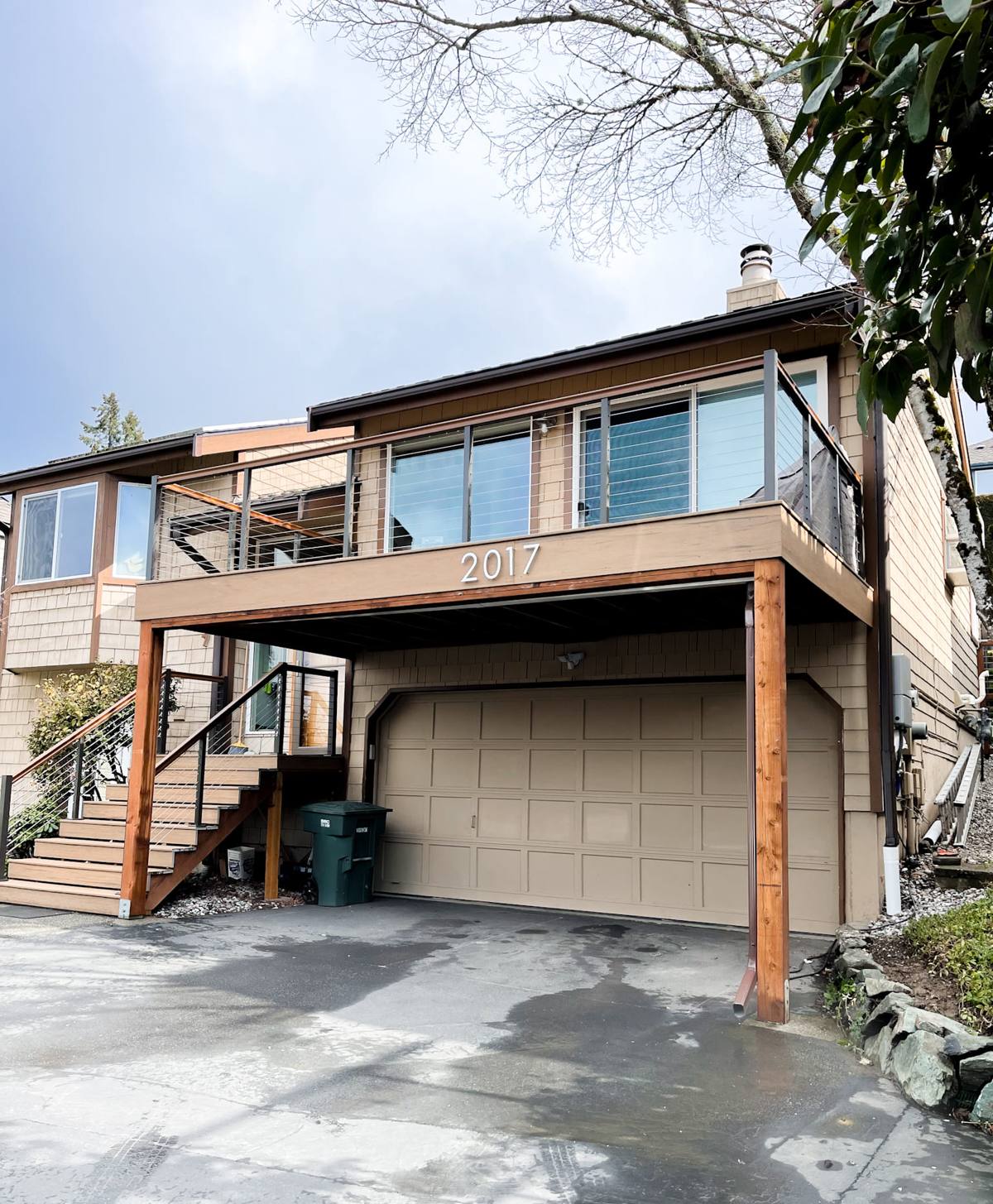
What West Sound's Climate Actually Does to a Deck
Before talking about materials, it helps to understand the specific stresses a deck faces in this part of the island:
- Salt-laden air accelerates corrosion on any exposed metal — screw heads, joist hangers, flashing — long before it does anything to the decking surface itself.
- Driving rain off the water doesn't just fall straight down; it gets pushed sideways into board gaps, end caps, and ledger connections that a calmer climate would never test.
- Shade and moisture together are what grow moss and algae. A deck tucked under trees or facing away from afternoon sun stays damp longer after every rain, which is exactly what organic growth needs.
- Seasonal temperature swings, while milder here than inland Washington, still cause composite boards to expand and contract. Gaps and fastening have to account for that movement or the deck telegraphs every season change.
None of this is unique to any one property — it's the baseline condition for any exterior surface in this part of San Juan County. The difference between a deck that looks good in year eight and one that's already showing problems is almost always in how the substructure and fastening were handled, not the composite brand on the label.
Why Composite Makes Sense Here
We install a lot of composite decking in West Sound because it removes several of the maintenance headaches that wood decks create in this climate. It doesn't need annual staining or sealing, it won't splinter, and modern composite formulations resist moisture absorption far better than untreated or even pressure-treated wood. That matters when a deck spends a good part of the year damp.
Composite isn't maintenance-free, though, and we tell every homeowner that up front. It still needs regular cleaning to keep moss and algae from taking hold, and the quality of the boards varies a lot between product lines. Cheaper composite can still fade, absorb moisture at the core, or develop a chalky surface faster than a mid- or premium-tier board. We steer clients toward products with a solid moisture warranty and a manufacturer track record in wet coastal climates, not just whatever's cheapest at the yard.
Composite vs. Other Common Decking Choices
| Material | Salt air / moisture behavior | Maintenance | Typical lifespan here |
|---|---|---|---|
| Composite (capped board) | Strong — moisture-resistant core, capped surface resists staining | Periodic cleaning, no staining/sealing | 25-30+ years with proper install |
| Pressure-treated wood | Absorbs moisture, prone to cupping and fastener corrosion | Annual cleaning, regular staining/sealing | 10-15 years before major repair |
| Cedar | Naturally rot-resistant but still absorbs moisture over time | Regular sealing to hold color and resist moss | 15-20 years |
| Uncapped composite (older/budget lines) | Core can absorb moisture at cut ends and fastener holes | Low, but moisture damage isn't always visible until advanced | Variable — depends heavily on install quality |
This is a general comparison, not a guarantee for any specific product — actual performance depends on the manufacturer, the board tier, and how the deck is built and detailed.
What a Correct Composite Install Looks Like
The composite boards get most of the attention, but the framing underneath and the details around edges and fasteners are where a deck actually succeeds or fails in this climate.
Substructure First
We treat the framing as the part of the job that determines whether the deck lasts. That means joists and ledger boards sized and spaced correctly for the composite span rating (composite generally needs tighter joist spacing than solid lumber decking), proper flashing at any ledger-to-house connection so water can't work its way behind the siding, and corrosion-resistant hardware throughout — stainless or coated fasteners and hangers rated for the moisture and salt exposure this location sees.
Fastening and Gaps
Composite boards need consistent expansion gaps between boards and at end points, sized to the manufacturer's spec and adjusted for the temperature at time of install. Too tight and the deck buckles when it warms up; too loose and it looks sloppy and lets debris collect. Hidden fastener systems, used correctly, keep the surface clean and reduce the number of exposed metal points that salt air can attack.
Airflow Underneath
A deck that sits low to the ground or over damp soil without adequate ventilation traps moisture underneath, which shows up later as persistent dampness in the framing and accelerated moss growth on the underside of boards. Proper joist height, venting, and in some cases a membrane or drainage system underneath keeps air moving so the structure can dry out between rain events instead of staying wet for weeks at a time.
Edge and Fastener Details
Cut ends of composite boards need to be capped or sealed per manufacturer instructions — an exposed cut end is the one place uncapped composite cores can take on water. Every screw and bracket should be rated for coastal exposure, not just standard exterior-grade hardware, because standard coatings degrade faster here than they would twenty miles inland.
Our Process for West Sound Deck Projects
- On-site assessment — we look at sun exposure, tree cover, drainage, and how exposed the site is to weather off the water, since these all affect material choice and detailing.
- Structural evaluation — if it's a replacement, we check the existing framing and substructure for hidden moisture damage before deciding what can be reused.
- Material selection — we walk through composite tiers and manufacturer warranties with the homeowner, being honest about where cost and long-term performance trade off.
- Framing and flashing — corrosion-resistant hardware, correct joist spacing for the board span rating, and flashing at every wall connection.
- Decking installation — proper gapping, hidden fasteners where specified, and sealed or capped cut ends throughout.
- Final walkthrough — we go over basic care so the homeowner knows what upkeep (if any) the specific product line needs.
Keeping a Composite Deck Clean in This Climate
Even low-maintenance composite needs occasional attention here, mostly around moss and organic growth rather than structural upkeep.
- Sweep debris — needles, leaves, seed pods — off the deck regularly so it doesn't trap moisture against the boards.
- Rinse or wash the surface a few times a year, more often in shaded areas, to keep algae and moss from establishing.
- Check that gaps between boards stay clear so water can drain through rather than pooling.
- Look at fastener heads and any exposed brackets periodically for early signs of corrosion, especially closer to the water.
- Trim back overhanging branches where practical to cut down on shade and debris buildup.
Why Hire a Crew That Already Works This Area
Orcas Island isn't like building on the mainland. Materials, crews, and equipment all have to move by ferry, which affects scheduling and makes it worth getting the order and logistics right the first time. Beyond logistics, a crew that regularly works West Sound and the rest of San Juan County has already seen how this specific stretch of coastline treats decking — which sites hold moisture longest, where moss becomes a persistent problem, and which fastener and flashing details actually hold up after a few wet winters. That local pattern recognition is hard to replace with a generic install approach brought over from a drier climate.
We're not going to tell you a composite deck installed here needs zero attention — that's not honest. What we can do is build it so that the attention it does need is light cleaning and occasional checks, not repairs.
Get a Straightforward Estimate
If you're planning a new deck or replacing one that's showing its age, we're happy to come take a look, walk the site with you, and give you an honest read on what it would take to build something that holds up to West Sound's weather. There's no pressure and no obligation — just fill out the form below and we'll set up a time to come out.