 Orcas Island Siding
 Metal Roofing in Friday Harbor's Marine Climate
Friday Harbor sits close enough to the water that salt air is part of daily life for every roof on the island. Add the long, wet Pacific Northwest winters and the shade cover that keeps moss thriving nine months out of the year, and you have a climate that is genuinely hard on roofing. Metal roofing handles this combination better than almost any other material available, which is why we get more calls about it every year from homeowners in Friday Harbor and the surrounding San Juan County waterfront.
That said, "metal roofing" covers a wide range of products and installation approaches, and not all of them hold up the same way out here. This page covers what actually matters for a metal roof installed in Friday Harbor specifically: the conditions it needs to survive, how a correct installation is put together, and what our process looks like from first estimate to final walkthrough.
What Salt Air, Rain, and Moss Actually Do to a Roof
Three separate stresses hit roofs here, and each one attacks differently:
- Salt air carries fine airborne chloride that settles on any exposed metal, fastener, or flashing. Over years it accelerates corrosion on lower-grade coatings and untreated fasteners, especially anything within a mile or two of the water.
- Driving rain off the Strait doesn't fall straight down — wind-driven rain gets pushed sideways into laps, seams, and penetrations that would stay dry in a calmer climate. Underlayment and flashing details matter more here than in inland installations.
- Moss and organic growth thrive under the tree cover common on Orcas Island and around Friday Harbor. Moss holds moisture against a roof surface for weeks at a time, which is hard on shingles but far less of a structural threat on metal — as long as the panel finish and fastener hardware are chosen correctly.
None of these three problems are solved by "metal roofing" as a generic category. They're solved by the right panel profile, the right coating system, the right fasteners, and correct flashing at every transition. That's where installation quality separates a roof that lasts twenty years from one that lasts fifty.
Why Metal Holds Up Better Here Than Most Alternatives
Metal roofing sheds wind-driven rain more effectively than lapped shingle products because it has fewer horizontal seams for water to work into. It also doesn't hold moisture against its surface the way asphalt granules or wood shakes do, so moss has a harder time getting a foothold and doesn't cause the same kind of surface degradation. For homes exposed to direct salt spray or persistent damp shade — both common situations around Friday Harbor — that combination is a real practical advantage, not just a marketing point.
Choosing the Right Metal Roofing System
There are two main categories of residential metal roofing, and the right choice depends on the home, the budget, and how the roof is exposed to weather.
| System | Best Suited For | Trade-offs |
|---|---|---|
| Standing Seam | Waterfront and exposed sites, low-slope sections, homes wanting a cleaner look | Higher material and labor cost; hidden fasteners reduce long-term corrosion risk |
| Exposed-Fastener Panel | Outbuildings, garages, budget-conscious re-roofs, steeper simple roof planes | Lower upfront cost; exposed fasteners need correct gaskets and periodic inspection |
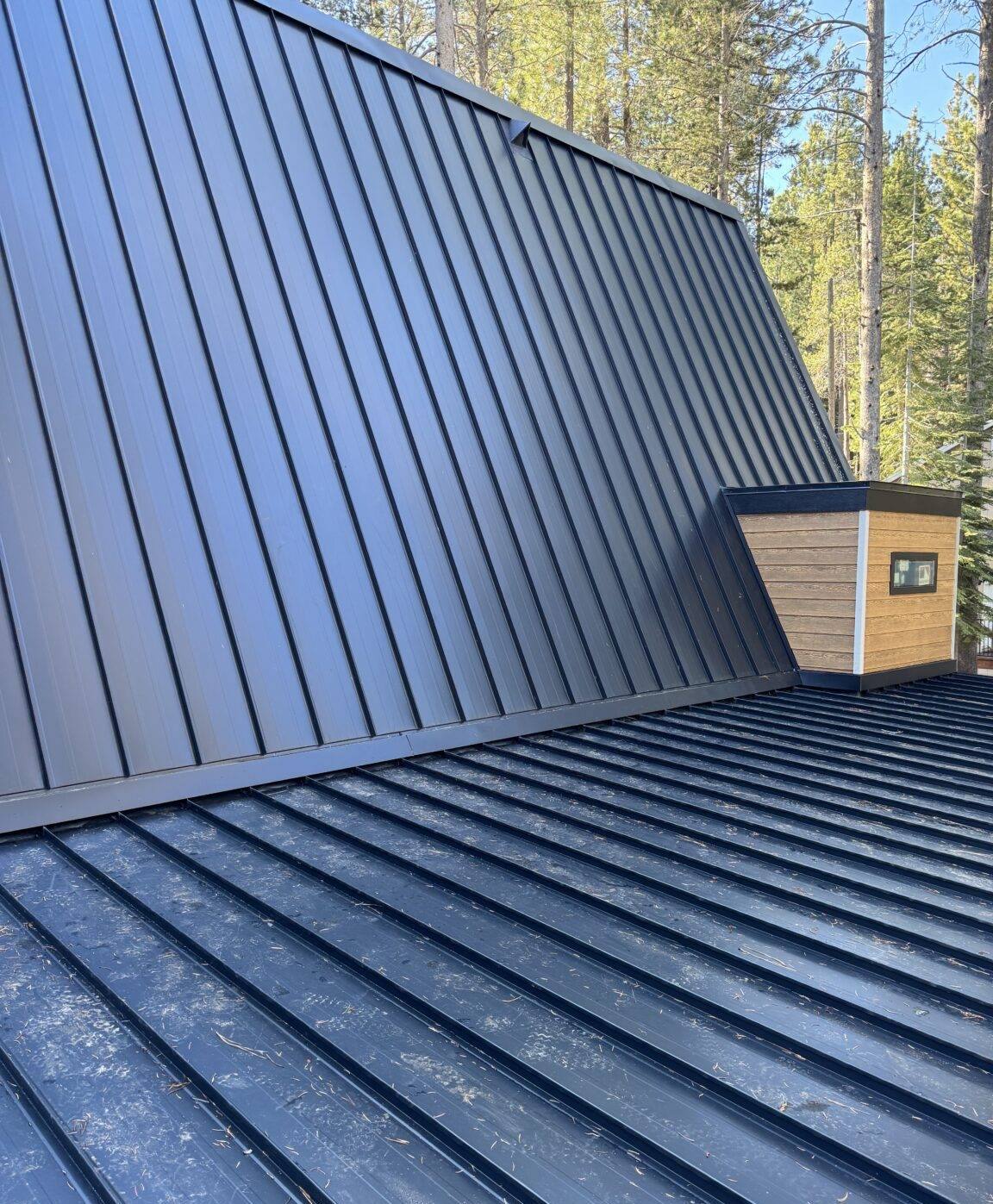
For primary residences directly exposed to salt air or wind off the water, we generally recommend standing seam. The concealed fastener system means there are no exposed screw penetrations for salt-laden moisture to work into over time. For detached garages, shops, and secondary structures set back from direct exposure, a quality exposed-fastener panel is often the more sensible investment, provided it's installed with the correct fastener spec and gasket type.
Coating and Fastener Choices Matter More Than the Brand Name
The single biggest factor in how long a metal roof lasts near the water isn't the panel material itself — it's the coating system and the fastener hardware. We install panels with coatings rated for coastal exposure and use fasteners matched to the panel metal to avoid galvanic corrosion, where two dissimilar metals in contact accelerate each other's breakdown. This is a detail that's easy to get wrong and expensive to fix later, since it shows up as rust streaking and fastener failure years after installation rather than immediately.
What a Correct Installation Involves
A metal roof is only as good as the assembly underneath it. On every Friday Harbor project we install:
- A synthetic or ice-and-water underlayment rated for the panel type, with extra coverage at eaves, valleys, and any low-slope transitions
- Properly lapped and sealed flashing at every wall intersection, chimney, skylight, and vent penetration
- Panel fasteners and clips matched to the metal type and spaced to the manufacturer's wind-load specification
- Ridge and hip caps installed with closure strips to block wind-driven rain and pest entry
- Ventilation checked and corrected where needed, since trapped moisture under a metal roof causes more long-term problems than the metal itself ever will
Skipping any one of these doesn't show up as a leak on day one. It shows up three, five, or ten years later, usually at the worst time of year to fix it. We'd rather take the extra time upfront.
Our Process for Friday Harbor Metal Roofing Projects
1. On-Site Assessment
We inspect the existing roof, the framing where accessible, ventilation, and the home's specific exposure — how close to the water it sits, how much tree cover shades it, and what direction the prevailing wind and rain typically hit from. This tells us which panel profile and coating make sense for that particular property.
2. Straightforward Estimate
You get a written estimate covering material, labor, tear-off (if applicable), and any structural or ventilation work identified during the assessment. No pressure, no artificial deadlines on the quote.
3. Scheduling Around Island Weather
We plan installation windows around the marine forecast, not a generic calendar date. Metal roofing can be installed in cooler weather more easily than some other materials, but wind and rain timing still matter for a clean, dry install.
4. Installation and Flashing Detail Work
Most of the time on a metal roof project isn't spent laying panels — it's spent getting the flashing, penetrations, and transitions right. This is the stage that determines whether the roof performs for decades or develops problems early.
5. Final Walkthrough
We walk the finished roof with you, review what was installed, and go over any maintenance basics specific to your system before we consider the job done.
Maintenance: What Metal Roofing Does and Doesn't Need
One of the practical advantages of metal roofing in a moss-prone climate is how little ongoing maintenance it requires compared to shingle or shake roofing. Moss doesn't root into metal the way it can degrade organic roofing materials, and a correctly coated panel doesn't need chemical moss treatments. That said, a metal roof in Friday Harbor still benefits from:
- An annual visual check of flashing, seams, and any exposed fasteners
- Clearing debris and organic buildup from valleys and gutters, especially under tree cover
- Prompt attention to any scratches or coating damage before corrosion can start, particularly on homes with direct water exposure
Why a Local Crew Matters for This Job
Metal roofing installation quality depends heavily on getting flashing and fastener details right for the specific conditions the roof will face — and those conditions change block by block on Orcas Island depending on tree cover, elevation, and exposure to the water. A crew that already works Friday Harbor and San Juan County regularly has already seen how salt air, driving rain, and moss behave on roofs in this specific area, and adjusts the coating spec, fastener choice, and flashing detail accordingly instead of applying a generic mainland approach. Familiarity with the local marine forecast also matters for scheduling a clean, dry install rather than working around weather blind.
Signs Your Current Roof Is Ready for a Metal Upgrade
- Persistent moss growth that returns within a season of cleaning
- Granule loss, curling, or lifting on an aging shingle roof
- Visible rust streaking or fastener corrosion on an existing metal roof with lower-grade hardware
- Recurring leaks at flashing points despite repeated patching
- A roof original to the home that's approaching or past its expected service life
If any of these sound familiar, it's usually worth getting an honest assessment before the next wet season rather than after the next leak.
If you're weighing metal roofing for a home in Friday Harbor or elsewhere on Orcas Island, we're glad to take a look and walk you through what makes sense for your specific roof and exposure. Reach out for a free, no-pressure estimate using the form below.