 Orcas Island Siding
 Why Roofs Wear Differently in Obstruction Pass
Obstruction Pass sits at the exposed southeastern edge of Orcas Island, where the terrain funnels weather off the water straight into rooflines. A roof here isn't dealing with one climate problem — it's dealing with three at once. Salt-laden air off the Pass corrodes exposed metal fasteners and flashing faster than it would a few miles inland. Driving rain, pushed sideways by wind off the water, finds its way into laps and seams that would stay dry in a calmer spot. And the dense stand of fir and madrona that shades much of this part of San Juan County keeps roof surfaces damp long after a storm clears, which is exactly the environment moss and algae need to take hold.
None of these factors alone would be unusual for a Pacific Northwest roof. Together, and sustained over the wet season that runs from fall through spring, they shorten the useful life of a roof that wasn't built with this specific exposure in mind. A shingle roof installed with inland assumptions — standard nailing patterns, minimal underlayment, no real plan for moss — will show its age here years before it should.
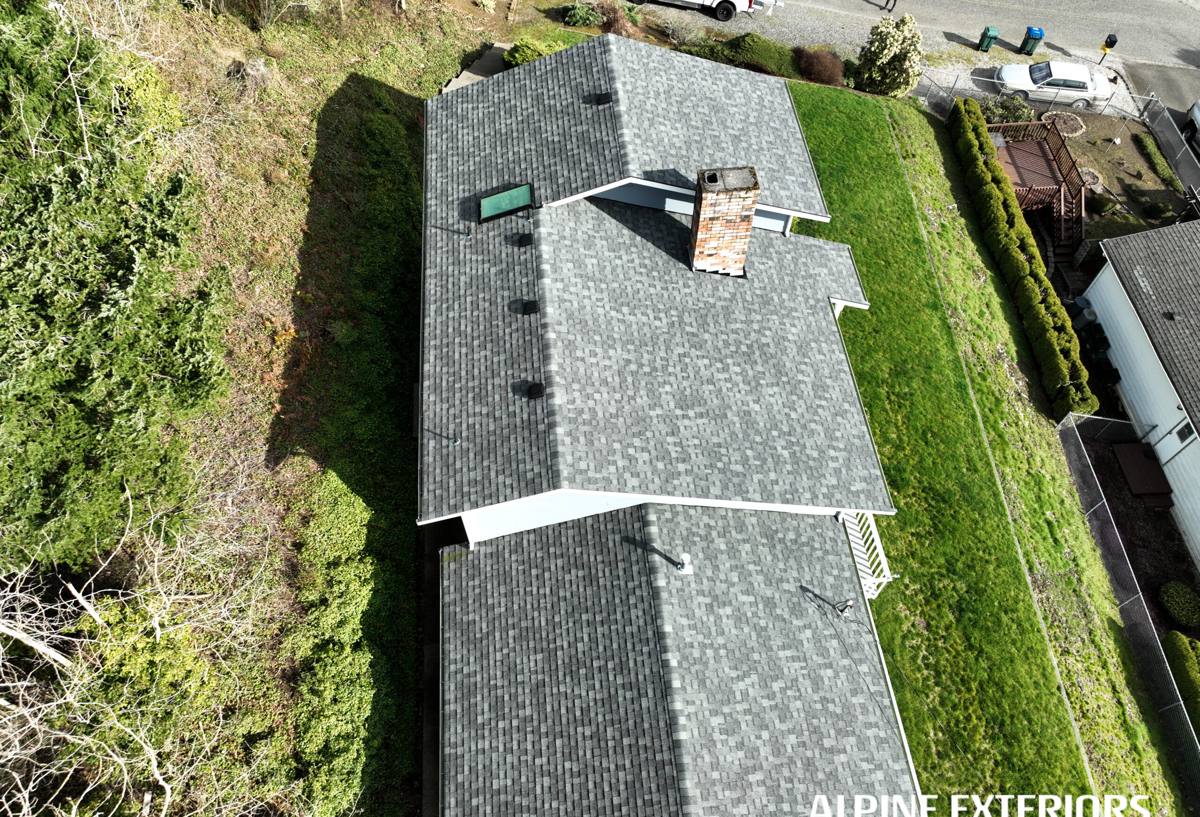
What a Correctly Installed Shingle Roof Requires Here
Asphalt shingle roofing is still one of the most practical choices for homes on Orcas Island — it's proven, repairable, and available in products rated for high-wind, coastal exposure. But "correct" installation in Obstruction Pass means a few things beyond the manufacturer's minimum spec:
- Fasteners and flashing rated for corrosion resistance, not standard galvanized steel that starts rusting within a few seasons of salt exposure
- A sealed, self-adhering underlayment at eaves, valleys, and any low-slope transitions, not just felt paper
- Nailing patterns and shingle ratings matched to actual local wind exposure, which can be higher here than the county average due to the Pass's open orientation to the water
- Wider, better-flashed valleys, since this is where wind-driven rain and blown debris both concentrate
- Attention to any tree cover close to the roofline, since overhanging branches feed moss growth and add debris load in valleys and gutters
Skipping any of these isn't usually visible on install day. It shows up two, five, or eight years later as a leak at a valley, rusted-through flashing, or shingles that have curled and lost granules well ahead of their rated life.
Underlayment and Flashing Are Where Roofs Actually Fail
Shingles get the attention, but the underlayment and flashing system underneath them is what actually keeps water out of the house. On a roof exposed to driving rain, water routinely gets past the shingle surface in wind events — the underlayment and flashing are the backup that's supposed to catch it and route it back out. In Obstruction Pass, we treat this layer as non-negotiable, not an upgrade option, particularly at chimneys, skylights, dormers, and any valley that collects runoff from multiple roof planes.
Choosing a Shingle Product for a Marine Exposure
Not every asphalt shingle line is built the same, and the differences matter more here than they would in a sheltered inland location. The table below breaks down how the common shingle classes compare for this specific exposure.
| Shingle Type | Wind Rating | Moss/Algae Resistance | Best Fit for Obstruction Pass |
|---|---|---|---|
| Standard 3-tab | Lower (typically 60-70 mph) | None built in | Not recommended for waterfront or tree-shaded exposure |
| Architectural/laminate | Higher (110-130 mph class available) | Available with algae-resistant granules | Good baseline choice for most homes in the area |
| Impact-resistant architectural | High, with added tear resistance | Available with algae-resistant granules | Worth it on open, wind-exposed lots or under conifer debris |
| Algae-resistant (AR) upgrade | Depends on base product | Copper or ceramic granules resist moss/algae staining | Strongly recommended given the tree cover and damp shade common here |
Our default recommendation for most Obstruction Pass homes is a laminate/architectural shingle with algae-resistant granules and a wind rating suited to the property's actual exposure — waterfront and open lots need the higher rating more than sheltered, inland lots do. We'll walk the specific site with you before recommending a product rather than defaulting to one line for every job.
Moss and Algae: A Maintenance Reality, Not a One-Time Fix
Moss on a roof isn't just cosmetic. As it grows, it holds moisture against the shingle surface and works its way under shingle edges, lifting them and creating entry points for water. On Orcas Island's shaded lots, moss growth is close to a certainty over a shingle roof's lifespan unless it's actively managed.
Algae-resistant shingles slow the process significantly but don't eliminate it, especially under heavy tree cover. A sound long-term approach combines the right shingle product with periodic soft washing (never pressure washing, which strips granules and shortens shingle life) and keeping overhanging branches trimmed back so the roof gets more light and air movement. We'll flag moss and drainage issues during any inspection or repair visit, since catching it early is far cheaper than replacing shingles it's already damaged.
Our Process for Obstruction Pass Roofing Projects
Assessment
We start with an on-site inspection of the existing roof, decking condition, ventilation, and any moss, staining, or soft-spot indicators. On Orcas Island, we also look closely at tree proximity and site exposure, since those two factors drive most of our product and detailing recommendations.
Scope and Estimate
You get a written scope covering shingle product, underlayment, flashing detail, ventilation changes if needed, and any decking repair we expect to encounter once the old roof comes off. We flag likely surprises before we start, not after.
Tear-Off and Deck Inspection
Full tear-off lets us inspect the roof deck directly rather than covering over rot or soft sheathing, which is common on older homes in wetter parts of San Juan County. Any damaged decking gets replaced before new roofing goes down — this isn't an optional add-on, it's how the new roof gets a sound base.
Installation
Underlayment, flashing, and shingles go in following the details above: sealed underlayment at vulnerable points, corrosion-resistant fasteners, and attention to valleys and penetrations. We follow manufacturer specs closely enough to keep warranty coverage intact.
Final Walkthrough
We walk the finished roof and the property with you, cover basic maintenance expectations — especially around moss and gutter debris — and make sure you know what a normal-wear versus a call-us-now issue looks like going forward.
Why Local Experience on This Island Matters
Roofing logistics on Orcas Island aren't the same as on the mainland. Materials, dumpsters, and equipment move by ferry, which means scheduling has to account for sailing times and weather windows in a way mainland contractors often don't plan for. A crew that regularly works Obstruction Pass and the surrounding parts of the island already has that logistics figured out — material orders timed to ferry schedules, weather windows built into the plan, and a realistic sense of how long a tear-off can safely sit exposed if conditions turn.
There's also a knowledge factor that's hard to substitute. A contractor who's worked multiple roofs in this specific stretch of San Juan County has already seen how wind behaves coming off the Pass, which lots hold moisture longest, and which older homes tend to have decking issues under their existing shingles. That local pattern recognition shows up in fewer surprises and a more accurate estimate from the start.
Cost Factors for Asphalt Shingle Roofing in Obstruction Pass
Every roof is priced from its own specifics, but the factors below are what typically move the number up or down on projects in this area.
| Factor | Why It Affects Cost |
|---|---|
| Roof size and number of planes | More area and more valleys/hips mean more material and labor |
| Existing deck condition | Rot or soft sheathing found at tear-off adds repair before new roofing can go down |
| Shingle product tier | Algae-resistant, higher wind-rated, and impact-resistant products cost more upfront but reduce maintenance and replacement frequency |
| Roof pitch and access | Steep or hard-to-access roofs take longer and require more safety setup |
| Ventilation upgrades | Older homes often need added ridge or soffit venting, which affects both cost and long-term shingle life |
| Ferry and logistics timing | Material delivery and disposal hauling both depend on ferry scheduling, which factors into project timelines |
We'll give you a written estimate that breaks out these factors specifically for your property rather than a flat per-square number that ignores what your roof actually needs.
Repair or Replace: What to Look For
Not every roofing issue on Orcas Island means a full replacement. Use this list as a general guide, and have a professional confirm before assuming the worst:
- Isolated missing or cracked shingles after a wind event — usually a repair
- Granule loss concentrated in one area versus across the whole roof — often a repair, but worth an inspection
- Heavy moss coverage across most of the roof surface — may still be a repair-and-clean situation if the decking underneath is sound
- Leaks tracing back to a single flashing point (chimney, skylight, vent) — typically a targeted repair
- Widespread curling, cupping, or bald shingles across the whole roof — usually signals the roof is at the end of its service life
- Soft spots or sagging felt underfoot on the roof deck — a sign of decking damage that needs to be addressed regardless of shingle condition
- Roof age at or past the shingle's rated lifespan combined with recurring repairs — a sign it's time to plan for replacement rather than keep patching
Ventilation: The Overlooked Half of Roof Longevity
A shingle roof's lifespan depends as much on what's happening underneath it as on the shingles themselves. Poor attic ventilation traps heat and moisture, which accelerates shingle aging from below and can contribute to condensation issues in the attic space — a particular concern in a climate as consistently damp as this one. When we replace a roof, we check existing intake and exhaust venting and recommend corrections where the current setup is undersized or blocked. This isn't an upsell; it's a factor that directly affects how long the new roof will actually last.
If you're weighing a repair, a replacement, or just want a straight answer on what condition your roof is really in, we're glad to take a look. Reach out for a free, no-pressure estimate using the form below.