 Orcas Island Siding
 Roof Repair Built for West Beach's Exposure
West Beach sits on the open western shoreline of Orcas Island, which means homes here take a different kind of weather than properties tucked into the island's interior. Wind off the water carries salt spray onto roofing materials year-round, driving rain finds every gap in flashing during winter storms, and the shaded, moisture-heavy tree cover common along this stretch of San Juan County keeps roofs damp long after a storm has passed. That combination is hard on a roof in ways that inland Orcas Island homes simply don't experience to the same degree.
A roof repair here isn't just patching a leak — it's addressing why that leak formed in the first place, usually some mix of moss intrusion, worn or corroded flashing, and UV/salt breakdown of the roofing surface itself. We repair roofs on West Beach regularly, and this page covers what actually goes wrong, what a proper fix looks like, and how to tell whether you're looking at a repair or something bigger.
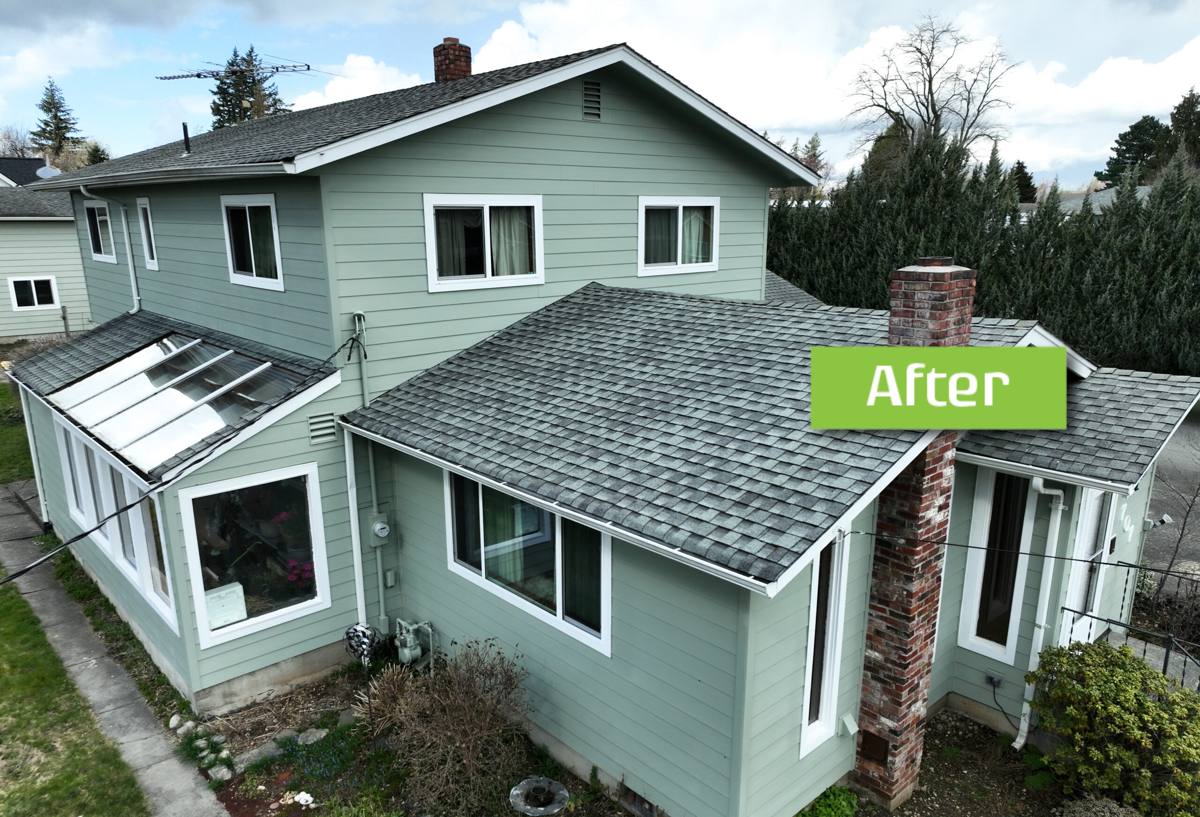
Why West Beach Roofs Wear Differently
Salt Air and Metal Fatigue
Homes with direct or near-direct water exposure see accelerated corrosion on any exposed metal — flashing, fasteners, gutters, and metal roofing panels included. Salt-laden air settles into seams and around nail heads, and over years that steady exposure works faster than plain moisture alone. Galvanized fasteners that would last decades a few miles inland can start showing rust streaks well before their expected service life on a shoreline-facing roof.
Driving Rain and Wind-Driven Water
West-facing exposure means storms don't just drop rain straight down — wind pushes it sideways and up under shingle edges, ridge caps, and step flashing. A roof that would shed water fine in a calm downpour can leak in a wind-driven one if the underlayment, flashing laps, or shingle nailing pattern aren't installed with that reality in mind. This is one of the most common reasons we get called to a roof that "was fine" until a specific storm direction hit it.
Moss, Shade, and a Long Wet Season
San Juan County's wet season runs long, and any roof with tree cover or a north/shaded slope holds moisture well into the dry months. Moss doesn't just sit on top of shingles — it roots into the granule surface, lifts shingle edges as it grows, and holds water against the roof deck. Left alone through a few wet seasons, moss growth is one of the single biggest accelerators of roof failure we see on Orcas Island.
Common Repair Issues We Find on West Beach Roofs
- Lifted or cracked shingles at moss-affected areas, usually on shaded slopes or under overhanging branches
- Failed step flashing or counter-flashing where the roof meets a wall, chimney, or dormer — a leading cause of interior leaks that show up nowhere near the actual entry point
- Corroded or loosened fasteners on metal roofing and flashing, especially on the more exposed western slopes
- Deteriorated pipe boots and vent flashing, which are rubber or plastic components that break down faster under sustained UV and salt exposure
- Clogged or damaged gutters and valleys holding standing water against roofing material
- Soft or discolored roof decking visible from the attic side, indicating a slow leak that's been running longer than the homeowner realized
What a Correct Repair Actually Involves
A roof repair that holds up on West Beach has to do more than cover the visible symptom. We start every repair with a full diagnosis — tracing water stains back to their actual entry point, which is frequently several feet from where the stain appears indoors, since water travels along rafters and decking before it drips.
Matching Materials and Technique
Patching with mismatched shingle profiles, the wrong underlayment, or generic flashing details is a shortcut that fails fast in this climate. We match existing roofing material where possible, and where an exact match isn't available, we choose a compatible product and detail the transition so it sheds water correctly rather than just looking patched.
Flashing First
Most of the leaks we trace back to a root cause come down to flashing — not the field of the roof itself. Step flashing, counter-flashing, valley metal, and pipe boots are where a roof actually fails, and where a repair has to be done with real attention to lap direction, fastener placement, and sealant use (sealant is a backup, not the primary defense against water).
Moss and Debris Removal Done Right
Where moss is part of the problem, we remove it by hand rather than pressure-washing, which can drive water under shingles and strip protective granules. We treat the area to slow regrowth and clear debris from valleys and gutters so water has a clean path off the roof going forward.
Our Repair Process
- Inspection — we get on the roof (weather permitting) and in the attic if accessible, tracing the actual leak path rather than guessing from the ceiling stain alone
- Written scope and estimate — a clear explanation of what's failing, why, and what the repair involves, before any work starts
- Repair — matched materials, correct flashing detail, and fasteners suited to a salt-air environment
- Cleanup and walk-through — debris cleared, work explained, and photos of the repaired area if requested
If an inspection turns up damage beyond what a repair can reasonably address — widespread decking rot, a roof past its material lifespan, or multiple failure points across different sections — we'll tell you plainly and explain the options rather than repairing a roof that needs replacing within a year or two anyway.
Repair vs. Replacement: How to Tell
| Situation | Usually a Repair | Usually Replacement |
|---|---|---|
| Leak location | Isolated to one flashing point or penetration | Multiple leaks across different roof sections |
| Shingle condition | Localized lifting, cracking, or moss damage | Widespread granule loss, curling, or brittleness |
| Roof age | Well within expected material lifespan | At or past the manufacturer's expected service life |
| Decking condition | Solid, no soft spots found in inspection | Soft, spongy, or visibly stained decking in multiple areas |
| Prior repair history | First or infrequent repair need | Repeated repairs to the same or nearby areas |
Roofing Materials on a Shoreline-Exposed Roof
When a repair area needs new material — or when a homeowner asks us whether it's time to think longer-term — the roofing material matters more here than it would on a sheltered inland lot. Some general trade-offs to weigh for a West Beach exposure:
| Material | Coastal Exposure Notes |
|---|---|
| Asphalt composition shingle | Widely used and cost-effective; look for products rated for high wind and algae resistance given the moss-prone shade common here |
| Standing seam metal | Excellent water-shedding and wind performance; fastener and coating quality matter more in salt air, so we're selective about hardware |
| Cedar shake | Fits the regional aesthetic but demands more consistent maintenance in a damp, shaded, moss-prone setting than other options |
| Torch-down or membrane (low-slope roofs) | Common on additions or shed-roof sections; seam integrity and UV-rated cap sheet matter most for longevity |
We're not going to tell you one material is universally "better" — each has real trade-offs in maintenance burden, upfront cost, and how it behaves under this specific combination of salt, shade, and wind-driven rain. Part of our job during an estimate is walking through those trade-offs honestly for your actual roof, not steering you toward whatever's easiest for us to install.
Signs Your West Beach Roof Needs Attention
- Water stains on ceilings or in the attic, especially after a wind-driven storm from the west
- Visible moss growth, particularly on shaded or north-facing slopes
- Granules collecting in gutters or at downspout outlets
- Shingles that look lifted, curled, or cracked from ground level
- Rust streaking below metal flashing or fasteners
- Daylight visible through the roof deck from inside the attic
- A musty smell in upper rooms or closets along an exterior wall
Why Local Experience on West Beach Matters
Working on Orcas Island comes with logistics that mainland crews don't always account for — ferry schedules, material lead times, and weather windows that close fast when a storm rolls in off the water. A crew that already works this side of the island knows how to plan a repair so it isn't left half-finished if the weather turns, and knows which flashing and fastener choices actually hold up here versus what a generic spec sheet recommends for a sheltered suburban roof.
We also know that a "quick patch" mentality doesn't serve West Beach homeowners well. A repair done without accounting for wind direction, salt exposure, and the area's long wet season tends to fail again within a season or two — costing more in the long run than doing it right the first time.
Simple Maintenance That Extends Repair Life
Once a repair is done, a few habits go a long way toward protecting it in this climate:
- Clear gutters and valleys of needles and debris at least twice a year, more often under heavy tree cover
- Have moss growth addressed early, before it lifts shingle edges or roots into the surface
- Trim back branches that keep a roof section shaded and slow to dry after rain
- Schedule a visual roof check after any major windstorm, particularly one from the west
- Address small leaks promptly — decking damage from a slow, ignored leak is what turns an affordable repair into a costly one
Get a Straightforward Roof Repair Estimate
If you're dealing with a leak, moss damage, or flashing that's seen better days on your West Beach roof, we're happy to take a look and give you an honest read on what it needs — repair or otherwise. Reach out for a free, no-pressure estimate using the form below.