 Orcas Island Siding
 Siding on West Beach Faces a Different Kind of Weather
West Beach sits out on the water, and that changes what a house needs from its exterior. Homes here take wind straight off the strait, salt-laden air that settles on every surface, and rain that rarely falls straight down — it comes in sideways, driven by wind, and finds every gap a wall has to offer. Add in the shaded, damp stretches of the year common across Orcas Island and San Juan County, and you have a climate that is genuinely hard on siding, not just inconvenient for it.
A lot of siding products are engineered and rated for a national average climate. West Beach isn't average. Homes facing open water deal with more direct salt exposure and wind-driven rain than homes tucked further inland on the island, and that difference shows up in how fast a wall system ages.
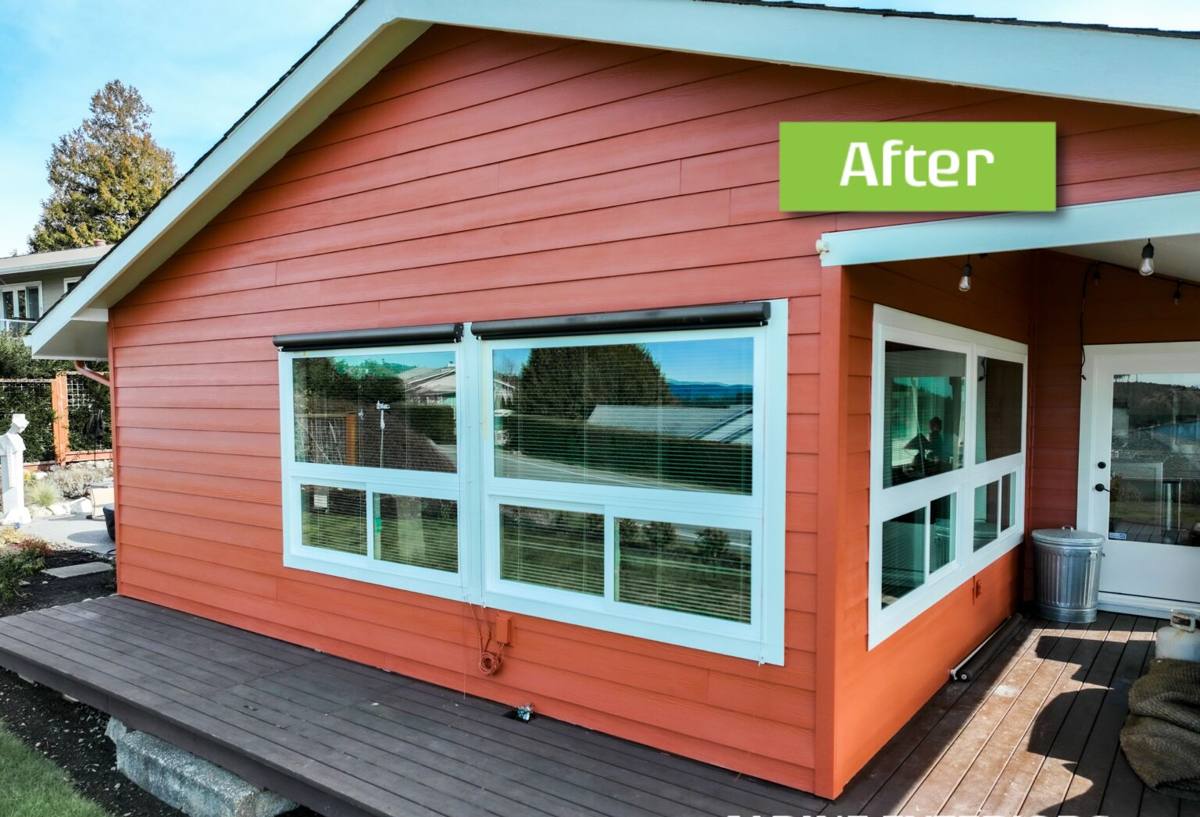
What Salt Air, Driving Rain, and Moss Actually Do to a Wall
Salt air is corrosive. Over years, it attacks unprotected fasteners, thin finishes, and any metal flashing that isn't properly rated for coastal exposure. Driving rain is a different problem: it doesn't just wet the surface of your siding, it pushes water sideways and upward into laps, joints, and any place where flashing or caulking was cut short. And moss — which thrives in the moisture and shade common to this part of Washington — holds water against a wall far longer than open sun and air ever would, keeping siding, trim, and sheathing damp for extended stretches instead of drying out between storms.
None of these three problems is dramatic on its own. Together, over a decade or two, they're what separates a wall system that ages gracefully from one that needs early repair, repainting, or full replacement.
Why Wood-Based and Composite Sidings Struggle Here
Wood and wood-based composite siding products depend on an intact factory coating to keep moisture out. Once that coating is compromised — at a cut edge, a fastener hole, or a spot where caulking has failed — the substrate underneath can wick moisture and swell. In a climate where the wall rarely gets a long, dry stretch to fully recover, that's a real vulnerability. It's a core reason we don't install wood-based composite siding or vinyl on homes in this area, and why we've standardized on a product built from a different material entirely.
Why We Install Only James Hardie Fiber Cement Siding
Fiber cement doesn't share the moisture-swelling behavior of wood-based products, and it isn't a fuel source the way wood siding is. James Hardie also builds region-specific formulations engineered for the moisture and freeze-thaw conditions of climates like the Pacific Northwest, rather than a single one-size-fits-all board. For a waterfront and near-waterfront community like West Beach, that engineering difference matters more than it does in a drier inland climate.
The ColorPlus Finish Advantage in a Wet Climate
Most Hardie products we install carry a factory-applied ColorPlus finish — baked on in a controlled setting rather than brushed or sprayed on-site. That finish is formulated to hold color and resist fading, and because it's cured at the factory rather than applied in the field, it starts life more consistently than a job-site paint coat ever can. In a salt-air environment, a durable, consistently applied finish is one less variable working against the house.
What a Correct Installation Involves on a Home Like Yours
Fiber cement siding is only as good as the installation behind it. A correctly installed system on an exposed wall does several things at once: it manages bulk water that gets past the surface, it protects every cut edge and fastener from ongoing moisture exposure, and it gives the wall a way to dry out between storms instead of staying damp for weeks. Skipping any one of these steps to save time is exactly how a good product ends up with a short lifespan.
The Details That Matter Most in a Driving-Rain Climate
- A drainage gap (rainscreen or furring) behind the siding so any water that gets past the face has somewhere to go and can dry out
- Correctly lapped, corrosion-resistant flashing at every window, door, and roof-to-wall intersection
- Fasteners and trim hardware rated for coastal, high-salt exposure rather than standard interior-grade hardware
- Factory-cut edges kept to a minimum, with any field cuts sealed per the manufacturer's published instructions
- Proper clearance between the bottom of the siding and grade, decks, and roof lines so splash-back and standing water aren't a constant issue
- Caulking used only where the manufacturer specifies it — not as a substitute for correct flashing and lap details
Our Process for a West Beach Project
We start with an on-site assessment of the existing wall, not just the visible siding. On homes that have carried older or failing siding for years, water can be trapped behind it long before it shows on the surface, so we check the sheathing and framing underneath before committing to a plan. If we find rot or hidden moisture damage, we address it before any new siding goes up — new Hardie siding installed over a compromised wall doesn't solve the underlying problem.
From there: full removal of the old siding, repair of any damaged sheathing or framing, installation of a proper drainage plane and flashing package, then the Hardie siding itself installed to manufacturer spec, followed by trim, caulking where called for, and a thorough site cleanup. Because Orcas Island is reachable only by ferry, we plan material deliveries and crew scheduling around that logistics reality, and we build weather windows into the schedule rather than rushing an install between storms.
Cost Factors for Fiber Cement Siding in West Beach
Every home is different, so we don't quote a per-square-foot number sight unseen. The factors below are what actually move a project's cost up or down, and they're the same factors we walk through with homeowners during an on-site estimate.
| Factor | Why It Affects Your Project |
|---|---|
| Home size and wall area | More square footage means more material and labor hours, in a straightforward way |
| Existing siding removal | Old siding, underlayment, and any trapped moisture add tear-off time and disposal cost |
| Hidden moisture or rot repair | Sheathing and framing repairs are common on older waterfront-exposed homes and are priced once uncovered |
| Trim and architectural detail | Dormers, multiple roof planes, and custom trim take more time to flash and finish correctly |
| Site access and logistics | Driveway access, staging space, and ferry-based material delivery affect scheduling and cost |
| Weather window scheduling | Coordinating install phases around driving rain protects the work in progress and the finished result |
Maintenance in a Salt Air, Moss-Prone Environment
James Hardie siding is low-maintenance compared to wood, but "low-maintenance" doesn't mean "no maintenance" — especially this close to the water. A little attention a couple of times a year goes a long way toward protecting the investment.
- Rinse salt spray and general grime off the exterior a few times a year, particularly after winter storms
- Keep gutters and downspouts clear so water sheets away from the wall instead of running down the siding face
- Trim back branches and vegetation touching the house to improve airflow and reduce the shaded, damp conditions moss prefers
- Check caulking at trim, window, and door penetrations annually and have any gaps addressed before they let water in
- Watch north-facing and shaded wall sections for moss or algae buildup and clean it off before it holds moisture against the wall long-term
- Use manufacturer touch-up paint on any nicks or cut edges rather than a mismatched field repaint
Why Hiring a Crew That Already Works West Beach Matters
Siding installation isn't just following a manual — it's applying that manual correctly to the specific exposure of a specific wall. A crew that already works homes in West Beach knows which walls take the brunt of the driving rain, which sides stay shaded and damp longest, and how to schedule an island project around ferry logistics and weather without cutting corners on drying time between phases. That familiarity with San Juan County's coastal conditions and permitting expectations means fewer surprises during the project and a wall system that's actually built for where it sits, not just for a national average climate.
If you're weighing a siding replacement or repair on your West Beach home, we're happy to walk the property with you, take a real look at what's happening behind the current siding, and talk through what correct James Hardie installation would look like for your specific exposure. The estimate is free, with no pressure to commit — just a straightforward look at your home and your options.