 Orcas Island Siding
 Decks Built for Mountain Lake's Particular Conditions
Mountain Lake sits up in the forested, higher-elevation part of Orcas Island, inside Moran State Park's tree cover rather than out on open shoreline. That changes what a deck actually needs to survive here. Homes and cabins around Mountain Lake deal with less direct salt spray than waterfront lots elsewhere on the island, but they get more shade, more standing dampness, and more moss than almost anywhere else in San Juan County. A deck built to a generic spec sheet doesn't hold up under that combination. A deck built for this specific microclimate does.
We've worked decks across Orcas Island long enough to know that "coastal Pacific Northwest" isn't one climate — it's several, depending on elevation, tree canopy, and how much sun a lot actually sees. Mountain Lake properties are their own case, and we build for the case in front of us, not a catalog average.
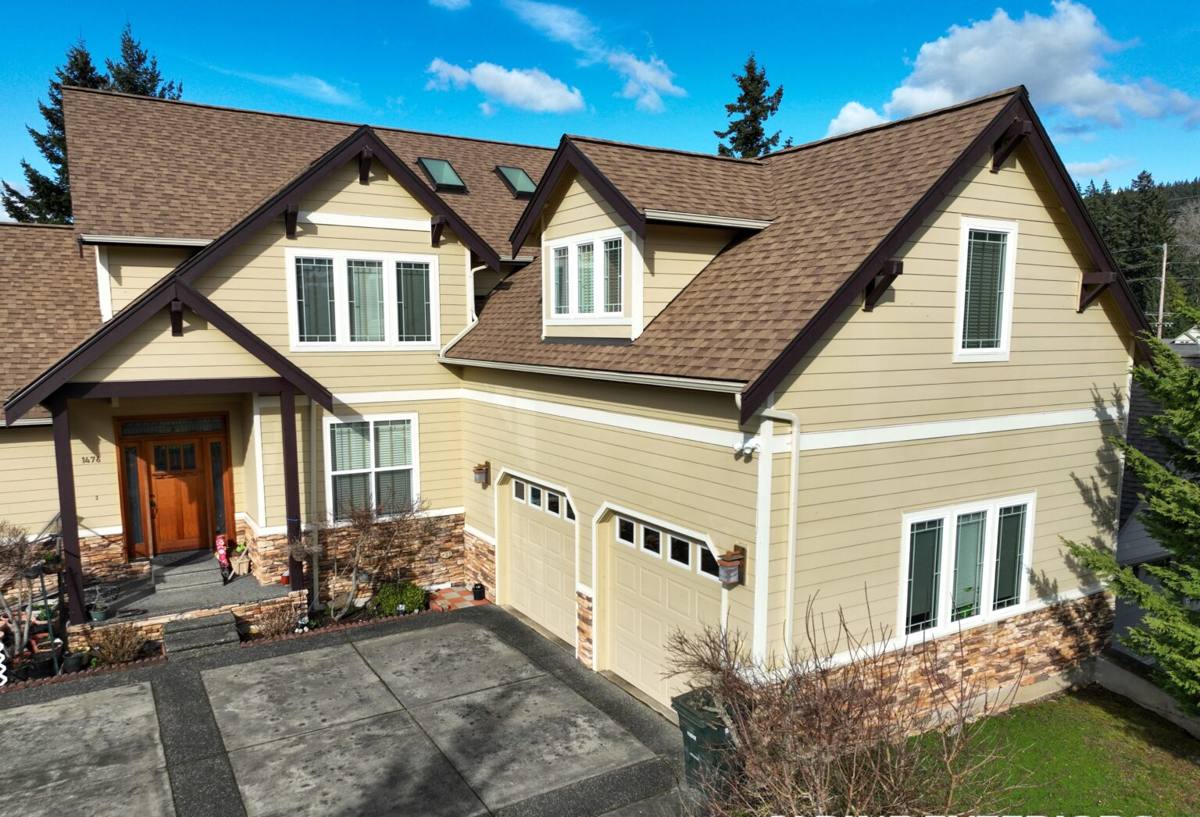
What the Mountain Lake Microclimate Does to a Deck
A few things happen consistently to decks in this part of the island, and each one has a direct fix if you plan for it up front:
Heavy shade slows drying
Dense fir and cedar canopy around Mountain Lake means many decks get only partial sun, some almost none. Rain that would evaporate off an open deck in a day can sit on a shaded one for the better part of a week, especially in the shoulder seasons. That prolonged dampness is the single biggest driver of rot, mildew, and moss growth on wood surfaces here.
Driving rain still finds its way in
Orcas Island's winter storms bring rain sideways as often as straight down. On a shaded deck that's already slow to dry, driving rain adds to standing moisture at ledger boards, stair stringers, and anywhere two pieces of material meet without a clean drainage path.
Salt air reaches further inland than people expect
Mountain Lake isn't a waterfront lot, so salt exposure is lighter than it is down at the shoreline. But this is still an island — airborne salt travels on wind and settles on exposed metal everywhere on Orcas, just more gradually inland. Over a decade, unprotected fasteners and hardware in a shaded, damp environment corrode faster than the same hardware would in a dry inland town, because moisture and trace salt work together.
Moss doesn't ask permission
Shade plus moisture plus organic debris from surrounding trees is exactly what moss and algae need. On a deck, that's not just a cosmetic problem — moss holds moisture against the wood surface and turns handrails and stair treads slick, which is a real fall hazard through the wet months.
Choosing Decking Material for a Shaded, Damp Lot
There's no single "best" decking material — there's the right material for your site, your maintenance appetite, and your budget. For Mountain Lake conditions specifically, we weigh moisture tolerance and moss resistance more heavily than we would on a sunny, open lot.
| Material | How it handles shade & moisture | Moss/algae behavior | Maintenance |
|---|---|---|---|
| Cedar (standard grade) | Naturally rot-resistant but still absorbs moisture in deep shade | Can develop surface moss if not cleaned periodically | Periodic cleaning, refinishing every few years |
| Composite decking | Doesn't absorb water into the board core; performs well in persistent damp | Grows algae film on the surface if never cleaned, but doesn't rot underneath it | Occasional wash; no staining or sealing |
| Pressure-treated framing lumber (structure only) | Treated for ground contact and moisture, used below the walking surface | Not a walking surface, so moss is a non-issue | Inspect fasteners and connections periodically |
| Tropical hardwoods | Dense and moisture-resistant, but installation-sensitive | Low moss uptake, but surface can still film over in deep shade | Oiling schedule required to prevent graying and checking |
For decks under heavy canopy, we lean toward composite for the walking surface or well-ventilated cedar with a real drying gap between boards. What we steer away from is dense, tightly-butted decking with no airflow underneath — it looks clean on install day and traps moisture within a season, in exactly the conditions Mountain Lake provides in abundance.
What's Underneath Matters More Than What You Walk On
Most deck failures we get called out to fix start below the surface, not on it. The framing, flashing, and footings are what determine whether a deck lasts fifteen years or fifty, and they're the parts a homeowner never sees once the build is done.
Ledger flashing
Where a deck attaches to the house is the single most common failure point on any deck in a wet climate, shaded lot or not. Proper flashing directs water away from the house band board instead of letting it wick in behind the ledger. We don't treat this as optional or "if there's room in the budget" — it's part of a correct install, every time.
Footings sized for this ground
Soil conditions vary across Orcas Island, and forested lots near Mountain Lake often have more organic topsoil and root activity than open sites. Footings need to reach stable bearing soil, not just a code-minimum depth on paper. We check what's actually in the ground on your lot before we pour.
Fasteners and hardware rated for the environment
Given the combination of shade-driven dampness and island-wide airborne salt, we use corrosion-resistant fasteners and structural hardware throughout — not just on the visible surface, but at every joist hanger and connector buried inside the frame. Hardware that's "fine for now" but rated for a dry interior climate is the kind of shortcut that turns into a structural problem a decade down the road, quietly, where you can't see it happening.
Airflow underneath
A deck built low to the ground with poor cross-ventilation traps moisture underneath it regardless of what decking material sits on top. We plan clearance and airflow into the framing design from the start, not as an afterthought.
Moss, Algae, and Realistic Maintenance
No deck in the Mountain Lake area is going to be maintenance-free — anyone who tells you otherwise is selling something. What we aim for is a deck where the maintenance is simple and infrequent, not constant.
- Sweep debris (needles, leaves, seed pods) off the deck regularly through fall — trapped organic matter is moss food
- Rinse or lightly scrub decking once or twice a year to keep algae film from building up on stairs and walking surfaces
- Check handrails and stair treads for slickness before winter — this is a genuine fall-hazard season on shaded decks
- Keep gutters and downspouts near the deck clear so runoff isn't dumping extra water onto or under the structure
- Have fastener and connector hardware checked every few years, especially on older decks built before corrosion-resistant hardware was standard practice
Material choice affects how often you're doing this work, which is why we talk through your realistic maintenance appetite before recommending decking, not after.
Permitting and Site Realities in San Juan County
Deck construction on Orcas Island falls under San Juan County building requirements, and depending on size, height, and proximity to critical areas, that can mean a permit review before work starts. Lots near Mountain Lake and within Moran State Park's surrounding area can also carry additional considerations around tree removal and site disturbance, since it's a heavily wooded, environmentally sensitive part of the island. We handle the permit process as part of the job rather than leaving it for you to sort out, and we won't start structural work without the approvals your specific site requires.
How We Approach a Custom Deck Build
Every deck starts with a site visit, not a phone quote. On a shaded, sloped, or wooded Mountain Lake lot, the site tells us things a set of measurements alone won't — where water actually moves, how much sun the space gets through the seasons, and what the ground is doing underneath.
- On-site assessment of drainage, sun exposure, soil, and existing structure (for replacements or attached decks)
- Design and material discussion based on your maintenance preference, budget, and how you'll actually use the space
- Permitting, when required, handled through San Juan County before any ground is broken
- Framing and structural work: footings, ledger flashing, joist layout, and corrosion-resistant hardware throughout
- Decking installation with attention to board spacing and airflow, not just surface appearance
- Final walkthrough covering what maintenance the specific materials we used will actually need
Why a Crew That Already Works Orcas Island Matters Here
A contractor who's never built on the island will spec a deck the way they'd spec one anywhere else — and on a shaded Mountain Lake lot, that's how you end up with trapped moisture, moss within a year or two, and hardware that corrodes faster than it should. Knowing this specific stretch of Orcas Island means knowing which lots hold moisture longest, which materials actually perform under heavy tree cover, and what San Juan County's permitting process requires before you're partway into the job and stuck. That's the difference between a deck that needs real attention every year and one that just sits there working, the way a deck is supposed to.
If you're planning a new deck or need to replace one that's struggling with moss, softness, or standing water on a Mountain Lake property, we're glad to come take a look. Reach out for a free, no-pressure estimate using the form below.