 Orcas Island Siding
 Siding Replacement Built for Crow Valley's Conditions
Crow Valley sits back from the shoreline on Orcas Island, and a lot of homeowners assume that distance buys them some protection from the weather that hammers the waterfront. It doesn't buy as much as people think. San Juan County's marine air still finds its way into the valley on the wind, the surrounding hills and tree cover trap moisture instead of letting it move through, and the result is a siding environment that's demanding in its own way — just not in the way people expect. Salt-laden air, driving rain, and a moss season that can run most of the year all take a toll on exterior materials, and older siding in Crow Valley often shows it in ways that aren't obvious from the driveway.
This page is specifically about siding replacement for homes in Crow Valley — what the local climate does to siding over time, what a correct replacement job actually involves, and why we've standardized on one product system instead of offering the usual lineup of options.
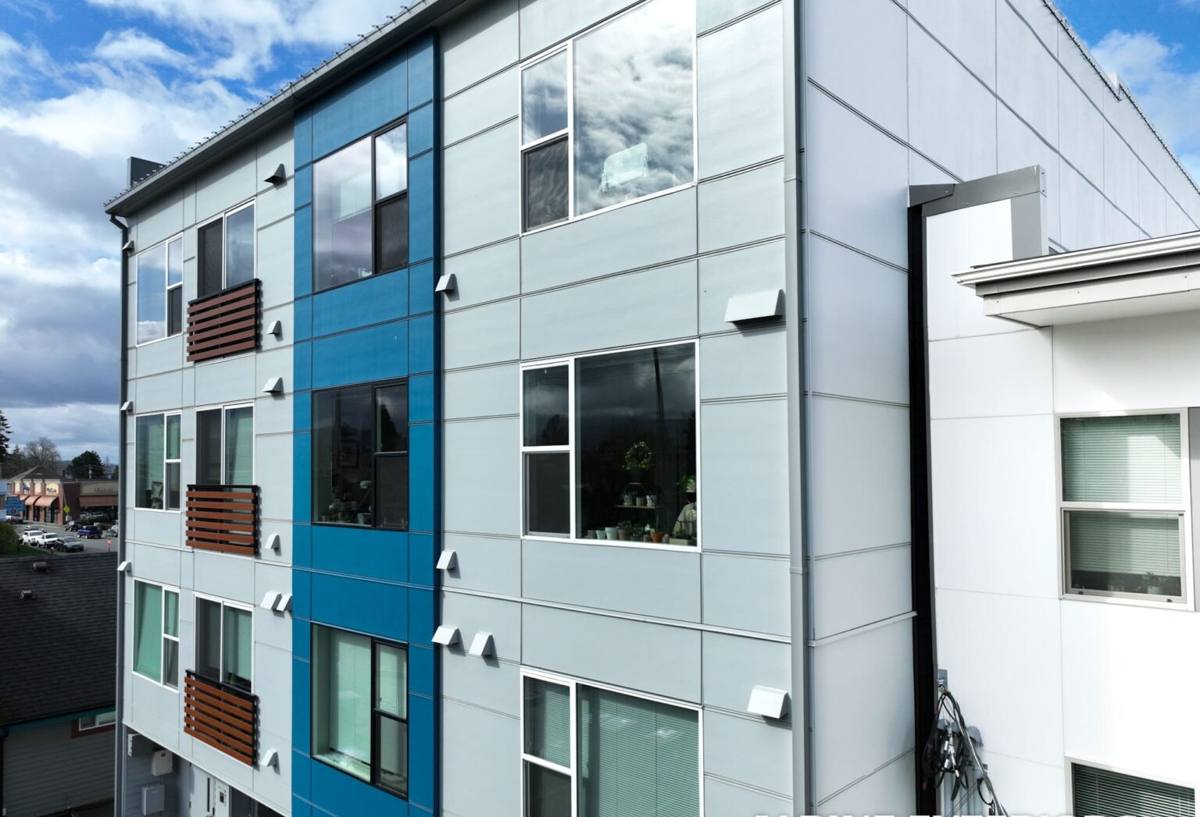
What the Crow Valley Climate Does to Siding Over Time
Salt Air Doesn't Stop at the Shoreline
Airborne salt from the surrounding waters of San Juan County travels on wind and fog well past the immediate coastline, settling on exterior surfaces throughout the island, including inland valleys. On wood-based siding, that salt film holds moisture against the surface longer than plain rainwater would, which accelerates paint failure, checking, and eventual rot at joints and fastener points. Metal fasteners and trim hardware are also more prone to corrosion in this environment than they would be further inland on the mainland.
Driving Rain Finds Every Weak Point
Orcas Island gets weather systems that arrive with real wind behind them, and Crow Valley's terrain can funnel and redirect that wind rather than blocking it outright. Driving rain doesn't just fall on siding — it gets pushed sideways and upward into laps, seams, and trim joints that were never designed to shed water from that angle. Over years, that's how water finds its way behind siding that looks fine from the ground.
A Moss Season That Doesn't Really End
Between the shade from mature trees common on Crow Valley lots and the region's extended wet season, siding here can stay damp for days at a stretch, which is exactly what moss and algae need to establish. Once moss takes hold on wood, engineered wood, or vinyl siding, it holds moisture directly against the surface around the clock, which is a much harder problem than simple rain exposure. On siding that's already aging, that constant dampness is often what finally tips a marginal wall assembly into active rot.
Signs a Crow Valley Home Needs Replacement, Not Just Repair
Repair makes sense when damage is isolated. Replacement becomes the right call when the underlying material has been fighting a losing battle with moisture for years. Before we recommend either one, we look for these signs:
- Soft, spongy, or crumbling siding when pressed near the bottom edges of boards or around window and door trim
- Paint that keeps failing within a year or two of repainting, even after prep work
- Persistent moss or dark streaking that returns within months of cleaning
- Visible gaps, warping, or cupping in individual boards or panels
- Soft or discolored sheathing visible once a section of siding is pulled back
- Rusted or failing fasteners and trim hardware
- Rising interior humidity, musty smells, or peeling interior paint near exterior walls — often a sign moisture has already worked its way inward
Finding two or three of these on a home usually means the siding has been compromised for longer than it looks, and patch repairs will keep costing money without solving the underlying problem.
Why We Install Only James Hardie Fiber Cement Siding
We don't offer vinyl, LP SmartSide, primed spruce, cedar, or other fiber cement brands like Cemplank or Allura. That's a deliberate standard, not a sales pitch, and it's worth explaining honestly rather than just asserting it.
Vinyl is inexpensive and low-maintenance in mild climates, but it softens and warps in direct heat, becomes brittle in cold snaps, and its seams and J-channels give wind-driven rain more places to work its way behind the wall — a real liability in a valley that already funnels weather. Engineered wood products like LP SmartSide perform reasonably well when installation and maintenance stay perfect for the life of the product, but any breach in the factory coating or field-cut edge exposes wood fiber that's genuinely vulnerable to the kind of sustained dampness Crow Valley sees for much of the year. Primed spruce and cedar are real wood, and real wood needs real upkeep — repainting on a strict cycle, caulking maintenance, and constant vigilance against the moss and salt exposure we've already covered. All of these are legitimate products with real advantages; they're just not what we're willing to put our name behind here.
James Hardie fiber cement is cement, sand, and cellulose fiber — it doesn't feed mold or moss the way wood-based products can, it's non-combustible, and it holds up to sustained damp exposure without the swelling or rot pathway that wood and engineered wood products carry. Hardie's HZ product lines are engineered for specific climate zones rather than sold as one generic product, which matters in a region that cycles through wet winters and dry, sometimes smoky summers. The ColorPlus finish is a factory-applied, baked-on finish that resists fading and chipping far better than field-applied paint, and it carries a substantial finish warranty on top of Hardie's product warranty — both of which are transferable if the home sells, which matters to buyers doing their own due diligence on an island property.
Choosing the Right Hardie Product Line for a Crow Valley Home
Hardie's product lines aren't interchangeable — each one suits a different look and, to some extent, a different exposure profile. For most Crow Valley homes, the decision comes down to matching the existing architecture and how much of the wall faces the prevailing weather.
| Product | Profile | Best Suited For |
|---|---|---|
| HardiePlank lap siding | Horizontal overlapping boards | Traditional farmhouse and craftsman-style homes common in the valley; the most common choice for full replacements |
| HardiePanel vertical siding | Large flat vertical sheets with battens | Barn-style, modern, or accent walls; often paired with lap siding on the same home |
| HardieShingle staggered siding | Individual shingle-look panels | Cottage-style homes or accent gables where a cedar-shake look is wanted without cedar's upkeep |
| HardieTrim boards | Fascia, corner boards, window and door trim | Paired with any of the above to protect the vulnerable edges and joints where moisture typically gets in first |
On homes with heavy tree cover, we'll sometimes recommend a smooth ColorPlus finish over a heavily textured one, since smooth surfaces shed moss spores more easily than deep wood-grain textures — a small detail, but it matters over a decade of shaded, damp conditions.
What a Correct Siding Replacement Actually Involves
Tear-Off and Substrate Inspection
We don't install new siding over old. Full tear-off lets us see the sheathing underneath, which is the only way to know whether years of trapped moisture have already damaged the wall structure. Any soft or rotted sheathing gets replaced before anything new goes up — covering it over just hides the problem for the next owner to find.
Weather-Resistive Barrier and Flashing
A new weather-resistive barrier goes on before the siding, along with properly lapped flashing at every window, door, and roofline intersection. In a valley that sees driving rain from shifting wind directions, flashing details at these transitions are usually where a mediocre installation fails first — water finds the shortcut, and it's almost always at a joint, not through the field of the siding itself.
Installation to Manufacturer Specification
James Hardie publishes exact requirements for fastener spacing, board overlap, clearance from grade, decks, and roof lines, and gaps at butt joints for expansion and future caulking. Skipping these specs is one of the most common ways fiber cement siding fails early, and it's also one of the easiest things for a homeowner to miss when comparing quotes — the material cost looks the same whether it's installed to spec or not, but the outcome isn't.
Finish Work and Site Cleanup
Trim, caulking at penetrations, and touch-up work happen last, followed by a full site cleanup — old siding debris, cut-offs, and fasteners don't get left in garden beds or under decks. On a valley lot with pasture or garden space nearby, that cleanup matters more than it would on a tight in-town lot.
Cost Factors for Siding Replacement in Crow Valley
Every home is different, so we won't quote a number without seeing the house, but these are the factors that most often move the price up or down on a Crow Valley project:
| Factor | Why It Matters Here |
|---|---|
| Extent of hidden moisture damage | Sheathing repair found during tear-off is common on older homes that have been fighting salt air and shade for years |
| Home size and wall complexity | Dormers, multiple gables, and wraparound porches all add cutting, flashing, and labor time |
| Product line and profile mix | Lap-only projects price differently than homes combining lap, panel, and shingle accents |
| Trim scope | Full trim replacement protects the joints that fail first in driving rain, but adds material and labor |
| Site access | Long driveways, tree cover, and staging space affect how efficiently material and equipment move on site |
| Material logistics | Everything for a San Juan County project has to be barged or ferried in and staged in advance, which affects scheduling more than base price |
Why Hiring a Crew That Already Works Crow Valley Matters
Island work isn't the same as mainland work, and it's worth being direct about that. A crew that already operates on Orcas Island has its ferry schedule, material staging, and delivery timing figured out, so a project doesn't stall out waiting on a board order that missed a boat. A crew that's replaced siding on other Crow Valley homes also has a working sense of which walls take the worst of the wind and rain on a given property, where moss tends to establish first, and how much sheathing repair to reasonably expect before tear-off even starts — none of which shows up in a generic estimate from a contractor pricing the job off photos.
There's also a simple accountability argument: a company that plans to keep working in this valley has every reason to install the job correctly the first time, because the next callback — or the next referral — comes from the same small community.
Ready to Talk About Your Home
If your Crow Valley home is showing any of the signs above, or you just want an honest read on how much life is left in your current siding, we're happy to take a look. Estimates are free and no-pressure — fill out the form below and we'll set up a time to walk the property with you.