 Orcas Island Siding
 Storm Damage Roofing for Deer Harbor Homes
Deer Harbor sits on the west side of Orcas Island, tucked against the water with a marina, wooded slopes, and homes that range from older cabins to newer waterfront builds. That location is beautiful and it's also demanding on a roof. Homes here take wind off the water, sit under heavy fir and cedar canopy that drops limbs in a blow, and stay damp and shaded enough in winter to grow moss faster than roofs on the mainland. When a storm comes through and does damage, the fix needs to account for all of that, not just patch the spot that's leaking.
This page covers what storm damage roof repair actually involves for a Deer Harbor property, what we look for, and how we handle the fact that this is an island job — meaning materials, scheduling, and access all work a little differently than they would in a mainland neighborhood.
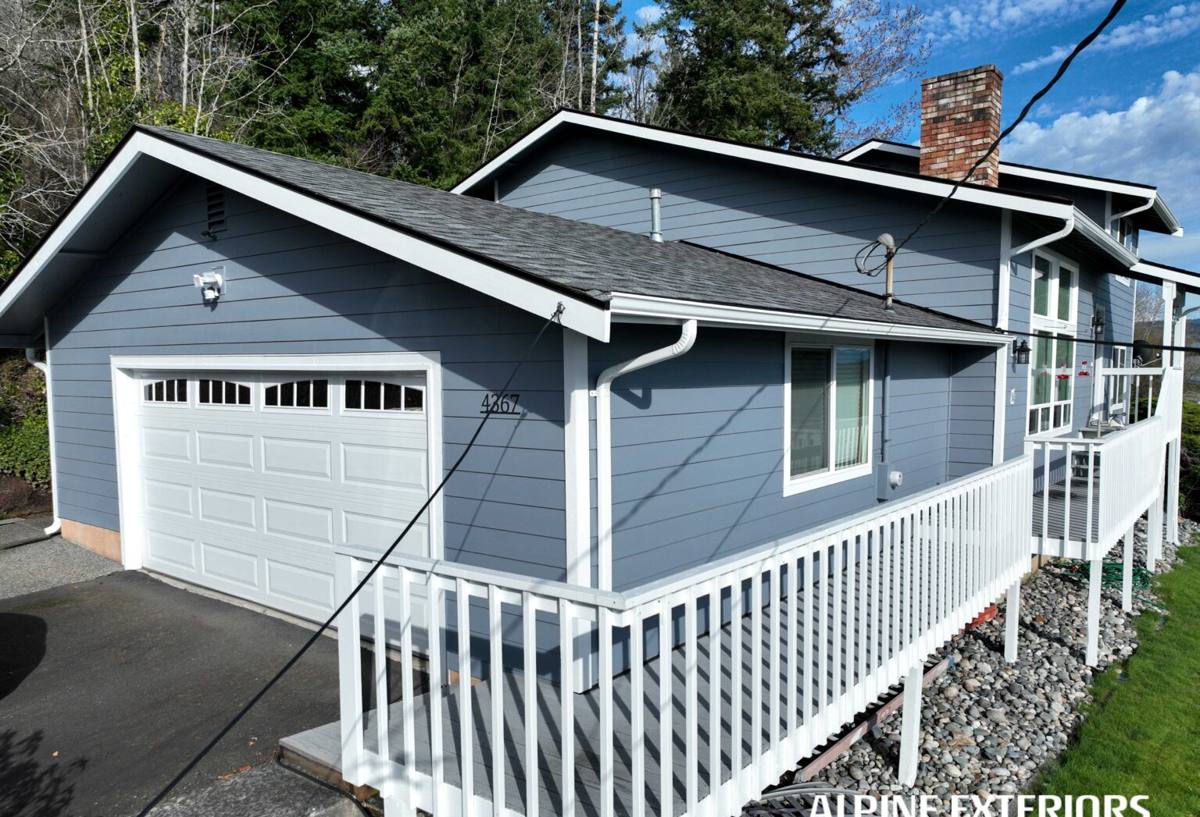
What Winter Storms Actually Do to Orcas Island Roofs
San Juan County doesn't see the wind speeds of an open coastline, but Deer Harbor's exposure to the water and its tree cover create their own combination of problems. The damage we see after a storm on this side of the island tends to fall into a few categories:
Wind and Driving Rain
Southerly and southwesterly storms push rain sideways across the harbor. Roofing that's rated for straight-down rain can still take on water when it's driven horizontally under shingle tabs, around flashing edges, or into any spot where a seal has aged or a fastener has backed out. Wind uplift on ridge caps and hip lines is one of the most common failure points we find after a storm, even when the rest of the roof looks fine from the ground.
Falling Limbs and Debris
Deer Harbor's wooded lots are part of what makes the area what it is, but big fir and cedar limbs coming down in a windstorm are a real and recurring cause of damage here — punctures, cracked shingles, dented metal roofing, and knocked-loose gutters. Even limbs that don't punch through can abrade a roof surface enough to shorten its life.
Moss and Trapped Moisture
Shaded, damp roofs on this side of the island grow moss on a longer season than sunnier parts of the county. Moss holds water against the roofing material, works its way under shingle edges, and lifts them — which turns a minor storm event into a real leak because the roof was already compromised going in. A storm rarely damages a healthy, moss-free roof the same way it damages one that's been holding moisture all winter.
Salt Air and Corrosion
Being right on the harbor means salt-laden air reaches roofing metal, fasteners, and flashing faster than it would further inland. Corroded nails, rusted flashing, and pitted metal roofing panels are common repair items we find on waterfront and near-waterfront homes, and salt exposure is part of why we're careful about material selection for repairs in this specific area.
Signs Your Deer Harbor Roof Has Storm Damage
Some storm damage is obvious — a limb through the roof, missing shingles scattered across the yard. Most of it isn't. Here's what we tell Deer Harbor homeowners to check for after a significant wind or rain event:
- Water stains or discoloration on interior ceilings, especially near chimneys, skylights, or where two roof planes meet
- Granules from asphalt shingles collecting in gutters or at downspout outlets
- Shingles that look lifted, curled, or creased, even if none are fully missing
- Bent, dented, or displaced metal flashing around vents, chimneys, and roof valleys
- Gutters pulled away from the fascia or sagging under debris weight
- Visible moss buildup along ridges and in shaded valleys, particularly on north-facing slopes
- Soft spots or give when the roof deck is walked (a sign water has already gotten into the sheathing)
- Debris, needles, or broken branches concentrated in one area of the roof, pointing to where impact damage may have occurred
If you see any of these, the safest move is to get it looked at before the next storm, not after the leak shows up inside.
Emergency Response: Stopping Further Damage First
When a roof is actively letting water in, the first priority isn't a full repair estimate — it's stopping the bleeding. That usually means a temporary tarp or emergency patch over the damaged section, done safely and correctly so it actually holds through the next round of wind and rain rather than tearing loose and making things worse.
On Orcas Island, timing matters more than it would somewhere with same-day access to unlimited crews and suppliers. Ferry schedules, weather windows, and material availability all affect how fast a full repair can happen. A properly secured temporary cover buys the time needed to do the permanent repair right, instead of rushing a fix in bad conditions.
What a Correct Storm Repair Involves
A storm repair that's done right addresses the cause of the damage, not just the visible hole or missing shingle. That generally means:
- Inspecting beyond the obvious damage point — wind and water travel, so the leak's source and the interior stain are often in different spots
- Checking the roof deck underneath for soft or delaminated sheathing before any new roofing goes back down
- Replacing damaged underlayment, not just the shingles or panels on top of it
- Re-securing or replacing flashing around any penetration near the damaged area, since flashing failure is a common hidden cause of storm leaks
- Matching shingle or panel material as closely as possible so the repair doesn't stand out or create a mismatched water-shedding pattern
- Clearing moss and debris from the surrounding area so it doesn't undermine the new work
A patch that only covers the hole and skips these steps tends to fail again in the next storm, because the underlying cause — a bad seal, a compromised deck, moss holding moisture — was never addressed.
Repair or Replace? What Actually Drives That Decision
Storm damage doesn't always mean a full roof replacement, but it can be the point where a homeowner has to decide whether to repair or start planning for a new roof. A few honest factors go into that call:
| Factor | Leans Toward Repair | Leans Toward Replacement |
|---|---|---|
| Roof age | Under roughly 10–12 years, in otherwise good condition | Nearing or past its expected material lifespan |
| Damage extent | Localized to one section or slope | Spread across multiple areas or slopes |
| Deck condition | Solid, dry sheathing under the damaged area | Soft, delaminated, or repeatedly wet decking |
| Moss/moisture history | Minimal prior moss or trapped moisture | Long-standing moss growth or chronic damp spots |
| Material availability | Existing shingle or panel style still obtainable to match | Discontinued material forcing a full re-roof for a uniform look |
We'll always give you a straight answer on which side of that line your roof falls on, including when a repair is genuinely the right and more economical call.
Insurance and Documentation
Most storm damage claims move faster and more smoothly when there's clear documentation of what happened and when. That's worth doing whether or not you end up filing a claim:
- Photograph visible exterior damage and any interior water intrusion as soon as it's safe to do so
- Note the date and general nature of the storm event (high wind, heavy rain, falling debris)
- Get a written assessment describing the damage and the recommended repair scope
- Keep receipts for any emergency tarping or temporary protective work
We provide written assessments homeowners can use for their own insurance conversations. We're not a public adjuster and don't represent the insurance company or negotiate the claim on your behalf — our job is giving you an honest, documented picture of the roof so you're working from accurate information either way.
Our Process for a Deer Harbor Storm Repair
Because Deer Harbor is a ferry-dependent, water-adjacent community, we plan storm repairs around the realities of getting here, not around a generic mainland timeline:
- Initial call and photos. A quick phone assessment and any photos you can safely get help us understand urgency and bring the right materials on the first trip.
- On-site inspection. We walk the roof, check the deck where accessible, and identify both the storm damage and any pre-existing conditions (moss, aging flashing, worn underlayment) that made the roof vulnerable.
- Temporary protection if needed. If the roof is actively leaking, we secure it first so you're not exposed to the next weather system while repairs are scheduled.
- Written scope and estimate. You get a clear description of what's damaged, what needs to happen, and what it costs — no surprise add-ons once work starts.
- Repair, done to match. We complete the repair with materials chosen for this environment's salt air and moisture exposure, matched to your existing roofing as closely as possible.
- Final check. We walk the finished repair with you and confirm the surrounding roof area is clear of debris and moss that could undermine the work.
Why a Crew That Already Works Deer Harbor Matters
Roofing on Orcas Island isn't the same job as roofing in a mainland subdivision, and Deer Harbor has its own quirks even within the island — tree cover, harbor wind exposure, and homes that range from seasonal cabins to full-time residences with different access and staging needs. A crew that already works this area knows how to plan around ferry schedules so a repair isn't stalled waiting on a missed sailing, understands which materials hold up against the salt air coming off the water, and has already seen how moss and shade behave on roofs in this specific microclimate.
That familiarity shows up in small but real ways: knowing where staging equipment on a wooded or waterfront lot takes extra care, recognizing which repair shortcuts don't hold up through a San Juan County winter, and being straightforward about what's genuinely storm damage versus what was already a maintenance issue waiting to happen.
If a recent storm has left your Deer Harbor roof leaking, damaged, or just something you're not sure about, we're glad to take a look. Reach out for a free, no-pressure estimate using the form below — we'll give you an honest read on what's going on and what it would take to fix it right.