 Orcas Island Siding
 What Olga's Climate Does to a Roof
Olga sits on the quieter, tree-covered side of Orcas Island in San Juan County, and that setting is exactly why roofs here wear differently than roofs twenty miles inland. Homes get a steady dose of salt-laden air off the surrounding water, long stretches of driving rain that come in sideways during winter storms, and heavy tree canopy that keeps roof surfaces shaded and damp for much of the year. That combination — salt, moisture, and shade — is a hard environment for any roofing material, and it's why so many older asphalt shingle and cedar shake roofs on this end of the island show moss, streaking, and premature wear well before their rated lifespan is up.
A roof that works in a dry inland climate isn't automatically the right roof for Olga. The material, the fasteners, and the details around flashing and ventilation all need to account for what this specific stretch of Orcas Island throws at a house year after year.
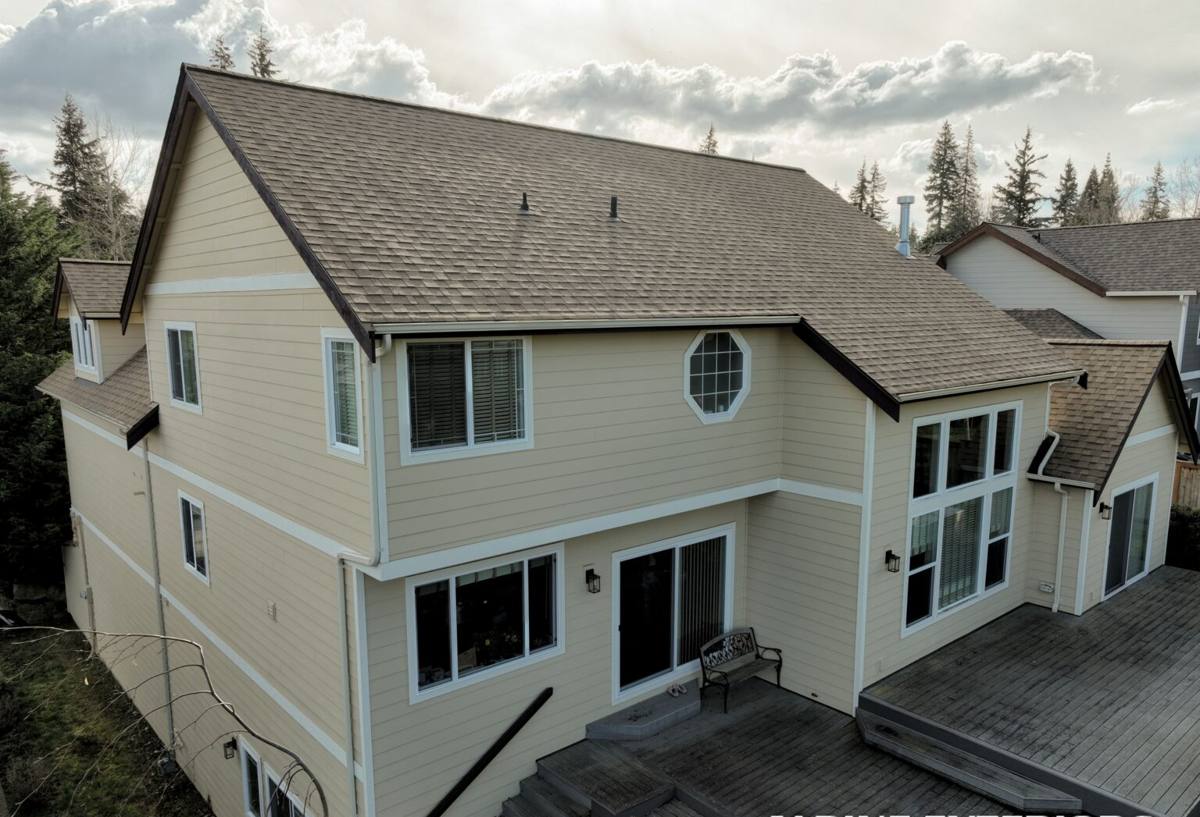
Why Metal Roofing Makes Sense Here
Salt Air and Corrosion
Marine air carries fine salt particulate that settles on every exposed surface, including roofing. Standard galvanized fasteners and uncoated metals can corrode faster near the water than they would further inland. We spec coastal-rated fasteners and finishes for Olga installs so the roof isn't fighting its own hardware ten years in.
Moss and Algae Resistance
Asphalt shingles have a granular surface that gives moss spores something to grip, and under heavy tree cover that moss takes hold fast. Metal roofing has almost nothing for moss to root into. Debris can still collect in valleys and against obstructions, but the panel surface itself doesn't feed a moss colony the way shingle granules do — which matters a lot on a shaded Olga lot.
Shedding Driving Rain
Wind-driven rain doesn't just fall straight down — it pushes sideways and can work its way under poorly lapped materials. Standing seam metal, in particular, uses raised interlocking seams that give wind-driven water nowhere to get under the panel, which is a real advantage during the kind of winter storm systems that roll through this part of the Salish Sea.
Weight and Longevity
Metal roofing is lighter than most people expect — often lighter than a layer of asphalt shingles — which is a plus on older Olga structures where we'd rather not add unnecessary dead load. It also tends to outlast asphalt by decades when installed correctly, which matters on a property where reroofing access means coordinating ferry schedules, not just a truck pulling up.
Metal Roofing Options We Install
Not every metal roof is built the same way, and the right choice depends on your roof's pitch, your budget, and how the house looks. Here's how the main options compare for a home like yours in Olga:
| Type | Best For | Fastening | Typical Lifespan | Trade-offs |
|---|---|---|---|---|
| Standing Seam | Most Olga homes, especially waterfront or heavy-tree-cover lots | Concealed clips, no exposed screws | 40–60+ years | Higher upfront cost, needs a skilled installer |
| Exposed-Fastener (Corrugated/Ribbed) | Outbuildings, shops, budget-conscious reroofs | Screws through the panel face | 25–40 years | Fasteners need periodic inspection and eventual replacement |
| Stone-Coated Steel | Homes wanting a shake or tile look with metal's durability | Concealed or semi-concealed depending on system | 40–50 years | Costs more than exposed-fastener; heavier than standing seam |
For most homes in Olga we lean toward standing seam because the concealed fastening holds up best against wind-driven rain and salt exposure over the long run. Exposed-fastener panels have their place, but the exposed screws are the first thing to fail in a salt-air environment if they're not maintained.
What a Correct Installation Involves
Metal roofing looks simple from the ground, but a correct install has several layers most homeowners never see, and skipping any of them is where problems start.
- Underlayment: A synthetic underlayment across the full roof, with self-adhered ice-and-water membrane at eaves, valleys, and around penetrations where wind-driven rain is most likely to test the roof.
- Fasteners and clips: Coastal-rated, corrosion-resistant hardware sized and spaced to the panel manufacturer's specs — not generic screws pulled from a general-purpose bin.
- Flashing: Custom-formed flashing at chimneys, skylights, dormers, and wall transitions. This is where the majority of roof leaks originate, metal or otherwise, and it's not a place to cut corners.
- Panel layout and seams: Standing seam panels need to be run and seamed to allow for thermal expansion and contraction without buckling or loosening over time.
- Ventilation: Proper ridge and intake venting so moisture from inside the house doesn't get trapped against the roof deck, which is especially important under Olga's shaded, damp tree cover.
Cost Factors for a Metal Roof in Olga
Every roof is priced on its own specifics, but a few factors consistently move the number up or down. In general terms, installed metal roofing in this region tends to run in the range of roughly $9 to $18 per square foot depending on system and complexity — well above asphalt shingles, but with a lifespan and maintenance profile that changes the math over 30-plus years.
| Factor | How It Affects Cost |
|---|---|
| Roof pitch and complexity | Steeper slopes, multiple valleys, and dormers add labor and material waste |
| Tear-off vs. overlay | Removing old shingles or shakes adds cost but is usually the right call over long-term overlay problems |
| Panel profile | Standing seam costs more per square foot than exposed-fastener panels |
| Chimneys, skylights, and penetrations | Each one adds custom flashing labor |
| Access and logistics | Ferry-dependent material delivery and site access on some Olga properties can affect scheduling and cost |
Our Process, Start to Finish
- On-site inspection and estimate: We look at your existing roof, deck condition, and any problem areas before quoting anything.
- Material selection and ordering: We plan delivery around ferry schedules so materials arrive complete and on time, not in scattered partial loads.
- Tear-off and deck check: Old roofing comes off and we inspect the deck underneath for rot or soft spots before anything new goes down.
- Underlayment and flashing: Ice-and-water membrane, synthetic underlayment, and custom flashing go in first, since these do the real waterproofing work.
- Panel installation: Panels are run, seamed, and fastened to manufacturer spec with coastal-rated hardware.
- Ridge, vents, and trim: Final details are fitted and sealed, including ridge caps and ventilation components.
- Cleanup and walkthrough: We clear the site of debris and fasteners and walk the finished roof with you before calling the job done.
Living With a Metal Roof in Olga: Maintenance That Actually Matters
Metal roofing cuts down on moss problems dramatically, but it isn't a zero-maintenance material, especially under heavy tree cover. Needles, leaves, and organic debris can still pile up in valleys and against low-slope transitions, holding moisture against the roof even if the panel surface itself resists moss. A simple annual check catches most issues before they become expensive ones.
- Clear needles and leaf debris from valleys and roof-to-wall transitions, especially after fall storms
- Check that gutters and downspouts are flowing freely, not backed up with debris
- Look at flashing around chimneys and skylights for any lifting or gaps
- After a major windstorm, do a visual check from the ground for loose panels or trim
- Trim back overhanging branches that drop debris directly onto the roof
Why a Crew That Already Works Olga Matters
Roofing logistics on this part of Orcas Island aren't the same as roofing on the mainland. Material deliveries and crew scheduling have to work around ferry timing, and a contractor who hasn't planned for that can turn a straightforward reroof into a stretched-out project with wasted trips. A crew that already works in Olga also has a feel for which properties take the worst of the wind-driven rain and salt exposure based on their orientation to the water, and which are more sheltered by tree cover — details that inform real decisions about flashing, fastener choice, and panel profile, not just paperwork.
Familiarity with San Juan County's permitting process also keeps a reroof from stalling out on the administrative side. None of this replaces good installation work, but it's the difference between a project that runs smoothly and one that fights the calendar the whole way through.
Get a Straightforward Estimate
If you're weighing a metal roof for your home in Olga, we're glad to take a look and walk you through what your specific roof needs — no pressure, no inflated scope. Use the form below to request a free estimate.