 Orcas Island Siding
 Why Deer Harbor Roofs Wear Differently
A roof in Deer Harbor works harder than a roof almost anywhere inland. The combination of salt-laden air off the water, driving rain that comes in sideways during winter storms, and a moss season that can run eight months or more puts a different kind of stress on shingles, flashing, and fasteners than you'd see on a typical mainland home. Metal components corrode faster near the water. Moisture gets trapped under moss mats instead of running off. And wind-driven rain finds every weak seam a standard installation might get away with elsewhere.
None of that means a roof here has to fail early. It means the installation has to account for those conditions from the start, rather than using a generic approach and hoping it holds up. That's the difference we build into every new roof installation on this end of Orcas Island.
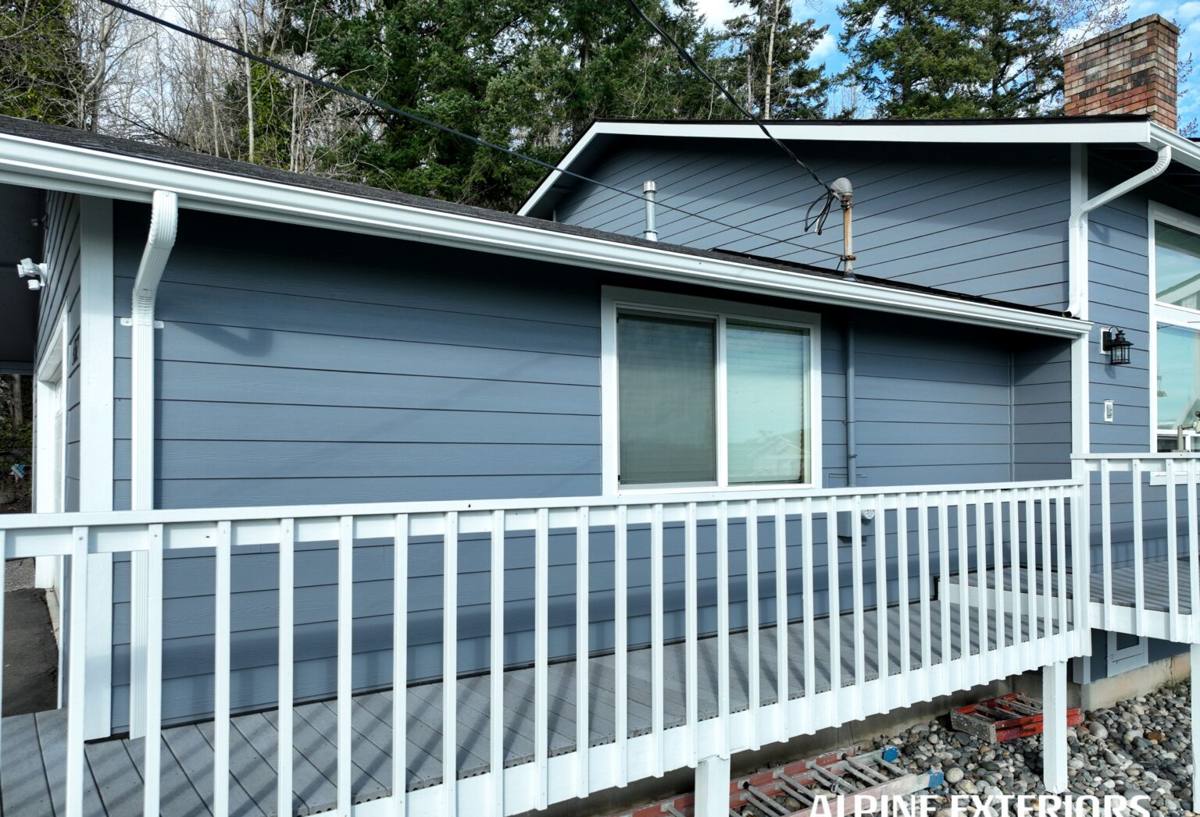
What a Correct Roof Replacement Involves
A new roof is more than shingles nailed over old ones. Done right, a full replacement addresses everything underneath the surface layer, since that's where most premature failures actually start.
Decking
Once the old roofing is stripped, we inspect the decking for soft spots, delamination, and water staining — common in homes that have carried trapped moisture under aging roofing for years. Any compromised sheathing gets replaced before anything new goes down. Installing new roofing over weak decking just hides a problem that will resurface, usually as a leak in a finished ceiling.
Underlayment and Flashing
In a marine climate, underlayment is your backup plan, not an afterthought. We use synthetic or self-adhered underlayment rated for high-moisture exposure, with extra attention at valleys, eaves, and any low-slope transitions where wind-driven rain tends to find its way in. Flashing around chimneys, skylights, and wall intersections gets replaced rather than reused — old flashing is one of the most common leak points we find on tear-offs in this area, and it's cheap insurance compared to a repair later.
Ventilation
A roof that can't breathe traps moisture in the attic, which accelerates rot and makes conditions worse for moss and mildew from the underside as well as the top. We check intake and exhaust ventilation as part of every installation and correct it where it's inadequate — a step that's easy to skip and shows up years later as premature decking failure.
Choosing a Roofing Material for a Marine Climate
There's no single "best" roofing material for Orcas Island — the right choice depends on your home's style, budget, and how much long-term maintenance you want to take on. Here's how the main options actually compare under local conditions:
| Material | Salt Air Performance | Moss Resistance | Maintenance |
|---|---|---|---|
| Architectural asphalt shingle | Good with corrosion-resistant fasteners and flashing | Moderate — needs periodic cleaning | Low to moderate |
| Standing seam metal | Very good with marine-grade coatings and stainless fasteners | Excellent — moss struggles to hold on smooth metal | Low |
| Cedar shake | Traditional island look, but moisture-sensitive | Poor without diligent upkeep — moss and rot risk are higher | High |
We install and stand behind architectural asphalt and metal roofing systems. We don't install cedar shake as new roofing — not because it can't look good, but because its long-term moisture behavior and maintenance demands are a poor match for the amount of rain and shade this climate delivers, and we'd rather be honest about that trade-off upfront than sell a product we don't think holds up here. If you're set on a wood-shake look, we're glad to talk through what that commitment actually involves before you decide.
The Long Moss Season
Moss isn't just cosmetic. On a shaded, north-facing slope — common on wooded Deer Harbor lots — moss can establish itself nearly year-round, and once it takes hold it holds moisture directly against the roofing surface. That constant dampness is what actually damages shingles; the moss itself is almost secondary. Over time it lifts shingle edges, clogs valleys and gutters, and creates the kind of standing moisture that rots decking from above.
A new roof won't stop moss from landing on it, but the installation can make a real difference in how much damage it causes. Proper shingle nailing patterns, tight valley work, and zinc or copper strips at the ridge (which release trace metal ions that inhibit moss growth as rain washes over them) all reduce how aggressively moss takes hold and how much harm it does before you catch it. We factor moss exposure into the installation plan for every roof on this end of the island, not as an upsell, but because ignoring it just means a shorter roof life.
Signs Your Roof Needs Replacing, Not Patching
Homeowners often ask us to look at a leak and end up learning the roof has quietly reached the end of its useful life. A few signs it's time to talk about full replacement rather than another repair:
- Granules collecting in gutters or at downspout outlets in noticeable amounts
- Shingles that are curling, cracking, or lifting at the edges, especially on the weather-facing slope
- Daylight visible through the roof deck from inside the attic
- Soft or spongy spots when walking the roof, or sagging visible from the ground
- Repeated leaks in the same area despite prior patch repairs
- Moss or algae mats that have been present for more than a season and keep returning after cleaning
- A roof that's simply reaching or past its material's expected service life
Our Installation Process
Every project follows the same sequence, adjusted for the specifics of your home:
- On-site inspection and honest assessment of whether you need a repair or a full replacement
- Written estimate covering material, labor, tear-off, disposal, and any decking contingency
- Permitting through San Juan County where required, handled before work begins
- Full tear-off of existing roofing and inspection of the decking underneath
- Decking repair or replacement as needed, followed by underlayment and flashing installation
- New roofing installation, including ridge and valley detailing suited to this climate
- Final walkthrough and cleanup, including magnetic sweep for stray fasteners around the property
Working Around Deer Harbor's Island Logistics
Island projects come with real logistical questions that a mainland-only crew doesn't have to think about: getting materials and equipment to the site reliably, scheduling around ferry access, and planning weather windows carefully since a delayed start on a tear-off day means an exposed roof deck overnight. We plan material staging and crew scheduling around these realities rather than treating them as surprises mid-project. A roof that's opened up and left exposed because of a logistics miscalculation is one of the more expensive mistakes an inexperienced or off-island crew can make here.
What Affects the Cost of a New Roof Here
Every roof is different, so we won't quote a number without seeing your home, but these are the main factors that move the price up or down:
| Factor | Why It Matters |
|---|---|
| Roof size and pitch | Steeper or more complex roofs take longer and require more safety setup |
| Material choice | Asphalt, metal, and other systems carry different material and labor costs |
| Decking condition | Rot or delamination found at tear-off adds material and labor to replace it |
| Number of penetrations | Chimneys, skylights, and vents each need individual flashing work |
| Access and staging | Tree cover, steep driveways, or limited unloading space affect labor time |
| Tear-off layers | Removing multiple existing layers of roofing adds disposal and labor cost |
As a very rough starting point, most full roof replacements in this region land somewhere between the cost of a mid-range vehicle and a small addition, depending heavily on the factors above. The only way to get a real number is a site visit — we'd rather walk your roof and give you an accurate figure than guess and revise it later.
Why a Crew That Already Works Deer Harbor Matters
Roofing done wrong in a climate like this doesn't fail quietly — it shows up as a leak two winters later, after the driving rain and salt air have had time to find every shortcut. Hiring a crew that already understands how Orcas Island weather behaves, how San Juan County permitting works, and how to stage a project around ferry access and shifting weather windows isn't a convenience — it's what keeps a new roof from becoming an early repeat project. We're not learning this climate on your home; it's the one we already build for.
If your roof is showing its age or you just want a straight answer about whether it's time to replace it, we're happy to take a look. Reach out for a free, no-pressure estimate using the form below.