 Orcas Island Siding
 Shaw Island's Weather Is Harder on Siding Than It Looks
Shaw Island sits in the heart of San Juan County, reachable only by ferry, and the weather that moves across it does not treat exterior siding gently. Salt-laden air drifts in off the surrounding water and settles on walls year-round, driving rain pushes moisture sideways into laps, seams, and trim joints during fall and winter storms, and the shaded, tree-covered lots so many Shaw Island properties sit on stay damp long after a storm has passed. That combination of salt, wind-driven rain, and a moss season that can stretch from early fall into late spring is exactly the kind of exposure that wears out the wrong siding material years before it should have failed.
Homes on more exposed, water-facing sides of the island take the brunt of the wind and salt, but even houses tucked back in the trees deal with constant humidity, slow-drying surfaces, and near-permanent shade in places. A siding replacement done right on Shaw Island has to be planned around that reality, not just around matching whatever was on the house before.
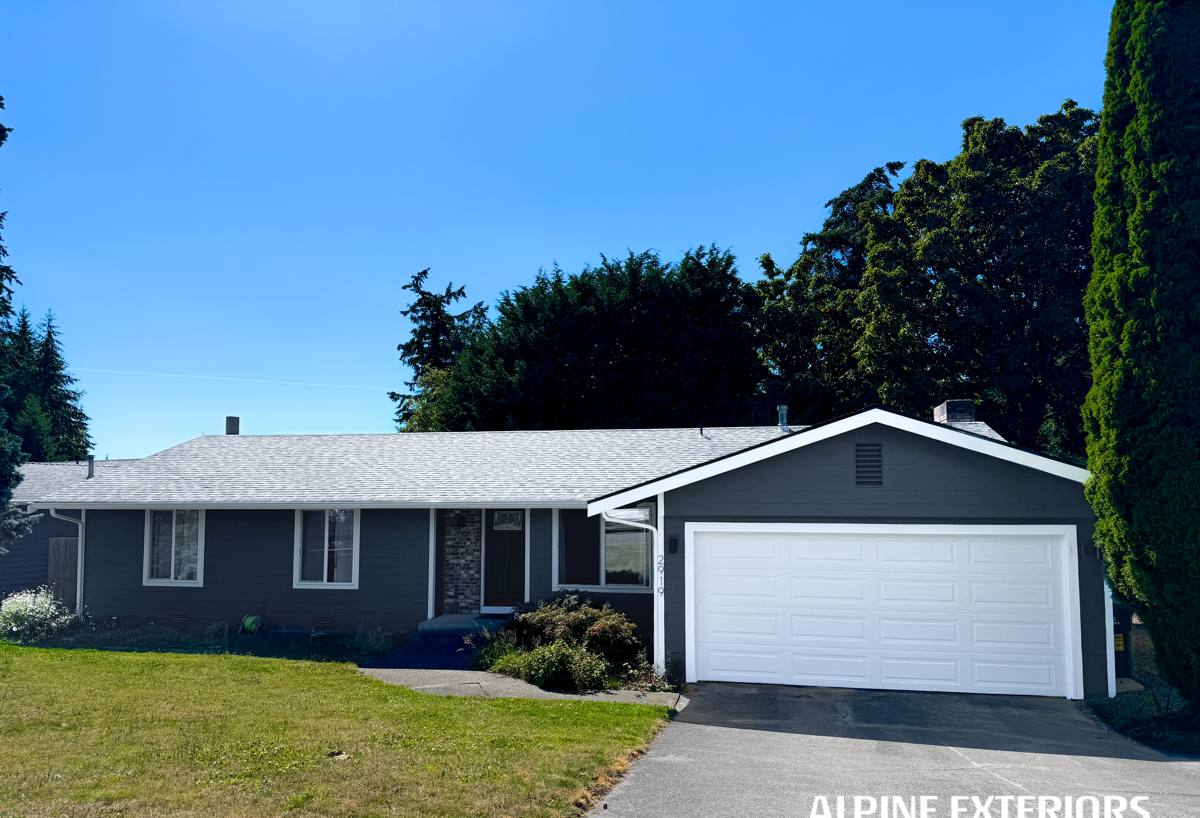
Signs a Home's Siding Has Reached the End of Its Life
Siding failure on the islands rarely shows up as one dramatic problem. It's usually a handful of smaller signs that, together, mean the material and the moisture barrier behind it are no longer doing their job.
- Persistent moss, algae, or dark streaking that comes back within weeks of being cleaned
- Paint that's peeling, bubbling, or chalking well before the manufacturer's repaint interval
- Soft, spongy, or crumbling spots when you press on the siding, especially near the bottom courses
- Visible cupping, warping, or gaps opening up between boards or panels
- Rot or staining around window trim, corner boards, and anywhere two roof planes meet a wall
- A musty smell or soft drywall on interior walls that back up to exterior siding
Any one of these can be a localized repair. Several of them together, especially on a home that's been through a decade or more of island weather, usually means it's time to talk about full replacement rather than patching around the problem spots.
What a Correct Siding Replacement Actually Involves
A siding job is only as good as what happens underneath it. On a Shaw Island home, where wind-driven rain is a regular event rather than an occasional one, the details behind the visible siding matter as much as the siding itself.
Tear-off and inspection
Old siding comes off down to the sheathing, and that sheathing gets inspected before anything new goes up. Any rot, soft wood, or water-damaged framing found at this stage gets repaired properly — covering it over with new siding just traps the problem behind a fresh face.
Water-resistive barrier and flashing
A correctly lapped weather-resistive barrier, along with properly integrated flashing at windows, doors, and every horizontal trim transition, is what actually keeps wind-driven rain out of the wall assembly. This is the part of the job that's invisible once it's finished, and it's also the part most likely to be shortcut on a rushed installation.
Installation to manufacturer spec
Fastener spacing, board overlap, clearance at grade, and gaps at trim all have to follow the manufacturer's published requirements. Getting these details right is what protects the material's warranty and what determines whether the siding actually performs the way it's engineered to in a wet, salt-exposed climate.
Why We Install Only James Hardie Fiber Cement
We install James Hardie fiber cement siding exclusively, and on an island property that means a few specific things. Hardie's fiber cement is non-combustible, which matters for insurance and fire-safety considerations on properties with limited emergency access. It doesn't absorb moisture the way wood-based products can, and it holds up to sustained salt exposure and driving rain without the swelling, delamination, or edge deterioration that softer materials are prone to over time near saltwater.
Hardie also builds its HardiePlank and HardiePanel lines in climate-specific formulations — HZ5 and HZ10 — engineered for the moisture and temperature conditions of different regions, including the wetter parts of the Pacific Northwest. The factory-applied ColorPlus finish is baked on under controlled conditions rather than field-applied, which means better adhesion and a longer color life than a site-painted product typically delivers, and it comes with a real transferable warranty backing the material itself.
We've chosen to stand behind one product system rather than offer several, because we've seen what performs on island homes over the long run and what doesn't. That's a professional standard we hold to, not a sales pitch — if a homeowner wants to weigh other materials, we're glad to talk through the honest trade-offs of each.
Getting Materials and a Crew to a Ferry-Access Island
Shaw Island's biggest logistical wrinkle for a construction project isn't the work itself — it's getting the right people, the right materials, and a dumpster on and off the island on a schedule that actually holds. Ferry sailings are limited compared to a mainland job site, material deliveries have to be planned around ferry capacity and timing rather than a simple truck route, and debris removal needs the same coordination in reverse.
A crew that regularly works Shaw Island and the rest of the San Juan Islands already has that logistics figured out — how much material to stage and when, how to sequence a tear-off so the house isn't exposed to weather overnight, and how to keep a project moving without losing days to missed sailings or last-minute supply runs. A crew doing its first island job has to learn all of that in real time, usually at the homeowner's expense in delays.
Our Process, Start to Finish
- On-site estimate — we walk the home, check the condition of the existing siding and sheathing where accessible, and talk through what the property's specific exposure (wind, shade, salt proximity) means for the job.
- Written scope and product selection — a clear plan covering tear-off, any sheathing repair allowances, the HardiePlank or HardiePanel profile and ColorPlus color selected, and a realistic timeline that accounts for ferry logistics.
- Material staging — siding, trim, fasteners, and the weather barrier are ordered and scheduled to arrive on-island ahead of the crew, so the work isn't waiting on a delivery.
- Tear-off and sheathing inspection — old siding removed in manageable sections, with any rot or damage addressed before covering.
- Weather barrier and flashing installation — the moisture-management layer that does the real work of keeping driving rain out.
- Hardie installation — siding installed to manufacturer spec, with attention to fastening, gapping, and trim detail.
- Final walkthrough — we go over the finished job with the homeowner and cover basic care going forward.
What Drives the Cost of a Shaw Island Siding Job
| Cost Factor | Why It Matters Here |
|---|---|
| Home size and wall complexity | More corners, dormers, and trim transitions mean more cutting, flashing, and labor time |
| Sheathing and framing condition | Rot found during tear-off has to be repaired before new siding goes on, which affects both cost and schedule |
| Siding profile and finish | HardiePlank lap siding, panel systems, and trim options carry different material costs |
| Site access and staging | Ferry-dependent delivery and limited on-island staging space can affect scheduling and logistics costs |
| Existing siding removal and disposal | Tear-off volume and debris hauling off-island are part of the total project cost |
Every one of these varies by property, which is why a firm number comes from an on-site look rather than a phone estimate. Broadly, homeowners should expect siding replacement pricing to fall in a wide range depending on the home's size and condition — an accurate figure only comes after we've seen the actual walls and sheathing.
Keeping New Siding Performing After Installation
James Hardie siding is low-maintenance compared to wood or engineered wood products, but "low-maintenance" isn't "no-maintenance," especially in a climate that grows moss on almost anything left alone.
- Rinse siding down once or twice a year to clear salt residue, pollen, and early moss growth before it takes hold
- Keep gutters clear so water isn't overflowing down the face of the siding
- Trim back vegetation and tree cover that keeps sections of the wall in constant shade and damp
- Check caulking at trim and window transitions periodically and touch up before gaps open
- Address any impact damage or chipping promptly rather than letting it sit exposed
None of this is heavy work, but skipping it is how even a good product ends up looking tired well before its time.
Why Local Island Experience Matters When You Hire
Anyone can quote a siding job from a photo. What separates a good result on Shaw Island is a crew that has actually dealt with the ferry schedule, the salt exposure, the shaded lots, and the moss season before — and built their process around those realities instead of learning them on your house. We work across Orcas Island and the surrounding San Juan Islands, and Shaw Island's logistics are part of what we plan for from the first estimate, not an afterthought once the crew shows up.
If your siding is showing its age or you're planning ahead for a replacement, we're happy to take a look and walk you through what your home specifically needs. Reach out for a free, no-pressure estimate using the form below.